
Does Community Size Matter in Business Success?
From new business incentives to hand-to-hand combat, smaller cities are competing in this recession; but a community's size - large or small - does not tell all.

Keeping ownership of environmentally impaired properties carries significant financial risk, particularly in a slow economy.
The increased importance with which Corporate Survey respondents regard the "right-to-work" and "low union profile" factors signifies the need for a new dialogue between labor and management.
LEED for Commercial Interiors (CI) now gives tenants the ability to make sustainable choices when they do not have control over an entire building's operations.
The ranking of available land and buildings by the respondents to Area Development's Corporate Survey reflects the fact that the importance of these factors is contingent on the project.
If there's any silver lining to our dark economic cloud, it has to be the attractive leasing deals many business tenants are enjoying.
Negotiating a lease can be confusing, so you may want to seek a consultant's assistance before you begin.
Nanotech is poised to bring groundbreaking changes and create new commerce hubs. But industry groups are concerned about safety.
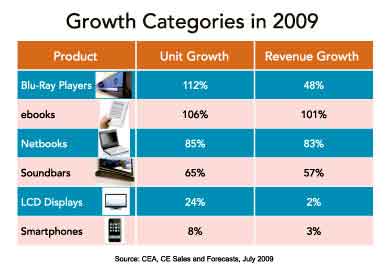
Once driven by unceasing consumer demand, the electronics industry has been powered down by the recession.
A year after the collapse of the U.S. economy, experts are declaring that the recession is "technically" over. But don't start celebrating yet.
The way business executives react when a crisis hits can have a game-changing impact on the company's bottom line.
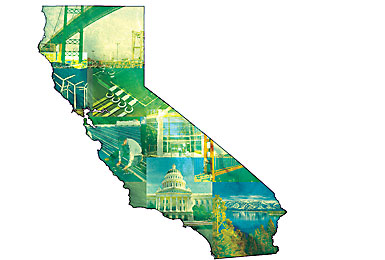
Numerous challenges facing the state are being addressed in order to keep - and attract - companies and high-paying jobs in California.
The nation's premier animal health companies are benefiting from the synergy created by their clustering in the Kansas City area.
Alaska benefits from a thriving oil industry, but its location and electric rates limit options for other industries.
A balanced state budget puts the state a position to plan for growth, with alternative energy leading the way.
New York City officials are moving aggressively to recruit diverse businesses, with upstate development leaning on high-tech.
Alternative energy, advanced manufacturing, and life sciences are important industries to the Keystone State's job growth goals.
Once the top economy in the nation, Texas has taken a hit from the recession. But recovery is underway.
State officials are targeting multiple industries for development, with financial services always a key sector.
Always firmly in the middle of booms and busts, Wisconsin's economy is holding steady against the recession.
Steady business from overseas is a key element in preventing additional economic erosion in this recession-devastated state.
Montana officials cope with decreased demand for a primary product by building buzz for biomass energy.
Forty-eight new advanced battery and electric-drive projects in more than 20 states will receive funding under the American Recovery and Reinvestment Act (ARRA).
Louisiana's state capital is becoming a digital entertainment hub, thanks to strong incentives and lifestyle factors that attract industry talent.
Officials in Columbus, Georgia, plan to target high-tech manufacturing using NCR's new ATM factory as a magnet.
Innovative businesses and regions are flourishing and building "future knowledge ecosystems" - or the next Silicon Valley.
The road out of the worst economic downturn in decades is not going to be a smooth one.
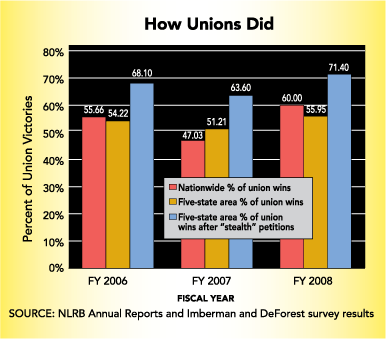
A recent survey of manufacturing executives reveals who loses to unions - and why.
Has there ever been as tumultuous a year for the automotive industry as 2009? Auto industry experts offer predictions for 2010 and beyond.
Receive quarterly issues of Area Development Magazine at no charge for qualified executives and consultants to industry.
Corporate Exec Survey Results
Leading Metro Locations
Top States for Business
Annual Econdev Awards