
Capital Access / Finance



Recent Features
Reshoring Reality Check from Construction
How tariffs and economic incentives are influencing FDI and location decisions.

How to Manage the Surge in Building Costs
Construction firms are navigating supply shocks, labor shortages and policy pressures with smarter, early-stage coordination.

The Rise of Joint Venture Agreements in New Construction Projects
Collaborative joint ventures spread risk and ensure successful project outcomes.

Large-Scale Projects Face Financing Challenges
Executives have been forced to find new ways to finance projects.

Best Practices in Incentives Procurement
Area Development Guest Editors Kathy Mussio and Amy Gerber, rounded up industry leaders to share their best practices for navigating economic development incentives.
Location Economics as an Emerging Driver of Private Equity Decisions
As they evaluate where to expand and which operations to relocate, private equity groups are increasingly evaluating location-specific factors.

Restarting Delayed Capital Projects
A collaborative approach to re-evaluation of delayed capital projects is in everyone’s best interest.

What’s Next: Leveraging Mergers and Acquisitions with Incentives
A company merging with or acquiring another firm should make sure to perform its due diligence with regard to previously granted incentives before entering into the transaction.

In Focus: Sale-Leasebacks Help Companies Leverage Capital
Companies feeling the strain of the COVID-19 shutdown are finding new opportunities in sale-leasebacks.
How CFOs Should Address Trade Questions — ASAP
Recent trade tensions and announced tariffs are proving disruptive to businesses, creating an uphill battle for CFOs, but they can mitigate supplier uncertainties by leveraging data.
The Big Five: Key Tax Credits and Public Incentives
Subsequent to his presentation on tax credits and incentives in the financing package at our Consultants Forum, Brad Elmer, CFA, Managing Director at Baker Tilly Capital, sat down to discuss the topic with Area Development.
Using Incentives to Tip the Corporate Capital Approval Scales
A company will be better able to pursue and justify the use of incentives in the capital approval process by communicating and illustrating their impact on its investment decision.
Navigating Uncharted Waters: 5 Trends Affecting Capital Investment Plans
A new administration in Washington, escalating wages, and a dwindling supply of industrial real estate are just some of the trends that may cause companies to take a wait-and-see approach to capital investment.

The Importance of an Incentives Review Process
Today’s reality requires companies to develop an incentives review process and give it due resources in order to obtain and stay in compliance with valuable negotiated incentives.

Utility Companies: Powerful Economic Development Partners
Utility economic development organizations can bring a lot to the table during the corporate location process, especially in terms of technical expertise along with strategic and project-level funding.
Sale-Leasebacks Allow Companies to Redeploy Capital
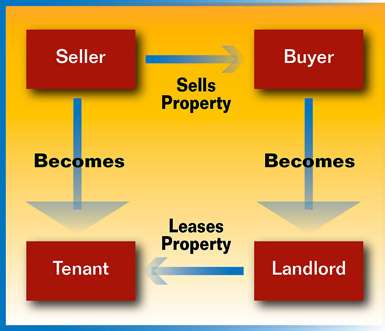
When companies decide to invest in new, custom-built manufacturing or distribution center facilities, they typically do so because of a lack of existing buildings that would meet their needs. But investing in a new facility doesn’t always mean long-term ownership. Sometimes companies opt to sell the facility and then lease it back.
In Focus: Funding Solar Projects for Commercial Facilities
Although companies can reap huge savings from installing solar energy, they may need to employ some creative strategies in order to secure project financing and must also consider the real estate available for such an installation.
Incentives for Advanced Manufacturing: Out of Step with the Times
Automation and other process improvements have drastically reduced the number of workers needed to achieve a given level of productivity. Have state governments that use tax breaks and other inducements to attract industrial projects updated their incentives to reflect these changing times? Conversations with site selection consultants and state officials paint a varied picture.

Compliance: Where Incentives Are Won or Lost
Proper incentives compliance reporting will help a company to ensure that it receives the full value of the incentives it was offered in the application and negotiations process.
Headquarters Decisions: Real Estate Executives Make Their Mark
Headquarters location decisions present companies an opportunity to realign the corporate “home base” with current strategic and operational objectives. They also can be a catalyst for management to facilitate change and move an organization forward based on their vision for the future.
Empowering Tenants in the Quest for Optimal Space
A tenant-based build-to-suit development provides complete transparency between the developer and tenant, enabling them to align their goals.
The Manufacturing Paradox: Output Up, Employment Down
Replacing aging plant and equipment will lead to acceleration in capital expenditure and, in turn, an increasing level of manufacturing relocation projects.
Decision-Makers, Drivers, and Inner Workings of the Location Selection Process
Those charged with making the location decision look to satisfy the company’s long-term goals, while achieving a return on the investment and minimizing risk.
Planning for Expansion in Secondary Markets
With increased demand for industrial space in primary markets, expanding or relocating business may find that secondary markets can meet prospective needs while offering financial benefits over core MSAs.
The New Economy, Crowdfunding for Civic Projects
For a small but growing number of locales, “crowdfunding” is part of the solution for funding economic development projects.
Critical Site Selection Factor #4: Occupancy / Construction Costs on An Upward Trend
The higher importance reflects not only the continued proportional significance of occupancy and construction costs in companies’ overall cost equation, but also the fact that such costs are continuing to ratchet up as the U.S. and global economies proceed with recovery at varying paces, increasing demand and nudging up prices.
The True Value of Economic Development Incentives
Companies need to determine which incentives are of most value to them and also make sure they are utilizing all the incentives to which they are entitled.
A Look Back - and Ahead - at the 2013/2014 Legislative and Incentives Landscape
From what we witnessed in 2013, we can only expect more dynamic developments in state incentive programs and a continued focus on additional transparency.
First Person: Putting U.S. Manufacturing Front and Center
Scott N. Paul, President of the Alliance for American Manufacturing, discusses how government policy supports U.S. manufacturing growth, the perceived “skills gap” and mainstream media’s recent focus on U.S. manufacturing.
Critical Location Decision Factor #5: Costs of a New Vs. Existing Facility
Of course, it’s less expensive to rehab an existing facility than go with a build-to-suit, but the latter will give a company a custom fit. This is the Sixth in a series of articles examining the top-10 site selection factors as decided by the respondents to AD's Q1 Corporate Executive Survey.
SMBs: How to Negotiate the New Lending Maze
While banks have more money than ever on their books, small business owners have difficulty qualifying for loans. The mismatch between lender and borrower results from a more conservative financial environment in which bankers rely on cash flow projections and businesses struggle with an uncertain market.
In Focus: The Need for a Strategic Approach to Facilities Capital Planning
As vice president in VFA's Consulting Services group, Ray Dufresne is responsible for management and direction of projects for customers across VFA's market base. Prior to forming the Consulting Services group in 2004, Dufresne led Assessment Services within VFA for 12 years.
A Strategic Facilities Capital Planning Primer
As the economy rebounds, access to readily available facility condition information provides a company with a strategic advantage.
Managing the Complexity of Large, Capital-Intensive Projects
Structured collaboration allows companies to streamline project management operations and maximize profits.

Financial Real Estate Strategies for 2010
As we enter the new year, it is clear that companies are still evaluating best use of capital and cost savings from a location and real estate perspective.