

Labor Costs / Organized Labor



Recent Features
Contributed Content
Oklahoma’s Competitive Edge: Low Cost, High Performance
A central U.S. location delivering cost stability, logistics reach and industry-focused workforce development.

Editor's Note: The Year Site Selection Grew Up
Energy availability takes center stage as companies compete for grid capacity and rethink growth strategies
Industries Look for Employees in Nontraditional Spaces Amid Labor Shortage
Employers turn to untapped talent pools to address workforce gaps.

What to Make of the Rising Trend of Salary Transparency in Job Descriptions
Salary transparency in job listings offers new insights into wages.

What If the Longshoremen's Strike Had Persisted? Examining the Potential Economic Fallout
Could a prolonged strike have disrupted U.S. supply chains further?

Can the UAW Make Substantial Inroads in the Southern States?
Southern states' preference for right-to-work laws and their culture of self-reliance contribute to a deep-rooted resistance to unionization. Many workers do not share the UAW’s political agenda.
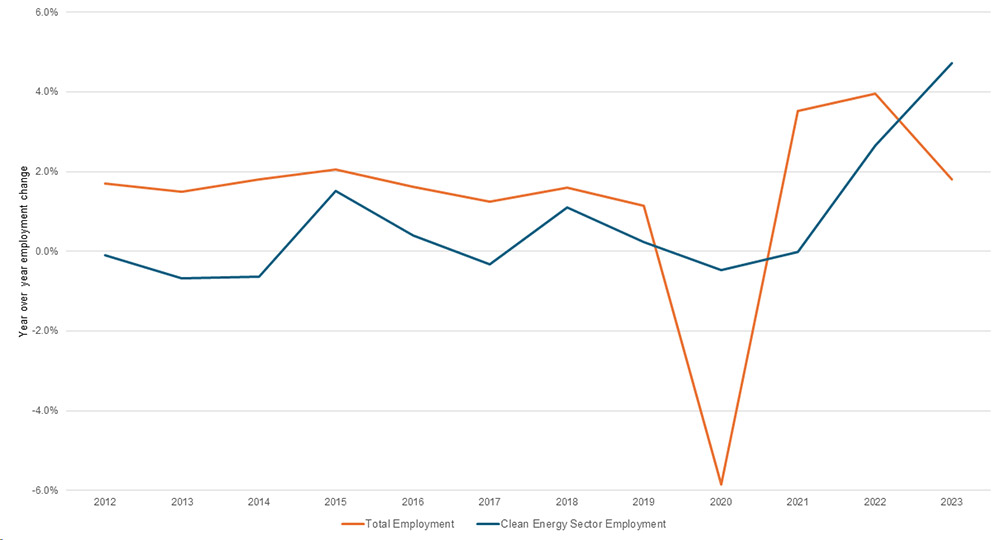
Green Jobs Boom in 2023: Is the IRA a Leading Factor?
Is the IRA driving a surge in green jobs, or is it part of a broader clean energy movement?
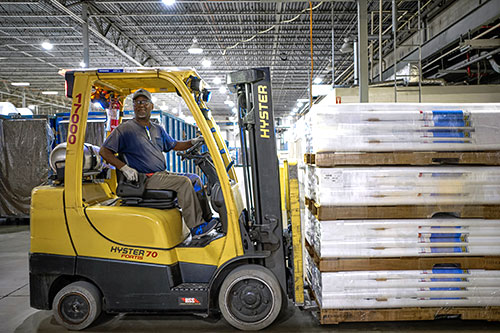
Impact of the Latest Minimum Wage Increases
The new year brings some significant changes that will impact employers who have entry-level workers, with 22 states raising their minimum wages effective January 1st.

The Importance of Understanding Labor Issues in Making the Location Decision
Site selectors should assess a potential location’s workforce with an eye to identifying areas of concern that might make it open to unionization efforts.

Look Beyond the Now When Considering Workforce Priorities
Industrial site selectors must consider not only a prospective location’s current labor pool but also its recruiting reach and unanticipated future demands and costs of a particular market.

Insights on Staffing and the Location Decision
When selecting a new site, companies today confront an ever-changing landscape of factors to consider, from site and facility planning to workforce analytics and training. Christine Chandler, president of AdvantaStaff, and Lovora Brown, AdvantaStaff’s director of Operations, who bring a combined 50 years’ experience in the manufacturing and distribution industry, provide their perspective on workforce issues that are important to companies’ location decisions.
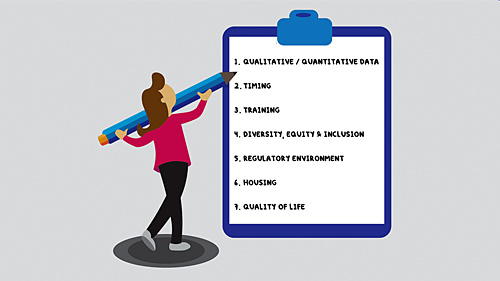
How to Factor in Labor Needs While Selecting a Site for Expansion
With today’s low unemployment rates, companies must consider how they will fulfill their workforce needs early on in the site selection process.

The Value of Job Ads Data in the Location Decision
Non-traditional data aggregated from job ads contain a plethora of insights for assessing a possible location.

Unlocking Labor Analytics
While assessing a prospective location’s workforce may begin with a review of the data, a qualitative evaluation can provide new information not easily apparent from any desktop research.
2022 Top States Workforce Development Programs
Companies across industry sectors are having trouble finding all the talent they need, which makes workforce development programs even more vital as a location factor.
Unionization Efforts Trending Upward
According to the experts, respecting and listening to employees’ concerns is key to keeping unionizing efforts at bay.

The Labor Challenges of Site Selection
A careful evaluation of a site’s labor force is needed to guard against unwelcome surprises.

Finding and Valuing Top Talent
Martha O’Mara PhD. Principal, Place Strategy Partners, LLC, spoke with Area Development about how companies can diversify out of high-cost locations while still accessing talented labor pools after her presentation at our 2019 Houston Consultants Forum.
In Focus: A Holistic Balance Sheet: The Key to Successful Real Estate
As the industrial landscape shifts, occupiers need to seek out opportune markets as well as evaluate the impact of labor costs in order to be successful.
Are Your Employees Ready to Work with Robots?
As manufacturers increasingly employ robots on the factory floor, they must communicate to their workforces how their roles will change and prepare them to work collaboratively with this new technology.

The Convergence of Technology + Automotive and Its Impact on Site Selection
Automotive suppliers must approach site selection prudently, with an eye to a long-term solution when evaluating potential locations as well as their labor pools.

Implications for Industry of Raising the Minimum Wage
With manufacturers today employing fewer minimum wage-workers, the industrial sector may be only minimally affected by an increase.

Site Selection 2020: Riding the Waves of Disruption into the Next Decade
Following our Miami Consultants Forum, Area Development discussed the current and evolving state of the site selection industry and industrial real estate market with Brad Migdal, Senior Managing Director at Cushman & Wakefield.
Who is Generation Z, the next workforce pool?
Brian Corde, a managing partner at Atlas Insight, spoke with Area Development about Generation Z, and its impact on the workforce, following his “Not Another Millennial Presentation!” presentation at our Miami Consultants Forum.
Contributed Content
Richmond, Virginia: A Top Destination for Middle-Office Relocation
Companies are moving their mid-level professional jobs to less expensive locations that still provide a talented workforce pipeline and an attractive quality of life.

Is Your New Economy Workforce Hiding Where You Least Expect It?
Area Development recently interviewed Chris Schwinden, Vice President, Site Selection Group, about how companies can assess a location’s true workforce potential in this exceptionally tight labor market.
Three Tips For Using Labor Market Data
Labor market information is critical, but companies must know the uses and limitations of such data in order to select the optimal location for success.
Union Activity Showing Recent Spikes
Although unions’ influence in the U.S. has diminished over the last four decades, they are still playing a key role in manufacturing and, more recently, the distribution sector.

Will the Latest Round of Minimum Wage Increases Affect Employment Levels?
Since the tight labor market has already pushed up wages, studies have shown an increase in the minimum wage will have minimal negative impact on employment levels.

Unemployment Numbers Reflect a Recovering Economy
As the U.S. economy has rebounded from the Great Recession and added jobs, unemployment has fallen to record lows in many states, creating worker shortages that need to be addressed.
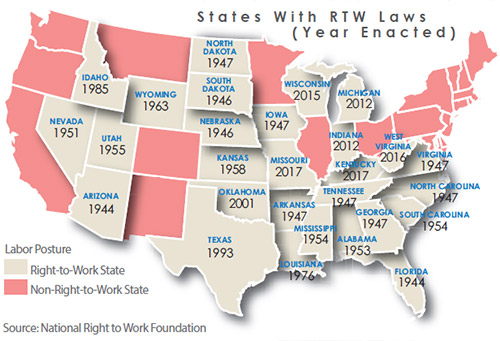
The New World of Right to Work
When making the location decision, companies should be wary of using RTW status as a location requirement and instead dig deeper into regional and local union activity.
The Select Few Metros Where Wages Are Really Growing
A recent analysis from Emsi suggests that the labor market might not be as tight as the data shows — or at least not tight enough for businesses in aggregate to significantly drive up wages.
Thinking Local: How to Find Manufacturing Talent
The best answer to the skills-shortage question is that it depends on where you’re located, the positions you’re looking to fill - and perhaps most importantly, the compensation you’re willing to offer.
Raising Minimum Wages: A Double-Edged Sword
While raising the minimum wage puts more money into the pockets of low-wage workers, it also incentivizes employers to hold the line on job creation or even reduce employment.

Navigating Uncharted Waters: 5 Trends Affecting Capital Investment Plans
A new administration in Washington, escalating wages, and a dwindling supply of industrial real estate are just some of the trends that may cause companies to take a wait-and-see approach to capital investment.

International Location Report: Mexico Maintaining a Place in Global Manufacturing
Despite dealing with a collapse in oil prices and threats of new tariffs to be imposed by the incoming Trump administration, Mexico retains significant economic advantages.