
Hoosier Energy Helping Innovators of Egg Production
With the help of the Jackson County REMC and Hoosier Energy, energy usage is on the cutting edge at Rose Acres Farms’ Indiana facilities.
2017 Food Processing

Headquartered in Jackson County, Indiana, Rose Acres is the No. 2 egg producer in the United States; producing enough eggs to feed 8 million people two eggs a day through egg laying farms in Arizona, Georgia, Indiana, Illinois, Iowa, Missouri and North Carolina. The company is currently at 15 percent cage-free production and continues to reshape its facilities with new technology and designs to increase that number over the next 10 years.
The massive egg-laying facilities have become advanced manufacturing centers over the years. Rose Acres’ patented system includes miles of egg belts, feeder chains, and manure belts as well as robotic equipment; in fact, no human hands touch the eggs from laying to placing them on a truck for shipping. This increase in technology means that reliable and responsive energy supply is essential to keep the operation running safely and efficiently.
Rose Acres is working closely with Jackson County Rural Electric Member Cooperative (REMC) – a distribution cooperative and Hoosier Energy —a generation and transmission cooperative to ensure that energy usage is on the cutting edge at its facilities.
“We value our relationship with Jackson County REMC and Hoosier Energy,” said Tony Wesner, Chief Operating Officer for Rose Acres. “We have to have them and need their guidance to help us be more energy efficient. More importantly, we have to have proper ventilation and climate controls to keep our birds safe and healthy—they are there at a moment’s notice when we need them.”
The cooperative feeling is mutual with Rose Acres being a long-time member of Jackson County REMC’s who has been able to see the company grow from a small local operation to a national contender in the poultry & egg industry.
“We look at everything from lighting to ventilation to help reduce overall energy usage and demand to help lower energy costs, and help make their facilities as efficient as possible,” said Jackson County REMC General Manager Mark McKinney.
Wesner added that moving to cage-free production does not necessarily lower energy demands and making improvements in facility design will be essential to maintaining costs while continuing the company’s strong traditions, “We take great pride in feeding the world and will continue to evolve and grow as we always have since the company’s inception seven decades ago.”
-
Hoosier Energy Power Network
Hoosier Energy is an electric generation and transmission cooperative providing electricity and value-added services to 18 electric distribution cooperatives, in central and southern Indiana and southeast Illinois. The electric cooperatives power facilities for leading automotive manufacturers including Honda Manufacturing of Indiana, NTN, Faurecia, and TOA USA. The Hoosier Energy economic development team provides a wide array of economic development services including site and building searches, incentive guidance, site analysis, and electric rate estimates.
Recent Project Announcements
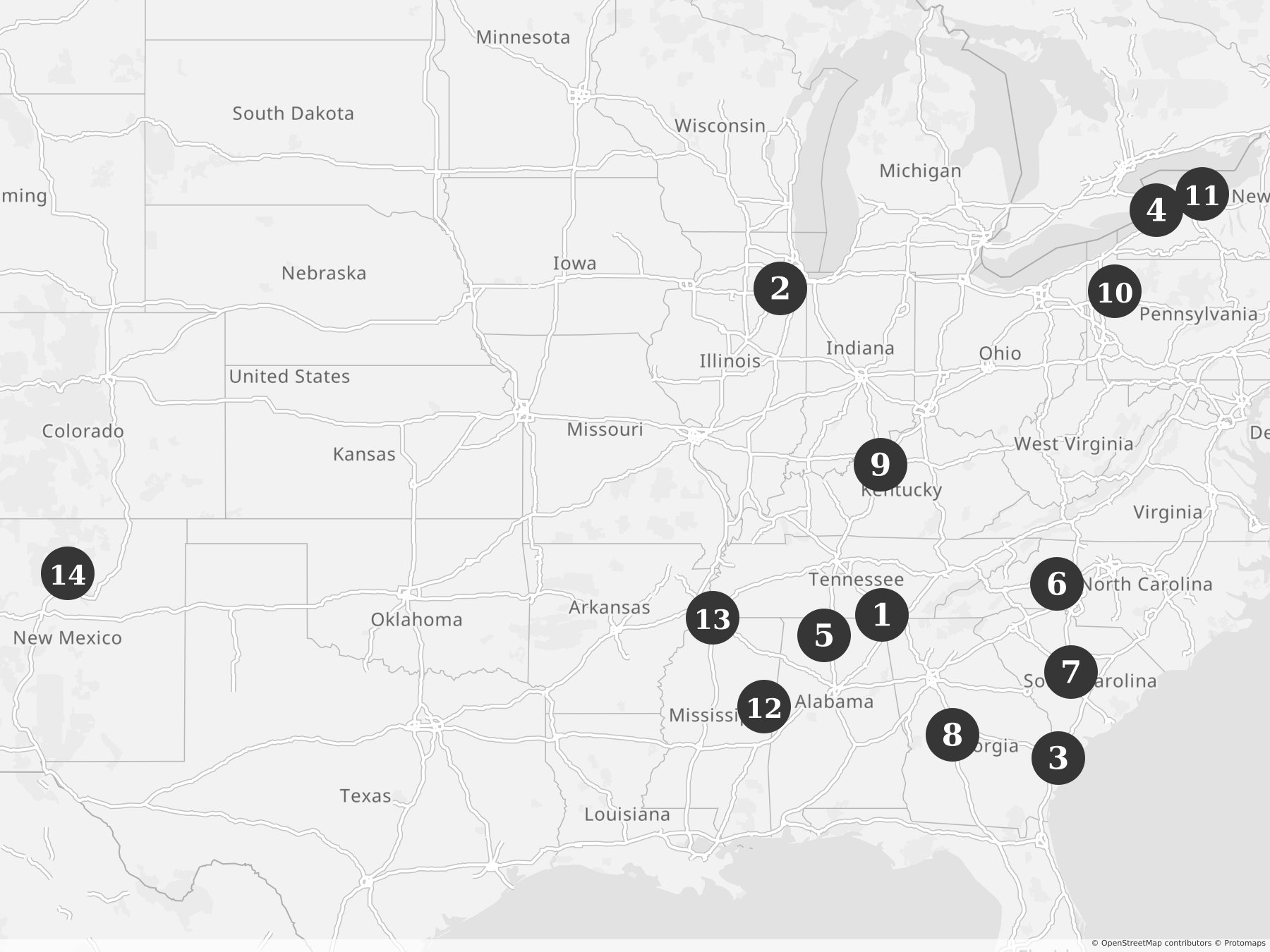
Valmont Industries Expands Jasper, Tennessee, Production Operations
10/25/2026
Hyundai Translead Expands Joliet, Illinois, Manufacturing Operations
10/25/2026
Mitsubishi Power America Expands Chatham County, Georgia, Operations
10/25/2026
Niagara Power Transformer Expands Buffalo, New York, Manufacturing Operations
10/25/2026
Nucor Expands Decatur, Alabama, Manufacturing Operations
10/24/2026
US Conec Plans Hickory, North Carolina, Manufacturing Operations
10/24/2026
Westinghouse Electric Company Expands Richland County, South Carolina, Advanced Nuclear Fuel Operations
10/24/2026
Blue Bird Corporation Expands Peach County, Georgia, Manufacturing Operations
10/24/2026
Silco Fire & Security Plans Bullitt County, Kentucky, Operations
10/24/2026
Conair Expands Franklin, Pennsylvania, Production Operations
10/23/2026
Phoenix Tailings Plans Rochester, New York, Rare Earth Mineral Separation Operations
10/22/2026
Barge Forest Products Expands Macon, Mississippi, Sawmill Operations
10/22/2026
ITT Goulds Pumps Plans Memphis, Tennessee, Manufacturing-Distribution Operations
10/22/2026
Discovery 2 Scale Plans Nambé Pueblo, New Mexico, Headquarters Operations
10/22/2026
Most Read
-
Top States for Doing Business in 2026: Where Competitive Advantage Becomes Project Certainty
Q3 2026
-
Why Great Sites Get Eliminated: The Critical Role of Information Presentation in Site Selection
Q3 2026
-
2025’s Top States for Business: How the Winners Are Outpacing the Rest
Q3 2025
-
Space and Defense Are Becoming One Industrial Ecosystem
Q3 2026
-
Industrial Location Decisions Follow the Freight
Q3 2026
-
Economic Developer Role Shifting from Deal-Making to Systems Stewardship
Q1 2026
-
New Markets Tax Credits Are Now a Permanent Part of the Deal Stack
Q3 2026