
Kentucky’s Winning Formula for the Food and Beverage Industry
The logistics/distribution advantages to be found in Kentucky, as well as its strength in agriculture, have made it a premier location for new and expanding companies in the food and beverage industry.
2018 Food Processing
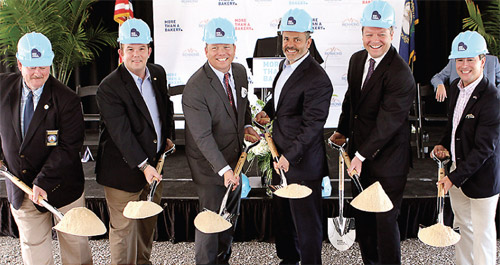
One of the most important aspects in food production is the ability to deliver fresh products to customers in a timely manner. Anything short of that simply will not cut it in a highly competitive market. That is why so many food production companies are turning to Kentucky for their distribution needs.
The food and beverage industry has long been a driving force within Kentucky’s economic makeup, from longstanding agricultural roots to its prominence as a producer of 95 percent of the country’s bourbon. Food processing in Kentucky has come a lot further than that, however, as the Commonwealth has become a premier location for new and expanding companies. A leading factor behind that growth has been logistics and distribution.
The most recent example — which highlights Kentucky’s logistical prowess within the industry — was the announcement in July that Kroger will expand its distribution center in the northern Kentucky community of Florence with an $18 million investment that will create 250 full-time jobs. The expansion came just nine months after the facility initially opened in October 2017.
Kroger’s facility is located in close proximity with Cincinnati/Northern Kentucky International Airport (CVG), the home of DHL’s cargo hub and a major selling point for numerous companies in the region. Consider Louisville International Airport — which is home to UPS Worldport — the state’s location along the Ohio River, and railways and interstates woven throughout every corner of the state, and it is easy to see why a company with distribution needs would locate in Kentucky.
Growth like that of Kroger’s facility is nothing new for Kentucky companies. In 2017 alone, 55 new or expanding food and beverage industry projects were announced, totaling $804 million in investment and 1,125 new jobs. All told, there are currently more than 325 food and beverage facilities across the Commonwealth that employ approximately 50,000 people, and the result has generated more than $7 billion in GDP from food, beverage, and related products manufacturing.
Kentucky’s strength in agriculture isn’t wavering either. Farmland still covers more than 50 percent of the state, ranking it in the top 15 for production of corn, soybeans, and wheat. More than ever, companies within Kentucky’s food industry are working hand-in-hand with local farmers to ensure the freshest, highest quality products for their customers.
For many within the food and beverage industry, Kentucky’s strength in agriculture and distribution has proven to be a winning formula.
-
Kentucky Cabinet for Economic Development
The Kentucky Cabinet for Economic Development helps businesses select, grow, and succeed in Kentucky. The state's central location, strong UPS, DHL, Amazon and FedEx presence, low costs of conducting business, and high quality of life make Kentucky a top choice.

Contributed Content
Laying the Groundwork for Success: Kentucky’s Speed-to-Market Initiatives Are Fueling Future Economic Growth
-
Contributed Content
Kentucky’s Investment in Quality Sites is an Investment in its Future
-
Contributed Content
Kentucky’s Logistics Industry is Creating Current & Future Economic Success
-
Contributed Content
Leading the Charge

Recent Project Announcements
South Korea-Based Sebang Lithium Battery Plans Jeffersonville, Ohio, Manufacturing Operations
09/30/2026
Walmart Plans Turtlecreek Township, Ohio, Fulfillment Operations
09/30/2026
Ultium Cells Expands Spring Hill, Tennessee, Production Operations
09/30/2026
Mesabi Metallics Plans Iowa Steel Production Operations
09/30/2026
King Technology Establishes St Peters, Missouri, Operations
09/30/2026
Prism Controls Expands Vergennes Township, Michigan, Production Operations
09/30/2026
Niowave Expands Lansing, Michigan, Production Operations
09/30/2026
Britain-Based Neptune North Plans Columbus, Ohio, Operations
09/29/2026
Morgan Stanley Services Group Plans Dallas, Texas, Operations
09/29/2026
Quad MX Solutions Plans Salt Lake City, Utah, Manufacturing Operations
09/29/2026
Howmet Aerospace Expands Wichita Falls, Texas, Manufacturing Operations
09/29/2026
Aluma-Form Plans Mocksville, North Carolina, Plastics Manufacturing Operations
09/29/2026
Italy-Based IMA Life North America Expands Tonawanda, New York, Pharmaceutical Operations
09/29/2026
Australia-Based Heidi Plans Toronto, Ontario, Headquarters Operations
09/29/2026
Most Read
-
The Shifting Landscape of Location Strategy
Q2 2026
-
Why Great Sites Get Eliminated: The Critical Role of Information Presentation in Site Selection
Q3 2026
-
What Site Selectors Discuss After the Site Visit Ends
Q3 2026
-
Why Relationships Still Win Projects in Site Selection
Q3 2026
-
Beyond the Launch Pad: Why Huntsville and Colorado Springs Are Winning Commercial Space Investment
Q3 2026
-
Steel Is Back—and Infrastructure Is Deciding Where New Mills Locate
Q3 2026
-
2025’s Top States for Business: How the Winners Are Outpacing the Rest
Q3 2025