Midwest becomes hotspot for semiconductor manufacturing and supply industries
Midwestern states compete for semiconductor investments, leveraging new incentives and educational partnerships to attract major industry players.
Q2 2024
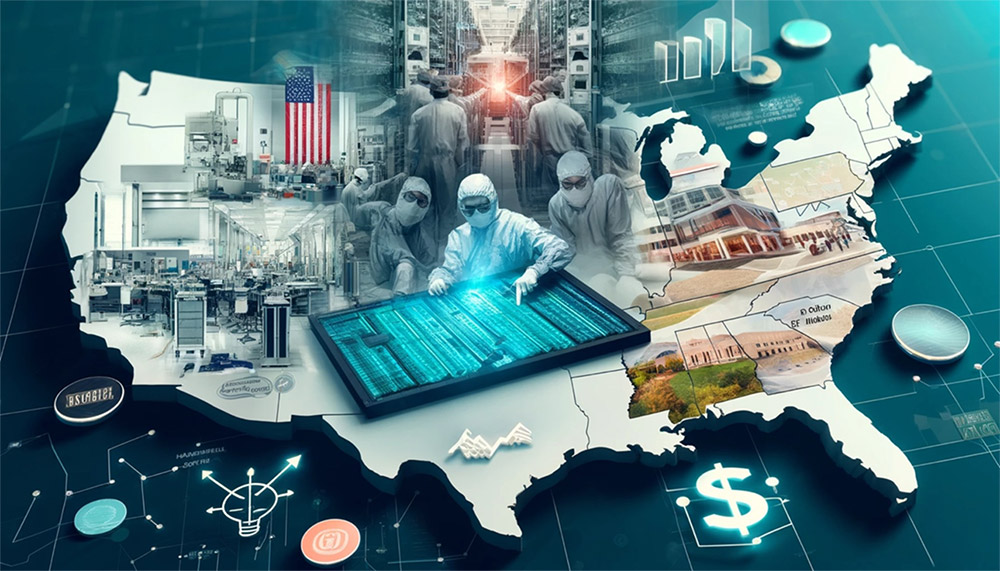
Semiconductor production facilities or “fabs”, as they are known, have been shown to bring capital investments in the billions of dollars. Not only are fabs themselves significant economic development projects that add new jobs to an area, but they attract dozens of suppliers that bring new capital investment and additional well-paying jobs into a community. It is easy to see why governors and state legislatures across the Midwest are developing new incentives and approaches to attract these types of facilities.
Ohio is the 3rd largest manufacturing state in the United States. However, job losses in steel, automotive, and other legacy sectors have put economic pressure on the state over the last several decades. In 2021, Ohio passed legislation that gave the state more tools to pursue and potentially win megaprojects. Namely, this new legislation allowed the state to extend its Job Creation Tax Credits, a refundable tax credit on new Ohio payroll (i.e., certain amount of newly created jobs), from 15 to 30 years as well as extend tax abatements from 15 to 30 years. If a project qualifies for the increased incentives, the savings could total hundreds of millions of dollars.
$166 billion – that’s the amount of Semiconducting projects that had been announced in the United States as of August 2023 It also passed Ohio House Bill 687, which created specialized conditions by which an Ohio semiconductor wafer manufacturing facility can qualify as a megaproject. This legislation also broadens various incentives to benefit suppliers of megaprojects. This will aid megaprojects in Ohio, helping to attract their suppliers. Semiconductor suppliers, which could include equipment, raw material, packaging, and chemical manufacturers, may qualify for benefits if they supply to a certified “megaproject” in Ohio. This new tool could be a strong addition to Ohio’s value proposition. Ohio has stated publicly that it is in contact with more than 30 out-of-state semiconductor suppliers and it is likely the state’s new tools, will aid their attraction efforts.
Shortly after Ohio passed its new megaprojects legislation, the state landed a $20 billion investment by Intel, which broke ground in September 2022 Intel plans to add 3,000 new direct jobs that have an average wage of $135,000. This project is the largest economic development project in Ohio’s history, to date, and brings an entirely new industry to Ohio.
Semiconductor manufacturers and their suppliers rely on a skilled workforce, which can make investing in areas that do not already have an established semiconductor ecosystem seem less attractive. Indiana has addressed that issue by leveraging its workforce and educational institutions to win economic semiconductor projects. In 2022, Indiana invested $84 million into the WestGate@Crane Technology Park. The state’s economic development corporation noted the campus will help the state secure semiconductor investment. Coinciding with the development of the Technology Park, NHanced Semiconductors committed to investing $236 million at the site. The first program for semiconductor degrees, which was bolstered by a $19 million investment by the U.S. Department of Defense was also launched in the state. These investments set the table for a generational win for the Hoosier state.
Sparked by over $50 billion in funding for the U.S. semiconductor industry via the CHIPS Act, state incentives for the semiconductor sector have increased tremendously. In April of 2024, Indiana announced an investment of $3.87 billion by SK hynix, which is expected to add up to 800 new jobs. The company plans to establish a packaging fabrication and R&D facility for high-intensity and AI microelectronic products. In the press release announcing the project, SK hynix and Indiana heralded the company’s partnership with area educational institutions and the semiconductor degree program; executives referred to the school’s R&D capabilities as a key factor in choosing Indiana. Workforce programs are incentives, particularly in a tight labor market. Indiana also added $658 million in incentives for the project.
Further to the west, Illinois has also focused on semiconductor production. In April 2022, the state approved the Manufacturing Illinois Chips for Real Opportunity Act (MICRO) program. This incentive provides strategic benefits to eligible semiconductor manufacturers, semiconductor parts manufacturers, and manufacturers converting existing manufacturing facilities to semiconductor manufacturing plants. Semiconductor manufacturers or suppliers can qualify for a myriad of tax incentives through this specialized program. These incentives include job creation and retention tax credits, investment credits, training credits, and other benefits. Illinois is hoping to mirror Indiana’s success by highlighting their educational partnerships. The business development arm for the state notes that the University of Illinois Urbana-Champaign has several semiconductor firms that it has incubated or that have emerged from its campus.
As of August 2023, $166 billion in semiconducting manufacturing projects had already been announced in the United States2 and states have continued to compete for these transformational projects. Ohio has developed targeted incentives that many view as providing it a competitive edge, as evidenced by the volume of investment seen in the state. Indiana has shown that workforce development pipelines can win deals. Illinois has modeled its efforts with a goal of mirroring the success experienced by both Ohio and Indiana. These developments have shown the Midwest is focused on attracting semiconductor manufacturers and supplier investment.
The views expressed are those of the authors and do not necessarily reflect the views of Ernst & Young LLP or any other member firm of the global EY organization.
Recent Project Announcements
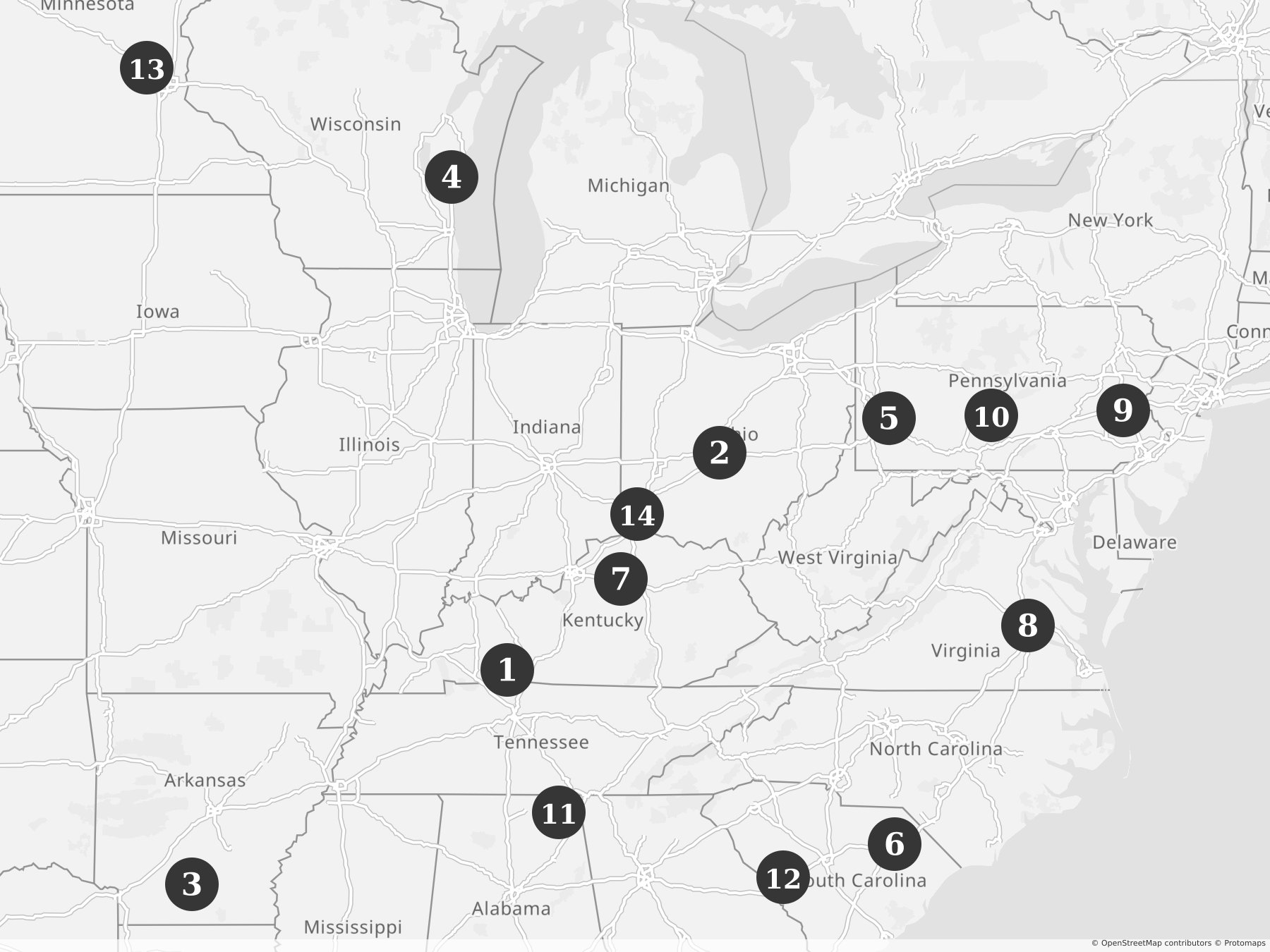
ClearFlow Metalworks Plans Logan County, Kentucky, Aluminum Manufacturing Operations
11/03/2026
Forgent Power Solutions Plans Columbus, Ohio, Operations
11/03/2026
Lockheed Martin Expands Camden, Arkansas, Production Operations
11/03/2026
Sartori Company Expands Plymouth, Wisconsin, Production Operations
11/02/2026
Tronix3D Expands Pittsburgh, Pennsylvania, Manufacturing Operations
11/02/2026
South Korea-Based Hwasung Group Plans Florence, South Carolina, Manufacturing Operations
11/02/2026
Japan-Based Nissin International Transport Plans Franklin County, Kentucky, Distribution Operations
11/01/2026
Dominion Packaging Expands Henrico, Virginia, Operations
11/01/2026
Glenmark Pharmaceuticals Plans Allentown, Pennsylvania, Distribution Operations
10/31/2026
Superior Huntingdon Composites Expands Huntingdon, Pennsylvania, Fiberglass Production Operations
10/31/2026
Helix Electric Plans Hollywood, Alabama, Manufacturing Operations
10/31/2026
Amick Farms Plans Edgefield County, South Carolina, Operations
10/31/2026
Gradian Thermal Solutions Establishes Dayton, Minnesota, Manufacturing Operations
10/30/2026
AMEND Consulting Expands Cincinnati, Ohio, Operations
10/30/2026
Most Read
-
Top States for Doing Business in 2026: Where Competitive Advantage Becomes Project Certainty
Q3 2026
-
Why Great Sites Get Eliminated: The Critical Role of Information Presentation in Site Selection
Q3 2026
-
2025’s Top States for Business: How the Winners Are Outpacing the Rest
Q3 2025
-
Space and Defense Are Becoming One Industrial Ecosystem
Q3 2026
-
Economic Developer Role Shifting from Deal-Making to Systems Stewardship
Q1 2026
-
Industrial Location Decisions Follow the Freight
Q3 2026
-
New Markets Tax Credits Are Now a Permanent Part of the Deal Stack
Q3 2026