C-Suite Must Show Higher Awareness and Involvement in Pursuing Tax Credits & Incentives Opportunities
With corporate capital expansion accelerating, front runner companies are prepared to maximize the capture of tax credits & incentives (C&I) and improve the return on their capital investment.
Q4 / Fall 2013
According to Mark Sweeney, senior principal with McCallum Sweeney Consulting, tax exemptions, in particular, can be quite valuable. For example, if there’s normally a 5 percent sales tax but manufacturing machinery and equipment is exempt, that’ll save half a million dollars on a $10 million capital investment. Some states also exempt various components that go into the manufacturing process, from raw materials to energy — that not only adds to the value of the exemption, but makes it an ongoing savings, not just an upfront break when the facility is being deployed.
Interestingly, a new EY study shows that corporate capital expansion plans are likely to drive tax credits and incentives (C&I) activity. Nearly seven out of 10 executives — 68 percent — surveyed by E&Y say their companies would pursue moderate to aggressive capital expansion over the next 24 months. And, as these companies accelerate their capital spending, there will be a commensurate increase in the likely benefits of exploring C&I opportunities since capital-intensive projects are often the most likely to see improved return from C&I and indirect tax savings.
The E&Y study, conducted in July 2013, is based on a combination of a quantitative survey and qualitative interviews of nearly 800 primarily tax and finance executives from Fortune 1000 businesses. This is the second of a bi-annual survey, first launched in 2011, to measure C&I activity level, C-suite focus, allocation of resources, and to better understand barriers companies face with their C&I initiatives.
“More organizations are paying attention to these opportunities,” said Ali Master, partner and national director of Business Incentives & Tax Credits, Ernst & Young LLP. “As companies become more aware of C&I, they assume a better position for reaping the rewards. According to the survey, 42 percent of respondents say that over the past two years they have been more active in pursuing business incentives.”
However, the C-suite shows a low level of awareness and involvement in pursuing C&I opportunities. Only 16 percent of survey respondents say their C-suite is “very” aware of the potential benefits from business incentives. Meanwhile, 36 percent say their C-suite is merely somewhat aware, and 20 percent indicate their C-suite is not at all aware of their organizations’ C&I strategies. In contrast, 28 percent say their most senior executives are either more aware than in the past two years or are beginning to focus on these opportunities more so than in the past two years.
A key trend uncovered by the survey is the emergence of a small but significant group of almost 60 companies (8 percent) that consider themselves as being “very active” when it came to capturing C&I. In fact, this group of “front-runner” companies said that they had a department focused on C&I with a “coordinated process at all levels” to maximize the capture of C&I.
“Companies interested in improving the return on their capital investment should emulate the organizations in the survey that clearly emerged as the front-runners in creating a business advantage through the use of credits and incentives,” said Master.
Additionally, the total pool of available C&I also is increasing, presenting worldwide opportunities for companies. Expansion of such programs is not uniform — not all jurisdictions are active — but the trend is toward more, not less. Competition is global, with local, regional, and national governments actively courting new businesses and working to retain or expand existing businesses. In such instances, the size of total incentives packages is growing, and there is a greater willingness and flexibility to work with businesses to develop the appropriate combination of incentives to address business needs.
Recent Project Announcements
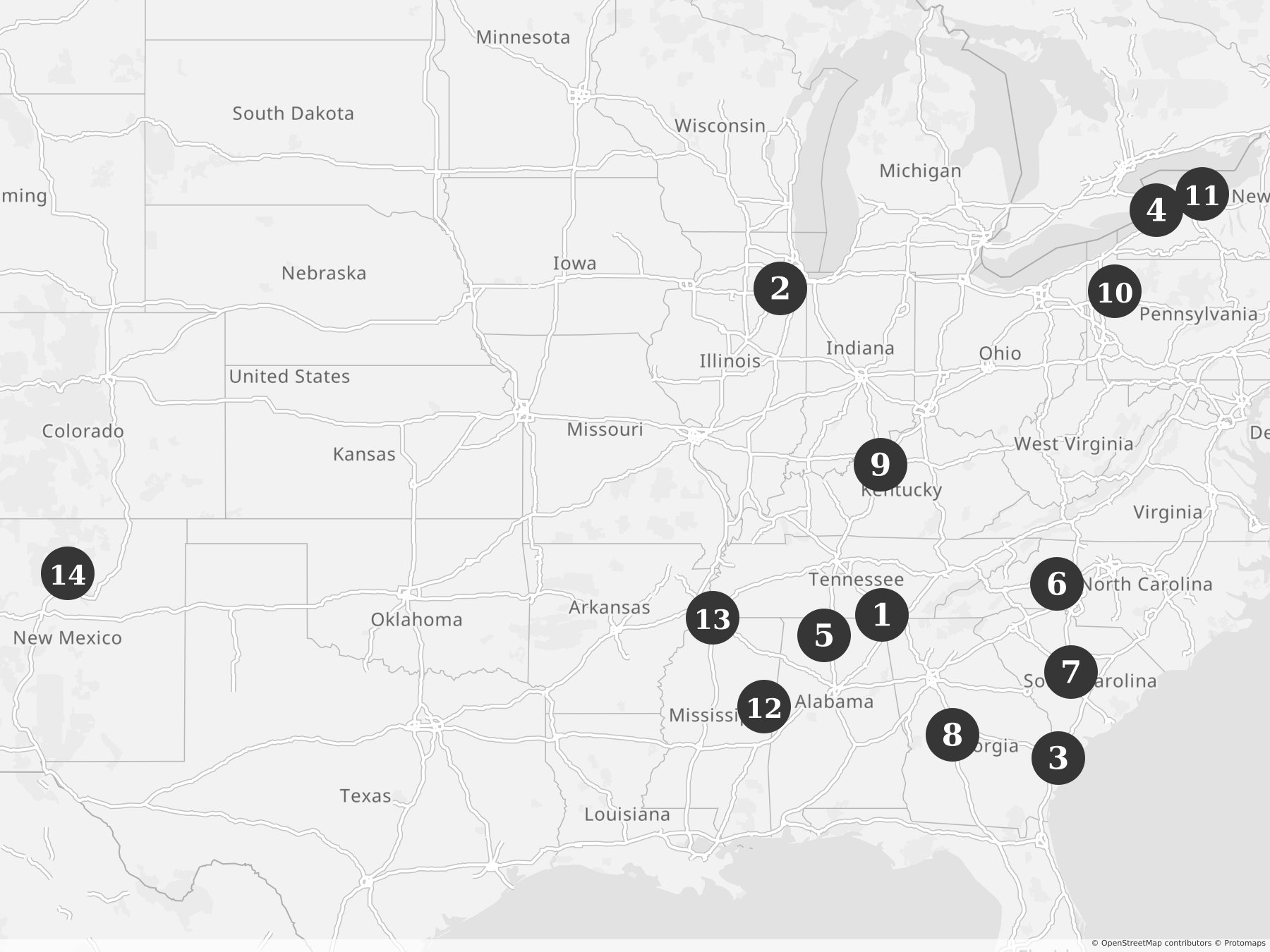
Valmont Industries Expands Jasper, Tennessee, Production Operations
10/25/2026
Hyundai Translead Expands Joliet, Illinois, Manufacturing Operations
10/25/2026
Mitsubishi Power America Expands Chatham County, Georgia, Operations
10/25/2026
Niagara Power Transformer Expands Buffalo, New York, Manufacturing Operations
10/25/2026
Nucor Expands Decatur, Alabama, Manufacturing Operations
10/24/2026
US Conec Plans Hickory, North Carolina, Manufacturing Operations
10/24/2026
Westinghouse Electric Company Expands Richland County, South Carolina, Advanced Nuclear Fuel Operations
10/24/2026
Blue Bird Corporation Expands Peach County, Georgia, Manufacturing Operations
10/24/2026
Silco Fire & Security Plans Bullitt County, Kentucky, Operations
10/24/2026
Conair Expands Franklin, Pennsylvania, Production Operations
10/23/2026
Phoenix Tailings Plans Rochester, New York, Rare Earth Mineral Separation Operations
10/22/2026
Barge Forest Products Expands Macon, Mississippi, Sawmill Operations
10/22/2026
ITT Goulds Pumps Plans Memphis, Tennessee, Manufacturing-Distribution Operations
10/22/2026
Discovery 2 Scale Plans Nambé Pueblo, New Mexico, Headquarters Operations
10/22/2026
Most Read
-
Top States for Doing Business in 2026: Where Competitive Advantage Becomes Project Certainty
Q3 2026
-
Why Great Sites Get Eliminated: The Critical Role of Information Presentation in Site Selection
Q3 2026
-
What Site Selectors Discuss After the Site Visit Ends
Q3 2026
-
2025’s Top States for Business: How the Winners Are Outpacing the Rest
Q3 2025
-
Space and Defense Are Becoming One Industrial Ecosystem
Q3 2026
-
Industrial Location Decisions Follow the Freight
Q3 2026
-
Economic Developer Role Shifting from Deal-Making to Systems Stewardship
Q1 2026