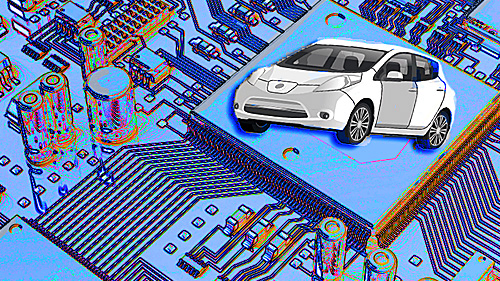
Expanding the EV Battery Pipeline
The need to produce EV batteries is presenting opportunities in lithium battery recycling facility expansions.
Q1 2023

Fortunately, the materials are highly recyclable. Benchmark Mineral Intelligence says that such scrap will account for about 78 percent of recyclable materials globally in 2025 and remain the main source for recyclers until the mid-2030s, when used batteries take over.
CleanTechnica reports that by 2050, battery recycling could supply 22–27 percent of lithium, 40–46 percent of nickel, and 45–52 percent of cobalt needed for electric vehicles in the U.S. It further states that currently the United States only has about 7 percent of the global recycling capacity while China has 80 percent.
Consequently, the race is on to collect and recycle used lithium-ion batteries, despite projections that it could take a decade or more before ample used lithium-ion batteries become available.
The race is on to collect and recycle used lithium-ion batteries, despite projections that it could take a decade or more before ample used lithium-ion batteries become available. In fact, in early 2019, the Argonne National Laboratory announced the launch of ReCell, the U.S. Department of Energy’s (DOE) Vehicle Technologies Office’s (VTO) first advanced battery recycling R&D center. The goal is to help enable the U.S. to compete in a global recycling industry and also reduce its reliance on foreign sources of battery materials.
The “Battery Belt”
Several companies are jumping into the market and making major investments. Among them are Li-Cycle and Redwood Materials, which is building a new battery materials and recycling facility on a 600-acres near Charleston, S.C. South Carolina is regarded as part of the “Battery Belt” corridor that extends from Michigan to Georgia.
Redwood operates a similar campus in northern Nevada where it recovers more than 95 percent of the rare metals from batteries in Volkswagen and Audi EVs per a partnership announced in July with Volkswagen Group of America. Redwood’s $3.5 billion Charleston investment will eventually employ 1,500 people and produce 100 GWh of cathode and anode components per year — enough components to supply more than one million EVs. The facility should be operational by the end of next year.
Several companies are jumping into the market and making major investments —Among them are Li-Cycle and Redwood Materials. Spoke & Hub Technologies™
Li-Cycle proprietary Spoke & Hub Technologies™ use a combination of safe mechanical size reduction and hydrometallurgical resource recovery specifically designed for lithium-ion battery recycling. Li-Cycle is developing its first commercial regional Hub facility in Rochester, N.Y., which is expected to be commissioned in 2023 and operate as a hydrometallurgical refinery facility. The Hub is designed to process approximately 90,000 tonnes of lithium-ion battery input annually or battery materials that are equivalent to 225,000 EVs per year. Once completed, it will be one of the world’s largest facilities and sources of recycled lithium.
The Hub facility complements Li-Cycle’s Rochester Spoke facility, completed in December 2020. Its first Spoke facility opened in early 2020 in Kingston, Ontario. In addition, the company opened two other lithium battery recycling facilities in 2022 in Tuscaloosa, Ala., and Gilbert, Ariz. Alabama was chosen to support needs in the Southeast; Arizona due to its proximity to California.
The company is also expanding into Europe with planned Spokes in Germany and Norway. By the end of 2023, the company expects to have a total of 65,000 tonnes per year of lithium-ion battery material processing capacity across its Spoke network in North America and Europe.
-
Karen Thuermer, Staff Editor, Area Development
Karen Thuermer is an Alexandria, VA-based freelance writer who has been covering economic development issues for over 25 years.


Recent Project Announcements
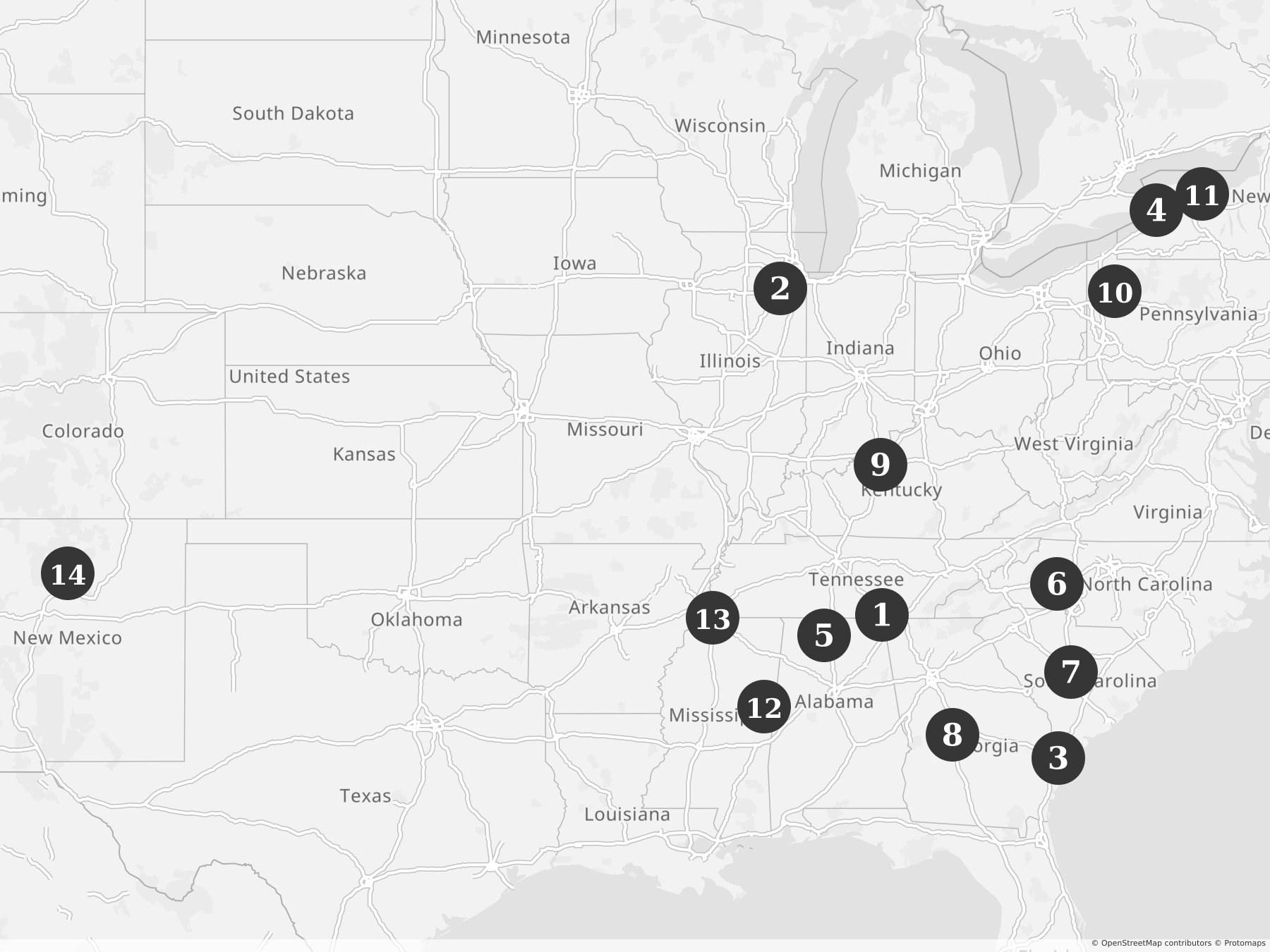
Valmont Industries Expands Jasper, Tennessee, Production Operations
10/25/2026
Hyundai Translead Expands Joliet, Illinois, Manufacturing Operations
10/25/2026
Mitsubishi Power America Expands Chatham County, Georgia, Operations
10/25/2026
Niagara Power Transformer Expands Buffalo, New York, Manufacturing Operations
10/25/2026
Nucor Expands Decatur, Alabama, Manufacturing Operations
10/24/2026
US Conec Plans Hickory, North Carolina, Manufacturing Operations
10/24/2026
Westinghouse Electric Company Expands Richland County, South Carolina, Advanced Nuclear Fuel Operations
10/24/2026
Blue Bird Corporation Expands Peach County, Georgia, Manufacturing Operations
10/24/2026
Silco Fire & Security Plans Bullitt County, Kentucky, Operations
10/24/2026
Conair Expands Franklin, Pennsylvania, Production Operations
10/23/2026
Phoenix Tailings Plans Rochester, New York, Rare Earth Mineral Separation Operations
10/22/2026
Barge Forest Products Expands Macon, Mississippi, Sawmill Operations
10/22/2026
ITT Goulds Pumps Plans Memphis, Tennessee, Manufacturing-Distribution Operations
10/22/2026
Discovery 2 Scale Plans Nambé Pueblo, New Mexico, Headquarters Operations
10/22/2026
Most Read
-
Top States for Doing Business in 2026: Where Competitive Advantage Becomes Project Certainty
Q3 2026
-
Why Great Sites Get Eliminated: The Critical Role of Information Presentation in Site Selection
Q3 2026
-
What Site Selectors Discuss After the Site Visit Ends
Q3 2026
-
2025’s Top States for Business: How the Winners Are Outpacing the Rest
Q3 2025
-
Space and Defense Are Becoming One Industrial Ecosystem
Q3 2026
-
Industrial Location Decisions Follow the Freight
Q3 2026
-
Economic Developer Role Shifting from Deal-Making to Systems Stewardship
Q1 2026