What in the World? FDI Trends to Watch in 2023
Despite the economic shocks of the last few years, companies are continuing to invest in the U.S. market.
Q1 2023
M&A remains a strong option for investors, despite being both costly & competitive.
The nature and volume of investment deals changed in 2021 and 2022. According to recent research by the Organization for Economic Co-operation and Development (OECD), there was a 76% increase in the completed deal values in advanced economies compared to 2020 levels. These levels were 50% higher than pre-pandemic levels, signifying investors are more willing to enter the U.S. market through M&A, even if it comes at a higher price and is through a more competitive process.
Infrastructure bills encouraged more sustainable and greenfield investments.
Congress has passed three major bills since March of 2021 that target sustainable, American-made products, each including incentives and tax credits for U.S. manufacturing and assembly. With these new federal motivations at play, it’s no surprise we saw a 32% increase in the number of greenfield projects in 2021, most of which were in the manufacturing, services, and infrastructure sectors. On the other hand, these bills disqualified highly polluting projects — i.e., extractive industries like coal, oil, and gas saw a 96% drop in new investments.
Congress has passed three major bills since March of 2021 that target sustainable, American-made products, each including incentives and tax credits for U.S. manufacturing and assembly. Japan, Germany, and Canada remained our strongest sources of FDI, while Ireland, South Korea, and Sweden emerged as larger sources of investment.
Specific to the United States, Japan was cited as the largest source of inbound FDI in 2021, with a 14.5% share. This is unsurprising as Japan has been a major trade partner for a long time; however, travel to and from Japan has been severely restricted in the past years throughout the COVID pandemic, which speaks to the strength of the relationship between the two countries.
Japan was followed by Germany (12.8%), Canada (12.2%), and the UK (11.4%). Notably, these four countries made up more than half of inbound investment into the United States. Ireland surpassed France in the rankings this year, edging in at the fifth spot. Interestingly, China joined the top fifteen rankings in 2021, coming in as our fifteenth-largest source of FDI. Meanwhile, Singapore exited the top fifteen rankings.
What is influencing FDI?
Many economic shocks and crises have occurred around the world since 2020, including Brexit, the Covid-19 pandemic, and the Russia/Ukraine war. There were various U.S. economic policies put in place in response to these shocks, including Covid-19 relief and stimulus checks, America’s departure from the Paris Climate Accord, the American Rescue Plan, and the recent infrastructure bills.
Specific to the United States, Japan was cited as the largest source of inbound FDI in 2021, with a 14.5% share. So, now what? After record-low and now increasingly high interest rates, supply chain issues, labor shortages, and energy and gas price increases worldwide, we’re left with a lot of uncertainty. Many corporations have struggled to keep up as they’re faced with these issues. Some corporations have responded by localizing and/or diversifying production, while continuing to reinvest earnings and expand in the U.S. market.
What should foreign companies consider when investing in the U.S. in 2023?
Sites and buildings: Ready sites and buildings are scarcer than ever before — particularly sizable sites. Taking a responsible approach to site selection and performing necessary due diligence from scratch can take a lot of time — time that many companies don’t have or haven’t allocated when beginning project planning. With a “buyer beware” approach in the United States when purchasing real estate, it’s important for companies to consider the small (and shrinking) pool of sites and buildings with all due diligence completed, particularly where there are specific or challenging site requirements.
Government engagement: Many companies fear the regulatory environment in the U.S. Thoughtful engagement with federal, state, and local governments is a key component to the successful execution of a project. By strategically collaborating with all levels of government and working hand in hand, companies can expect more seamless permitting and incentive opportunities. Moreover, by working with professionals who have a solid understanding of a changing landscape related to business and tax filings, necessary permits, and state and federal laws, companies can avoid many pitfalls upfront.
Thoughtful engagement with federal, state, and local governments is a key component to the successful execution of a project. Labor challenges: Post-COVID, many communities around the world are struggling to build a ready workforce for projects. This is especially true in the U.S. where many regions have significantly more job openings than employees to fill them. Even companies with relatively small hiring requirements must consider labor markets and prevailing wages in their region, as companies are competing heavily to recruit and retain manufacturing employees.
What’s the verdict?
Despite some obstacles, foreign direct investment is booming. When considering federal programs and a renewed focus on rebuilding the domestic economy after COVID, the time is right for companies to consider taking a thoughtful, diligent approach to investing in the US.
-
Morgan Crapps, Principal, Parker Poe Consulting
Morgan Crapps works with corporate clients to find optimal locations for their entry, expansion, or relocation in North America. She also negotiates and structures incentive agreements with state and local governments. Morgan frequently advises companies on manufacturing, distribution, office, and development projects and has significant experience working with global businesses to facilitate foreign direct investment (FDI) in the United States. Morgan previously worked for a midsize law firm as an attorney in the economic development and international arenas, where her practice focused on tax and incentives. Prior to that, Morgan worked for a U.S. state's Department of Commerce, both as a project manager in global business development and as senior manager of international strategy and trade.

Recent Project Announcements
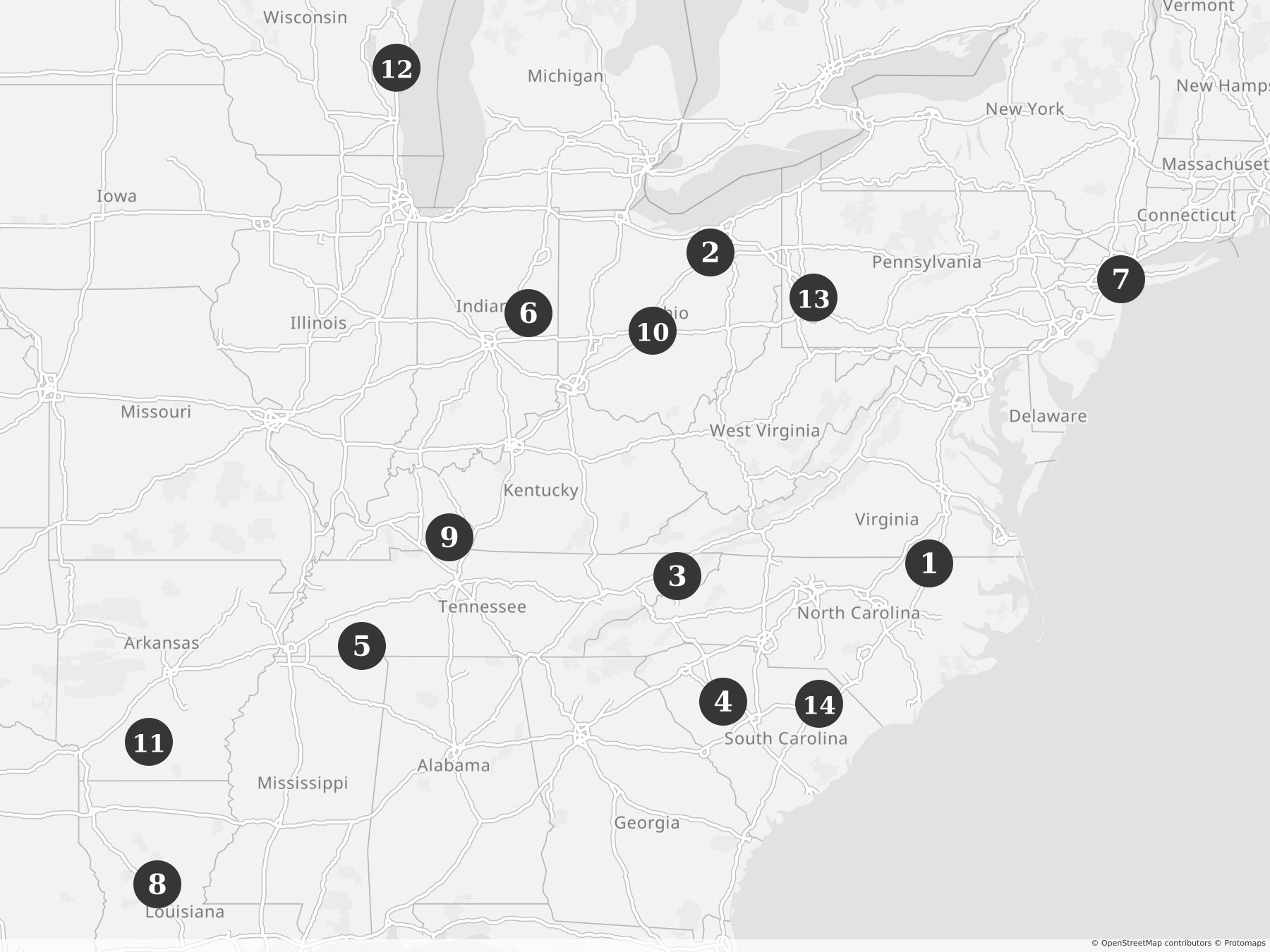
Halifax Linen Service Expands Roanoke Rapids. North Carolina, Operations
11/10/2026
Spray Products Corporation Expands Medina, Ohio, Operations
11/08/2026
BWXT Expands Jonesborough, Tennessee, Manufacturing Operations
11/08/2026
Germany-Based VITREUS USA Plans Newberry County, South Carolina, Production Operations
11/08/2026
ABB Relocates-Expands Selmer, Tennessee, Manufacturing Operations
11/08/2026
Astemo Expands Muncie, Indiana, Manufacturing Operations
11/08/2026
Grow Therapy Expands New York City Operations
11/05/2026
Robinson Carbon Plans Alenandria, Louisiana, Biochar Operations
11/05/2026
ClearFlow Metalworks Plans Logan County, Kentucky, Aluminum Manufacturing Operations
11/03/2026
Forgent Power Solutions Plans Columbus, Ohio, Operations
11/03/2026
Lockheed Martin Expands Camden, Arkansas, Production Operations
11/03/2026
Sartori Company Expands Plymouth, Wisconsin, Production Operations
11/02/2026
Tronix3D Expands Pittsburgh, Pennsylvania, Manufacturing Operations
11/02/2026
South Korea-Based Hwasung Group Plans Florence, South Carolina, Manufacturing Operations
11/02/2026
Most Read
-
Top States for Doing Business in 2026: Where Competitive Advantage Becomes Project Certainty
Q3 2026
-
Why Great Sites Get Eliminated: The Critical Role of Information Presentation in Site Selection
Q3 2026
-
2025’s Top States for Business: How the Winners Are Outpacing the Rest
Q3 2025
-
Economic Developer Role Shifting from Deal-Making to Systems Stewardship
Q1 2026
-
New Markets Tax Credits Are Now a Permanent Part of the Deal Stack
Q3 2026
-
Industrial Location Decisions Follow the Freight
Q3 2026
-
Reshoring Gains Ground in Defense and Advanced Manufacturing
Q3 2026