6 Key Themes Driving The U.S. Industrial Real Estate Resurgence
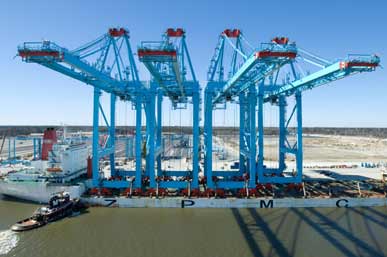
The revival of U.S. manufacturing, the re-shoring trend, a demand for "big-box" space, and the growth of e-commerce are increasing demand for and investment in distribution facilities.
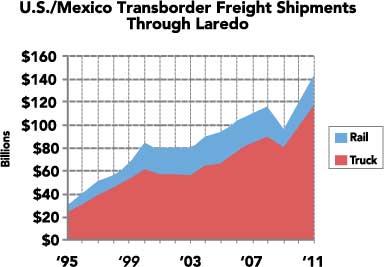
Intermodal traffic between the U.S. and Mexico is growing rapidly, helping to realize the promises of NAFTA after nearly two decades.
Although many distribution centers look the same from the outside, the processes that go on inside need to be uniquely configured for process optimization.
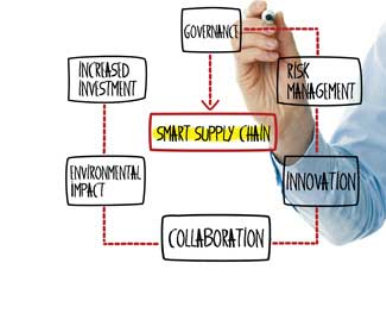
Companies are realizing that making their supply chain more sustainable will help their bottom line as well as encourage collaboration, drive innovation, and reduce risk.
Companies choosing a location where PPPs are in place can benefit from the public and private sectors commitment to economic growth.
Many cities are growing faster than their suburban counterparts, as companies mine their skilled work forces, affordable property, and financial inducements.
In addition to its lower labor costs, Mexico's proximity to the Americas and its stable, transparent operating environment are making it a location of choice for many U.S. companies.
Contractors who engage in open communication and rigorous problem-solving and owners who view their contractors as trusted advisors are much more likely to achieve successful projects.
A company can recoup some of the costs of "going green" through Renewable Energy Credits as well as Investment Tax Credits, among others.
Moving consistently makes top-10 lists when it comes to the most stressful life events, and moving can be even more challenging for companies than it is for individuals and families.
Over the past 12 months, the Mountain States' economies have been driven by a mixture of modern and emerging sectors - such as IT - and old standbys like dairy, which also opened the door for expansion - even as the region braced to learn the economic impact of devastating fires that occurred in June and July.
As the Mid-Atlantic States slowly plod toward recovery, each state is concentrating efforts on differentiating from the pack.
Foreign direct investment is becoming a bigger economic engine for growth throughout the South Atlantic States.
New England touts a long history of tradition, independence, strong character, and academics. The slow but evident economic recovery of the New England States reflects the persistent determination of its citizens and their resilience in the face of adversity.
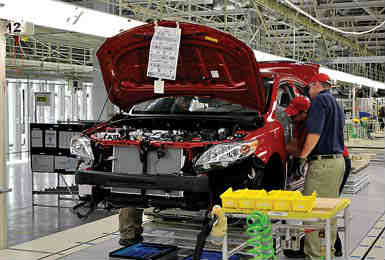
Major automakers such as Ford, General Motors, Toyota, and Volkswagen are just a few of the players that have a strong and growing presence in the South. As the auto industry continues to recover, that formidable industry cluster is fueling growth across Alabama, Arkansas, Kentucky, Louisiana, Mississippi, and Tennessee.
Arizona, New Mexico, Oklahoma, and Texas have generated nearly 280,000 new jobs over the past 12 months. Texas is responsible for producing the lion's share of those new jobs.
Natural resources, particularly in the area of energy, serve as the lynchpin for the Pacific States, where hydropower is gaining in importance, and oil and gold exploration also offer major opportunities.
While manufacturing has always been a part of the region's history, a report entitled "Midwest Destiny" - by the Federal Reserve Bank of Chicago - noted that diversification has spurred other sectors, such as tourism, business services, and finance.
Boasting low tax rates and aggressive recruitment programs, the Plains States point to major expansion projects as evidence of their economic health over the past year.
The editor of Area Development magazine recently spoke with David Trebing, General Manager of State and Local Relations at Daimler AG, about his company's experience and his advice for working with economic developers.
As the cost of manufacturing overseas increases, the re-shoring of American manufacturing in the tech industries would not only shorten the supply chain, but also reduce its impact on the environment, while providing Americans with well-paying jobs.
Choosing the best operating, maintenance, and service approach can mean the difference between a continuously high-performing building that is an organizational asset and one that degrades in overall performance and occupant satisfaction, and costs more to operate over time.
A series of increasingly demanding Navy biofuel tests culminated in July 2012 with a task force of U.S. Navy ships and aircraft operating off the West Coast powered by biofuels.
President Barack Obama overcame Republican "Tea Party" opposition to win a big victory over congressional conservatives in a bill to not only reauthorize the Export-Import Bank but to increase its lending cap from $100 billion to $140 billion.
Match-making business by-products with potential users can be a profitable sustainable strategy for all involved.
As OEMs put the squeeze on, and global markets weaken, suppliers take steps to protect themselves and meet price demands, ensuring survival in a flat or declining market.
Savvy managers look for opportunities to profit from the downturn with careful facilities management and strategic positioning business operations.
Receive quarterly issues of Area Development Magazine at no charge for qualified executives and consultants to industry.
Corporate Exec Survey Results
Leading Metro Locations
Top States for Business
Annual Econdev Awards