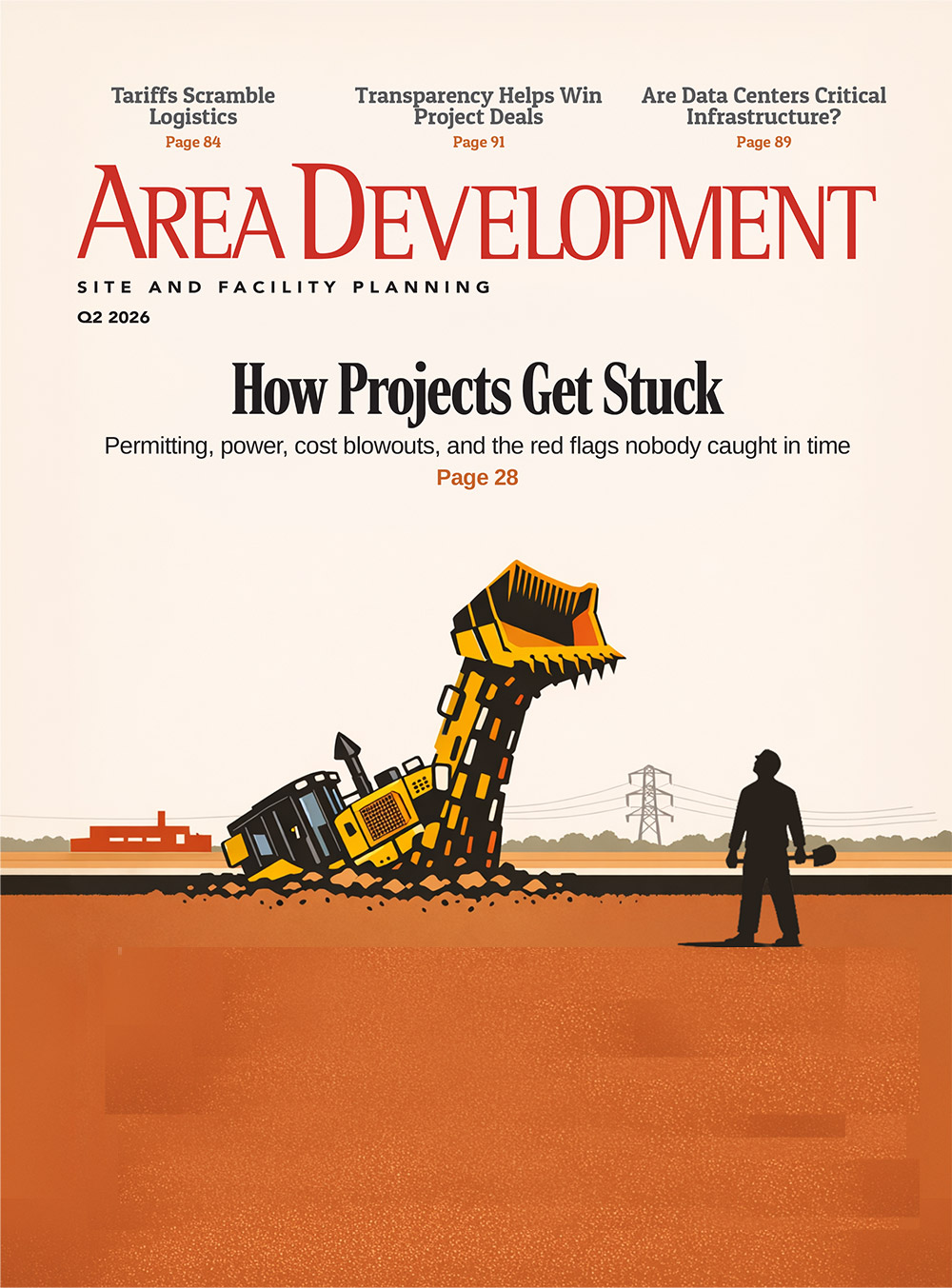
Episode 14 of the Site & Facility Planning Podcast delivers a strategic overview of the forces shaping capital investment decisions — from Mississippi’s infrastructure-first approach to the growing importance of workforce pipelines, the realities behind stalled projects, and the implications of accelerating Korean investment across the U.S. Four conversations from the field, all pointing in the same direction...
The latest episode of the Area Development Site Selection and Facility Planning podcast brings together four conversations that, taken together, offer a clear picture of where the industry is right now: what's working, what's slowing projects down, and where the next wave of investment is coming from.
Mississippi's Competitive Formula
The episode opens at SelectUSA, where Area Development Editor Andy Greiner sat down with Mississippi Governor Tate Reeves. Mississippi just earned its second consecutive Gold Shovel in Area Development's annual State Shovel Awards — recognition that reflects the volume and quality of capital investment projects the state has attracted.
Reeves points to three structural advantages that have driven $85 billion in announced investment since he took office: power availability, workforce development through the Accelerate Mississippi program, and a deliberate upfront investment in site readiness — water, sewer, permitting, and infrastructure already in place across 30 shovel-ready sites.
The competitive advantage Reeves returns to most often is speed. "We pride ourselves on being the place in America to get a company from spending money to making money," he says. The state has also moved into early-stage permitting with the Army Corps of Engineers and other regulators, compressing timelines that stop projects elsewhere.
5
On workforce, Reeves describes Accelerate Mississippi as deliberately private-sector-run — board members from industry, not government — to keep training aligned to actual hiring needs rather than program legacy. He also highlights K–12 gains: Mississippi has moved from 50th to 16th in fourth-grade math nationally, and high school graduation rates have climbed from 72.5 percent to over 90 percent. "Today Mississippi has the smartest fourth graders in the southeastern United States," he says, "which means in ten years we're going to have the smartest workforce in the southeastern United States."
Skilled Trades Pipeline: Which States Are Actually Building the Workforce
Josh Wright, Chief Economist at Lightcast, joins the episode to walk through the Area Development Skilled Trades Pipeline Ranking — a collaboration between Area Development and Lightcast released this year. The ranking moves past current employment counts to assess which states are building the pipeline of skilled trades and engineering-tech workers that manufacturers will need five to ten years from now.
What surprised Wright most: the depth of Southeast strength, and the relative underperformance of Texas and Florida compared to expectations. States like Indiana, Wisconsin, and Kansas also ranked well — evidence that some traditional manufacturing states have successfully adapted their workforce infrastructure.
The ranking uses location quotient — a per-capita density measure — to assess how heavily each state's educational and training system is oriented toward skilled trades versus four-year degree pathways. Wright notes that workforce availability has now leapfrogged energy cost and availability as the single most important site selection factor in Area Development's annual survey of site selectors — a significant shift, and one the pipeline ranking was designed to track.
Companies know what they want to build. What’s slowing them down is everything that has to be in place first.
Wright is careful about how to use the data: it's an indicator, not a verdict. Local labor markets cross state lines, and the ranking doesn't capture wages, demographic composition, or commuting patterns. But it offers a defensible starting point for understanding which states are orienting their systems toward the jobs that are actually being created.
Why Projects Stall: Five Answers From the Field
At Area Development's 2026 workshop in Charlotte, five consultants and developers were asked the same question: what's the biggest reason projects stall right now? The answers came from different vantage points — real estate advisory, legal, construction, supply chain, and foreign direct investment — but they add up to a coherent picture.
Permitting delays and local approval processes that haven't kept pace with the speed of corporate decision-making (Alicia Janesko Hutchings, Cresa). Construction cost sticker shock driven by inflation in materials and labor, often because companies are working from outdated benchmarks (Chris Urchell, Baker Tilly). The complexity of building large-scale infrastructure in rural areas where data center and industrial campuses are increasingly being sited (Courtland Robinson, Brasfield & Gorrie). Project financing that doesn't pencil out at current interest rates and capital costs, leading to delays of six months or more (David MacNamara, Womble Bond Dickinson). Power — not just availability, but the lead times for switching equipment and transformers needed to support AI and automation-intensive facilities (J.C. Renshaw, Savills). And for foreign-direct-investment projects specifically: tariff and immigration uncertainty (Sven Gerzer, Parker Poe Consulting).
The through line: speed and certainty. Companies know what they want to build. What's slowing them down is everything that has to be in place before the first shovel goes in.
Korean companies aren’t waiting — uncertainty in the global supply chain is the reason they’re moving.
Korean Investment Is Accelerating — and the Southeast Is Winning It
The episode closes with Sydney Chun, who leads the Global Korea Desk at Cushman & Wakefield in Seoul. Chun was at SelectUSA this year for what she described as the largest Korean contingent the conference has ever seen — and a group that came to make deals, not just attend panels.
Chun explains how Korean conglomerates approach U.S. site decisions differently than many domestic companies. Site selection is integrated into the business case from the beginning — not a downstream real estate decision, but part of the C-suite financial model that includes power procurement, infrastructure costs, and milestone-based incentive structures. Korean companies build to milestones. If power can't be delivered on schedule, they can't staff the facility on schedule, which means they can't qualify for the incentives they committed to — a clawback risk that weighs heavily in their planning.
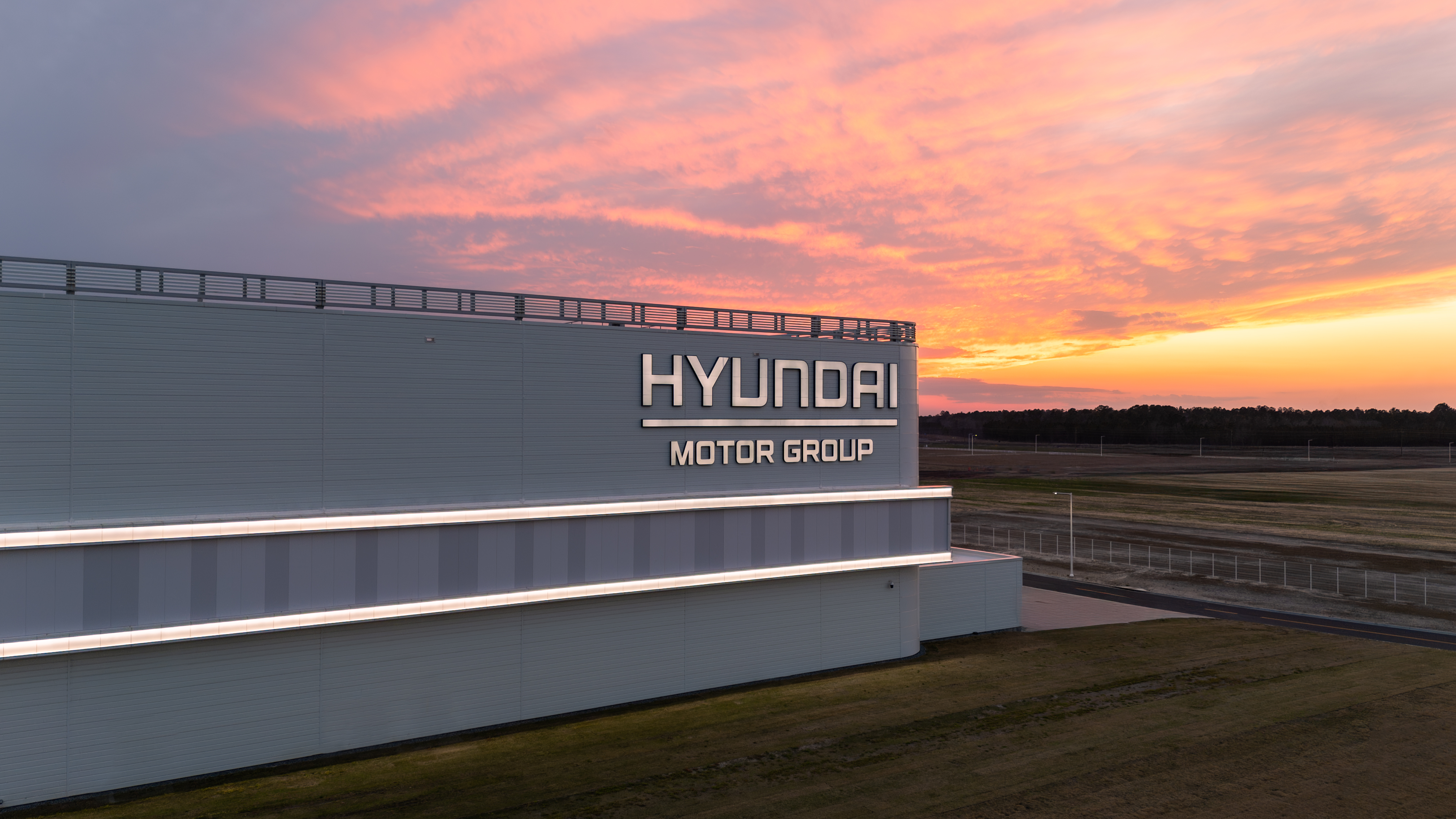
The anchors — Hyundai, and a cluster of major Korean manufacturers — have already landed primarily in Ohio, Tennessee, Kentucky, Georgia, and Texas. What Chun is watching now is the supplier wave: smaller companies, in larger numbers, that will follow the anchors and cluster nearby for logistics reasons. That second and third wave, she says, is where the Southeast will continue to capture investment.
The broader driver, Chun argues, is supply chain fragility. Korean companies have studied the geopolitical risk, internalized it, and concluded that proximity to their U.S. customers is a strategic necessity, not just an efficiency play. At a moment when much of SelectUSA was discussing tariff uncertainty and a wait-and-see mood, Chun's observation is pointed: Korean companies aren't waiting. The uncertainty in the global supply chain is itself the reason they're moving.