
Editor's Note:This article was paid for and written by the WEDC and approved by Area Development.
Wisconsin’s emergence as a national biohealth and biopharmaceutical manufacturing leader is no accident. Through strategic investment, research collaboration, and a long-standing commitment to workforce development, the state is building an ecosystem designed to support the future of healthcare innovation, from breakthrough discovery to large-scale manufacturing.
Today, Wisconsin’s biohealth industry contributes approximately $37.7 billion to the state’s economy each year and supports more than 58,000 jobs. A state once known primarily for its legacy manufacturing strength is now increasingly recognized for its leadership in personalized medicine, diagnostics, medical device production, and biopharmaceutical innovation.
That momentum accelerated in 2023 when Wisconsin earned federal recognition as a Regional Technology Hub, reinforcing the state’s growing influence in biohealth and biotechnology. The designation recognized Wisconsin’s unique combination of research excellence, manufacturing expertise, and collaborative infrastructure—a formula that continues to attract both global industry leaders and emerging startups.
At the center of Wisconsin’s success is its deeply integrated approach to innovation. Research institutions, private industry, economic development organizations, and government leaders work together to move discoveries from the laboratory to commercial application faster and more efficiently.
Wisconsin is uniquely positioned to lead the future of biohealth innovation.
The University of Wisconsin-Madison remains one of the state’s most powerful innovation engines. Long regarded as a premier research institution, UW-Madison has helped drive advances in bioscience, data-driven healthcare, and precision medicine through initiatives such as the Wisconsin Health Data Hub and the state’s Biohealth Tech Hub. These efforts are creating new opportunities for companies developing next-generation therapies, diagnostics and manufacturing technologies.
Wisconsin’s manufacturing heritage also provides a critical competitive advantage. Wisconsin suppliers provide products worth $7.8 billion to the state’s biohealth industry annually—an indicator of the broad and deep supply chain that exists for biohealth companies in Wisconsin. Employment among medical equipment suppliers has risen steadily in recent years, underscoring the sector’s continued growth trajectory.
That combination of research and production capability has drawn major investment from some of the world’s leading life sciences companies.
$37.7B
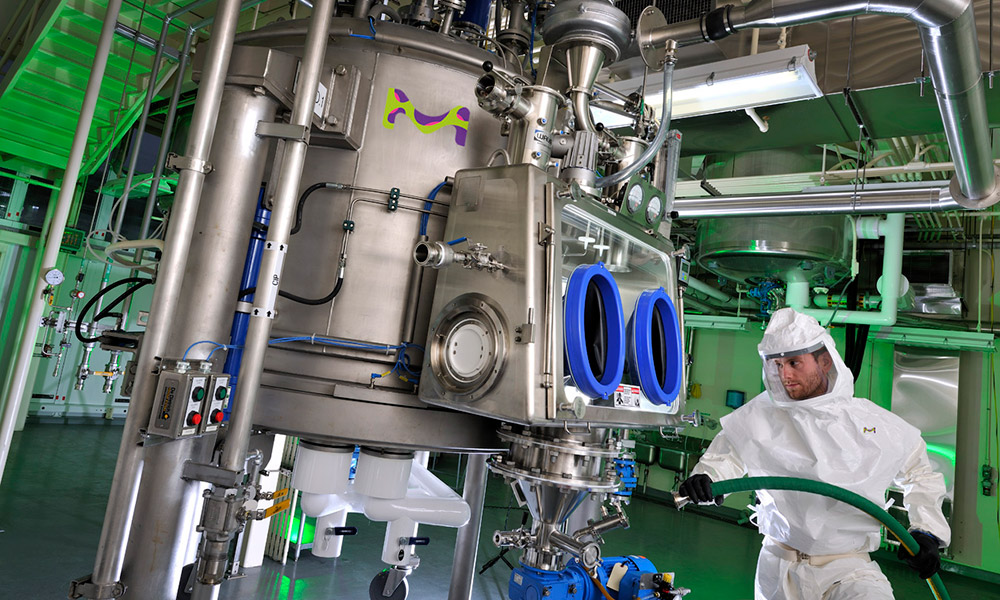
In Madison, global biotech company Catalent announced a $45 million expansion designed to strengthen the company’s biologics manufacturing capabilities. In southeastern Wisconsin, Eli Lilly and Co. is investing $4 billion into a major expansion in Kenosha County to increase capacity within its global injectable drug manufacturing network. Meanwhile, Abbott’s acquisition of Madison-based Exact Sciences further highlighted the state’s prominence in diagnostics and precision medicine innovation.
However, Wisconsin’s biohealth story extends beyond large-scale corporate investment. The state has cultivated an environment where startups, entrepreneurs, and midsize companies can grow alongside established industry leaders. That collaborative culture has become one of Wisconsin’s defining characteristics and is a key reason more than 2,200 biohealth companies now operate across the state.
Companies here have access to world-class talent, cutting-edge research, and the infrastructure needed to grow and compete globally.
Organizations such as BioForward play a major role in sustaining that ecosystem. As Wisconsin’s leading biohealth industry association, BioForward helps connect companies, researchers, educators, and policymakers while supporting the growth of the Wisconsin Biohealth Tech Hub initiative.
“Wisconsin is uniquely positioned to lead the future of biohealth innovation because of the strong partnerships between our research institutions, manufacturers, and workforce development organizations,” said John W. Miller, CEO of the Wisconsin Economic Development Corporation. “Companies here have access to world-class talent, cutting-edge research, and the infrastructure needed to grow and compete globally.”
Talent development remains another foundational pillar of Wisconsin’s strategy. For companies evaluating locations for expansion or relocation, access to a skilled workforce is often one of the most important considerations. Wisconsin has spent decades building that pipeline.
The state was the first in the nation to establish a technical college system, and workforce readiness continues to be a top priority. Wisconsin’s highly integrated technical college network now serves nearly 275,000 students across 16 colleges and nearly 50 campuses statewide, providing hands-on training aligned with industry needs.
For an industry increasingly focused on resilience, collaboration, and speed to market, Wisconsin offers a model for alignment.
That investment begins well before students enter college. Wisconsin has committed more than $5.5 million toward K-12 fabrication laboratories that provide hands-on science, technology, engineering, art and mathematics education. These programs expose students to advanced manufacturing and engineering concepts early, helping cultivate the next generation of biohealth and biopharma talent.
As the life sciences industry continues to evolve, Wisconsin is positioning itself not only as a center for innovation, but also as a destination where companies can successfully scale manufacturing, access world-class research, and develop the workforce needed for long-term growth.
For an industry increasingly focused on resilience, collaboration, and speed to market, Wisconsin offers a model for how states can successfully align education, research, and manufacturing to support the future of biohealth.