Editor's Note: This is a paid advertisement that was written by Area Development on behalf of Tennessee Department of Economic and Community Development.
Tennessee has always had a gift for making outsiders feel at home. It's a quality embedded in the culture—warm, direct, and built on handshakes that mean something. Over the past four decades, that same quality has quietly made Tennessee one of the most sought-after destinations for Foreign Direct Investment in the United States.
The story starts, as so many Tennessee success stories do, with a single landmark moment. When Nissan chose Smyrna for its first U.S. manufacturing facility in 1980, it wasn't obvious that the decision would set in motion a generational shift in how the world views this state. But it did. Today, Tennessee doesn't just attract international companies—it competes for them at the highest level and consistently wins.
The Numbers Tell a Compelling Story
In 2025, Tennessee committed more than 8,000 new jobs, and approximately half of those came from international investment. Of the $11.4 billion invested in the state last year, 70 percent originated from foreign-based companies. That figure—70 percent—is not a rounding error. It reflects a fundamental shift in Tennessee's economic identity.
Since Governor Bill Lee took office in January 2019, the state has landed 197 FDI projects representing nearly 28,000 job commitments and more than $23 billion in capital investment. In 2025 alone, 45 percent of all landed projects were FDI projects, the highest annual share in state history. At $7.8 billion, 2025 also marks the highest single-year total for capital invested by foreign-based companies in Tennessee's history.
The companies choosing Tennessee aren’t passing through. They’re building here.
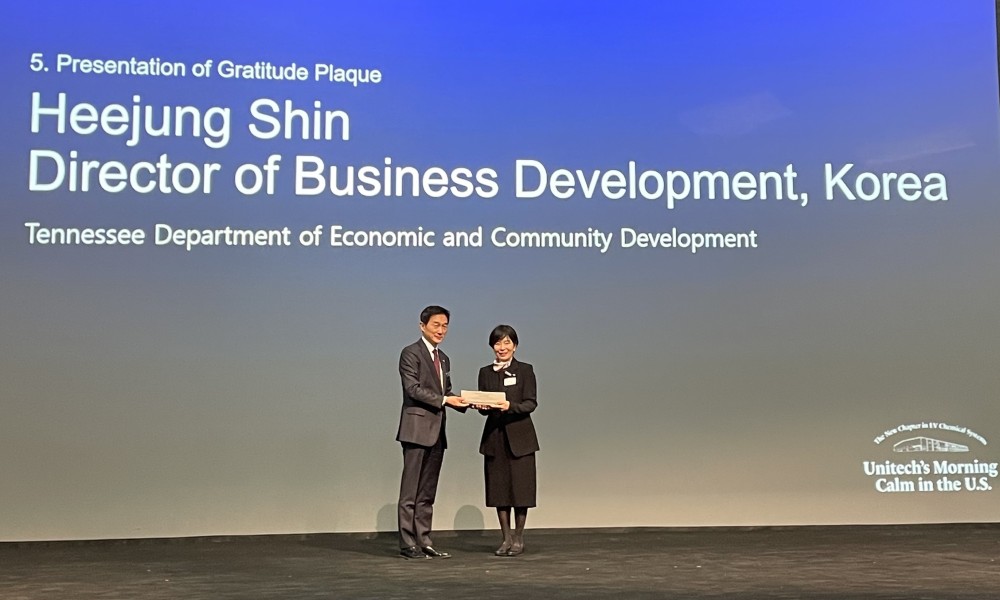
Japan remains the state's all-time leading FDI partner, with 207 Japanese businesses employing more than 50,000 Tennesseans and representing over $21 billion in investment. But since 2019, South Korea has emerged as the state's top partner in terms of both job creation and capital investment—approximately $11.5 billion and nearly 5,000 jobs across 20 projects. That relationship was on full display in late 2025, when Hyosung HICO announced its second expansion in six months at its Memphis headquarters, adding 240 jobs and $157 million in investment. The facility is now one of the largest domestic power transformer manufacturing operations in the country.
Competing in Critical Industries
Tennessee's economic development strategy is deliberately focused on sectors that carry national significance: aerospace and defense, pharmaceuticals and biotech, nuclear energy, and critical minerals. These aren't merely high-growth industries—they are industries that matter to national security and long-term economic resilience.
$7.8B
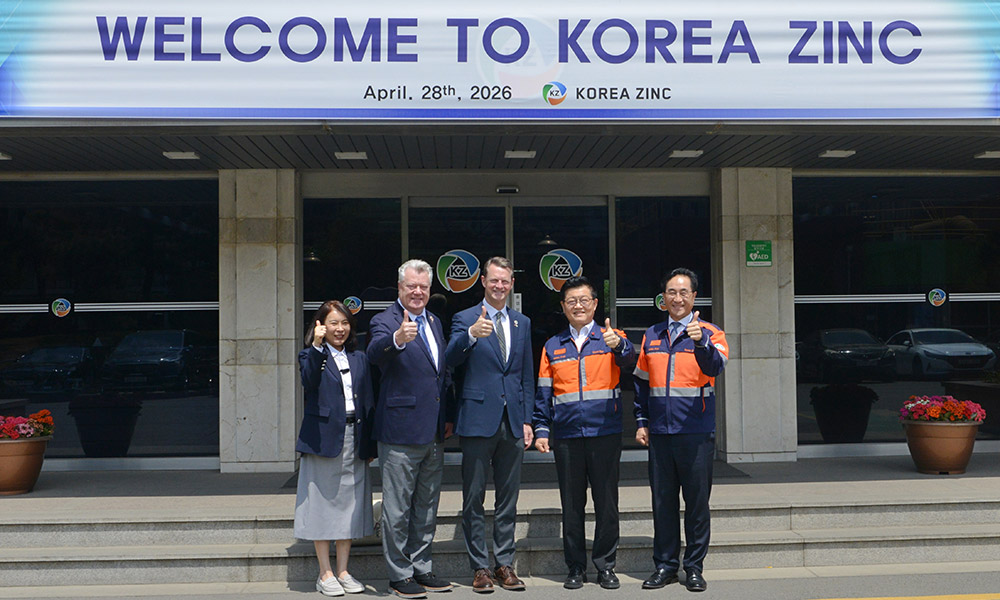
That focus is producing historic results. Korea Zinc, the world's leading nonferrous metal manufacturer, announced a $6.6 billion investment to locate its first U.S. operations in Tennessee—the single largest corporate investment in state history, surpassing the $4.5 billion commitment made by French nuclear company Orano USA just one year earlier. Orano's Oak Ridge facility, designed to produce enriched uranium for U.S. reactors, represents exactly the kind of investment that will define Tennessee's economic future. The company's CEO noted that Tennessee's proactive approach—developing a nuclear workforce pipeline and building out the regional supply chain—was central to the site selection decision.
Tennessee’s economic development strategy is deliberately focused on sectors that carry national significance.
On the defense side, Barrett Firearms Manufacturing announced a $76.4 million investment in a new Manufacturing & Technology Campus in Murfreesboro, which will serve as the global manufacturing hub for its Australian parent company, NIOA Group. And Sinova Global, a Canadian company, selected Lake County—Tennessee's most economically distressed county—for a $150 million silicon metal refining plant, demonstrating that the state's FDI reach extends well beyond its major metro areas.
A Partnership Built to Last
What distinguishes Tennessee's approach to FDI is the depth of the relationships it builds with international partners. When Nissha Medical Technologies, a subsidiary of Kyoto-based Nissha Co., Ltd., chose to relocate its engineering operations to Vanderbilt University's campus, it wasn't simply a real estate transaction. It was the formalization of an ongoing research collaboration with faculty and an investment in a talent pipeline that will generate returns for years.
That's the model Tennessee is betting on: not just locations, but partnerships. Not just jobs, but ecosystems. The companies choosing Tennessee aren't passing through. They're building here—and increasingly, they're expanding here too.
In a global competition for investment, Tennessee is no longer just a contender. It's become a destination of choice.