
There is a moment in almost every economic development project that nobody wants to talk about: the moment when the celebration fades and reality sets in. The announcement has been made, the community is excited, and then something surfaces — a $250,000 tap fee, a privilege tax buried in a local ordinance, a road that cannot handle industrial truck traffic. By that point, the damage is done. Trust erodes. Companies question their decision. Relationships built over months of work begin to sour.
The antidote is straightforward: disclose. Early, fully, and with the intent to help solve problems rather than conceal them. As Kofi Annan observed, knowledge is power and information is liberating. The communities that consistently win projects — and keep companies satisfied long after the ribbon-cutting — have made transparency a discipline, not an afterthought.
Transparency as a Differentiator
When companies are evaluating multiple locations, local economic developers hold a genuine informational advantage. They know the quirks, the fees, the permitting timelines, and the infrastructure gaps that no outside research will uncover. The question is whether to deploy that knowledge proactively or wait and hope nothing inconvenient surfaces on its own.
The fear is that disclosure will knock a site off the list. In practice, the opposite tends to happen. When a community surfaces a known issue and comes prepared to help solve it, it demonstrates something more valuable than a perfect site: it shows what kind of partner that community will be over the long life of a project. There is a recognizable cadence to genuine partnership — quick responses, proactive updates, a willingness to engage — and companies and their consultants notice it immediately. Being transparent also naturally invites scrutiny of whether the other communities on the list are being equally forthcoming.
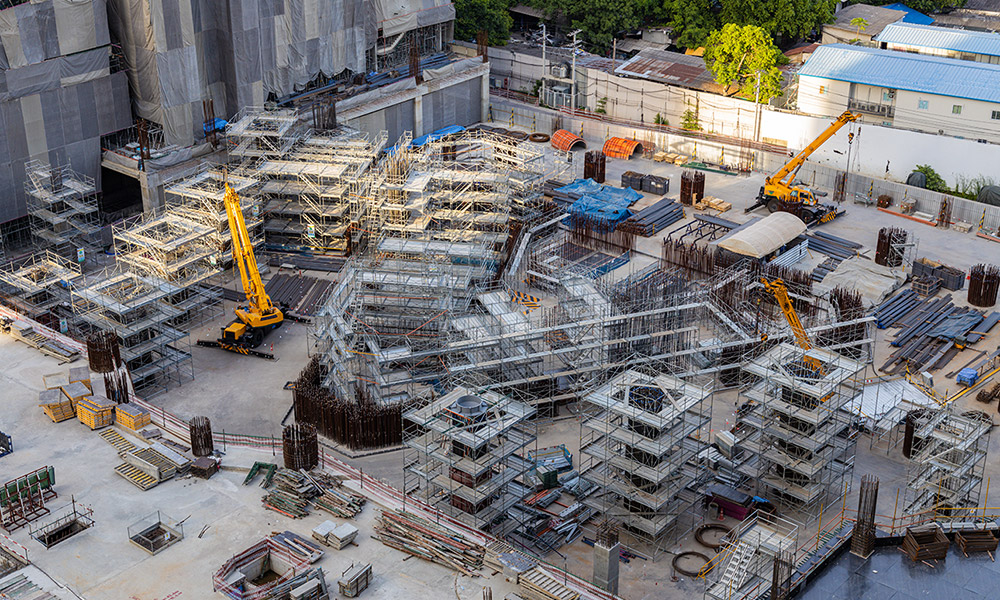
The moment when reality sets in is when trust is either reinforced or lost.
A community with real challenges that is visibly working to address them will often out-compete a community with fewer problems that is not engaged. Disclose with the intent to assist, and you become a partner rather than just a location on a shortlist.
The Fees Nobody Mentions Until It’s Too Late
Local fee structures are among the most common sources of late-stage surprise, and they are often material to project budgets. They tend to be policies tucked inside ordinances or utility rate schedules that outside consultants may not think to ask about — but that you almost certainly know.
Impact fees are a prime example. In Utah, for example, there is a mandatory building permit fee of 1 percent that applies in addition to often significant one-time impact fees authorized in some municipalities that, when combined, can exceed 1 percent of project new development costs — on a large project, these fees accumulates quickly. Privilege taxes layered on top of lease rates can shift the economics of an entire site comparison; in some Arizona municipalities a 7 percent privilege tax changes the monthly cost picture substantially. Tap fees can reach six figures when a tenant needs to upsize a water line. In one case, a company had modeled every line item carefully, assumed a water line upgrade would be minor, and was handed a $250,000 bill they had never anticipated. Electrical inspection fees in some states apply as a percentage of total infrastructure cost — which for a large manufacturing facility is enormous — and business license fees in states like South Carolina can cascade across multiple counties depending on where employees work and deliveries are made.
217
The solution is disclosure paired with a plan. In one state, we worked with a county that identified a significant electrical inspection fee on a large manufacturing project and proactively approved a project-specific cap — helpful to the budget and to the relationship in equal measure. In Utah, where an impact fee could not be waived, a deferral preserved cash flow during construction and early operations, when capital is most constrained. In South Carolina, a request for a partial impact fee waiver was granted because the community was committed to finding a path forward to win the project. The timing of disclosure matters as much as the disclosure itself: surface a fee early with a mitigation strategy already attached and the message is clear — you have already started working on it.
Know the Full Permitting Path
Economic developers who know only their local permitting process are operating with incomplete information. State-level approvals — environmental permits, DEQ sign-offs, Army Corps involvement on sites with wetlands — can add months to a schedule a company has already committed to. Not knowing those requirements does not make a community look cautious; it makes them look unprepared.
The communities that win on permitting have built relationships with state agencies before they need them. DEQ offices, environmental agencies, and Department of Transportation teams all conduct pre-submission meetings. They will tell you what they need before you submit, flag issues in advance, and help keep a project on track. Being able to walk a company through that process with confidence signals a great deal about how the rest of the project will be managed.
A community that surfaces challenges early and works to solve them becomes a partner, not just a location.
Site-specific environmental considerations deserve their own attention. In Florida, a species of skink can only be tested for during two windows each year — March through May, and October through December — using plywood planks laid across the site and checked weekly for footprints. Missing the window adds months. Every state has an equivalent: seasonal clearing restrictions, protected species surveys, coastal review layers. Companies arriving for the first time will not know to ask. Several states, including North Carolina, have formalized concierge permitting with a dedicated Department of Commerce liaison to DEQ for large projects. If your state offers something similar, make sure prospective companies know about it.
Infrastructure Gaps: Surface Them, Solve Them
As the inventory of ready industrial sites contracts, more projects are landing on rural parcels where real infrastructure gaps exist. Power may be miles away. Sewer needs extending. Roads are not built to industrial standards. None of these are automatic deal-killers — but they become deal-killers when they surface too late.
We worked on a rural county site where the sewer line was three miles away and the extension cost was $3.8 million. Under most circumstances, that conversation ends quickly. In this case, the county had already permitted and designed the extension and had $1 million committed toward it. We went to the Department of Commerce with one specific ask: close the $2.8 million gap, nothing else. The state delivered. The project will bring 217 jobs at a $68,000 average wage and $150 million in investment to a community that would have lost every bit of it without that preparation.
$3.8M
Road capacity is increasingly catching projects off guard as industrial development moves further from established highway corridors. DOT standards for industrial access roads are non-negotiable, and the cost of bringing a substandard road up to those standards falls to the company if the issue has not been addressed in advance. Getting to DOT early creates options that disappear once a project is underway. And when a gap cannot yet be fully solved, transparency still wins: a county that had not closed a sewer funding gap was honest with an incoming company about where things stood and asked them to join in advocating for a state allocation. They agreed. Sometimes the right answer is not “we’ve solved this,” but “we’ve started, and here is how we finish it together.”
Grant Mechanics: Details That Determine Outcomes
Infrastructure grants are powerful tools whose mechanics can create complications if not understood early. In many states, infrastructure funding flows only to the county, not the company, meaning the county must run a separate public bid process. If a company has already retained a contractor and included offsite improvements in that scope, unwinding the arrangement is time-consuming. Getting ahead of this — telling a company early that a particular grant requires a county-run bid so those items should stay out of their contractor scope — prevents a predictable problem.
The issue is rarely the problem itself — it’s when and how it is discovered.
Timing creates additional complexity. Infrastructure grants often require a local match tied to property tax incentives that do not generate revenue until a facility is on the tax rolls — potentially three or more years after the infrastructure is needed. Understanding this sequence early makes solutions possible: accelerated incentive payments, company-funded construction with county reimbursement, or bond structures that smooth the cash flow gap. One detail matters enormously: unless very carefully structured, reimbursements paid to a company in the form of a grant are taxable income; payments made directly to a contractor are not. Companies that do not know this can face unexpected tax liability. Incentive compliance deserves equal candor. Some programs carry reporting requirements that exceed the realistic capacity of a lean operations team. Steering a company toward a simpler program they will actually receive serves everyone better than loading them with incentives they will never claim or potentially lose. As Benjamin Franklin put it, an investment in knowledge pays the best interest.
Setting the Standard
The communities that consistently win have internalized a simple discipline: surface everything, solve what you can, and be honest about what you are still working on. They know state permitting timelines, not just local ones. They have working relationships at DEQ, DOT, and Commerce. They have answers ready on fees and have started on infrastructure gaps before anyone arrives to ask.
This requires genuine work — building agency relationships before you need them, thinking through the full cost picture, and being willing to say “here is a challenge” in the same breath as “and here is what we are doing about it.” The reward is not just one project won. It is a compounding track record of trust, because the communities that are prepared to be real partners become, over time, the communities that everyone wants to work with.