The workforce gap in clean energy is real, but it might not be where you think it is. It’s not primarily in solar installation or wind turbine maintenance — those get most of the attention. According to Stephen Tucker, president and CEO of Northland Workforce Training Center in Buffalo, the critical shortage is hiding in plain sight, in every hospital, school, and office building in the country.
“Every building in the country — we don’t know it — but they have a building engineer,” Tucker said. “A facilities person responsible for that building. Maintaining it, controlling the temperature, the heat, keeping everybody safe, the internet, everything. And we don’t have enough technicians to fill those roles.”
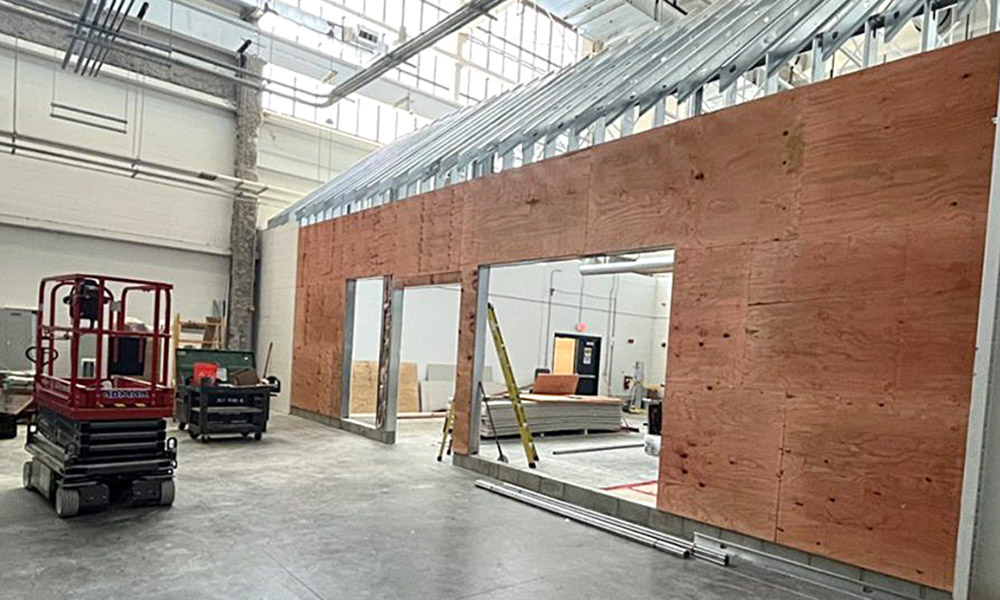
This July, Northland Workforce Training Center opens two facilities on the Northland campus designed to address that gap — and to make the broader energy transition legible to a region still figuring out what it means. The Clean Tech Lab will train building maintenance technicians and clean energy workers, anchored by a working smart commercial building built inside the facility itself. Adjacent to it, the Western New York Experience Center will demonstrate how power is generated, transmitted, and distributed in multiple forms — solar, wind, hydro, and nuclear — for anyone who walks through the door.
Every building in the country ... has a building engineer. And we don't have enough technicians to fill those roles."
The Experience Center concept came from Pittsburgh, where Eaton Corporation operates a demonstration facility designed to look like the city itself — bridges and all — showing how its electrical equipment keeps urban infrastructure running. Tucker and his team adapted that model to Western New York, a region with a century of power infrastructure history through Niagara Falls and a state government pushing aggressively toward clean energy goals.
The project has been five years in development and cost $4.2 million, funded through a combination of federal HUD dollars secured through Senators Schumer and Gillibrand, New York State’s Office of Strategic Workforce Development, the Ralph C. Wilson Jr. Foundation, the New York Power Authority, and National Grid. The training component received $3.8 million; the Experience Center, $500,000.
$4.2M
Tucker’s pitch to the site selection and economic development community is direct: workforce infrastructure is a location decision factor, and regions that don’t build it will lose projects to ones that do.
“Business moves at the speed of business,” he said. “When businesses are looking to locate or expand in different regions, the number one thing they consider is workforce development. If they feel the region doesn’t have a workforce that’s ready to fill those roles — or resources to train them within a specific amount of time — they may consider other regions.”
That argument is already being tested. Northland Workforce Training Center is currently partnering with Edwards Vacuum, which is building a facility in the STAMP campus between Rochester and Syracuse, to train new hires for semiconductor manufacturing roles. Micron’s expansion into Syracuse anchors the same corridor. Tucker sees Northland Workforce Training Center as a regional resource for the emerging Buffalo-to-Albany semiconductor belt, not just a local training provider.
"When businesses are looking to locate or expand in different regions, the number one thing they consider is workforce development.
The Experience Center will also include a scale model of a small nuclear reactor — likely a Westinghouse design, Tucker said — alongside solar, wind, and hydro demonstrations. The inclusion is deliberate. Small modular reactors are increasingly part of the national conversation around industrial power needs, but public understanding of the technology lags well behind policy discussion. Giving a community a physical object to look at, Tucker believes, changes that dynamic.
The enrollment numbers at Northland Workforce Training Center underscore something the facility’s backers don’t understate. In technical fields nationally, people of color represent less than twenty percent of the workforce; women represent less than five percent. At Northland Workforce Training Center, current enrollment is sixty percent people of color and ten to fifteen percent female.
“It’s not only creating a pipeline of talent,” Tucker said. “It’s also creating a pipeline of diverse talent, and it’s creating access to opportunities for those populations as well.” The facilities open July 1st.