
Five years after the pandemic upended the world of work, companies are still redefining what “normal” means. Hybrid schedules, new expectations for flexibility, and shifting life priorities have blurred the line between workplace and community. For corporate leaders making location decisions — and for the communities trying to attract them — success now depends on more than cost or infrastructure. It depends on how well a place supports the people who live and work there.
As a workplace strategist at Cushman & Wakefield, I’ve seen organizations across industries confront the same challenge: how to connect business performance with the human experience of work. The answer lies in understanding people — their behavior, their needs, and how the places they occupy either help or hinder them.
Rebuilding the Why — Inside the Hybrid Workplace
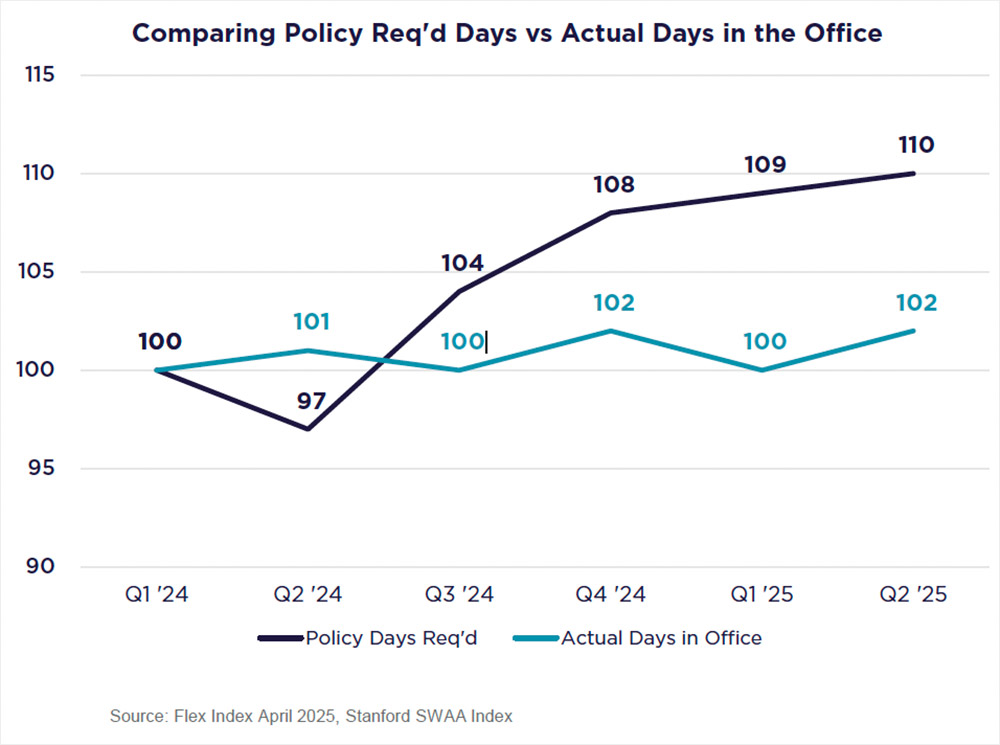
Hybrid work is now the baseline for most companies. Nearly 70 percent of Fortune 100 firms operate with some form of hybrid rhythm, according to Flex Index. Anecdotally, what we see in the field is typically three days in the office and two remote. But as executives often admit, the real challenge isn’t the schedule — it’s the purpose.
Employees and leaders alike are asking what the office is for. When it competes with the convenience of home, it must offer something more meaningful than a desk and Wi-Fi. That means dependable technology, well-designed spaces for both collaboration and focus, and an environment that feels intentional rather than obligatory.
The best workplaces today function like communities. They encourage spontaneous connection, offer spaces for different kinds of work, and give employees a reason to want to be together.
The best workplaces now function like robust communities.
Culture, however, is what brings these spaces to life. Organizations that successfully engage their people do so through visible, present leadership. Executives who walk the floor, hold informal conversations, and model collaboration send a powerful message that connection matters. Engagement doesn’t come from mandates — it comes from presence.
Younger employees, often portrayed as disengaged, actually crave mentorship and a sense of purpose. What keeps them home isn’t indifference but the absence of meaningful interaction once they arrive. Aligning leadership behavior with workplace goals builds loyalty that no policy can replicate.
The Lifecycle Lens — Designing for Every Stage of Work and Life
Workplace and location strategies are converging, driven by a growing recognition that people’s lives outside of work directly influence how — and where — they work best.
67%
Hybrid work has redefined not just when people work, but where. For companies with employees in the office three days a week, the question becomes: what happens on the other two? Do we want people isolated at home — or engaged in ways that strengthen both their connection to the company and to the community?
Forward-thinking organizations and communities are starting to fill that gap. Access to coworking spaces, local cafés, parks, and “third places” gives employees flexibility to work from anywhere — while keeping them active participants in local life. When people can grab coffee near home, bike to a coworking hub, visit a farmers market after work, or support local restaurants, it reinforces why they’ve chosen to live — and stay — there. And when being in the community feels this convenient and rewarding, many may even choose to spend an extra day in the office — not because they have to, but because it fits naturally into their rhythm of life.
Authenticity is the new differentiator — both for companies and for communities.
Employees at different life stages value different things. Early-career professionals often prioritize vibrancy, connection, and access to culture and amenities. Families and mid-career workers focus more on schools, safety, and childcare. Those in the sandwich generation are balancing both childcare and eldercare, seeking flexibility and nearby resources to support their responsibilities. Later in life, people often look for stability, health care access, and a sense of belonging — along with opportunities to contribute, connect, and shape their next chapter.
Companies making location decisions now factor these dynamics into workforce planning. Communities that offer a mix of housing, reliable childcare and eldercare, good schools, and recreation appeal to a broader range of employees and help reduce turnover.
Workforce retention begins long before recruitment. The most competitive regions align livability and career opportunity so that people don’t have to choose between professional growth and personal well-being. Employees are not static. They grow, age, and evolve, and they expect the places they work and live to evolve with them. Communities that anticipate and support those transitions will become the most resilient labor markets in the years ahead.
Beyond the City Limits — The New Geography of Talent
The geography of talent is shifting. For decades, companies equated “access to workforce” with proximity to major urban cores — dense labor markets, transit, and global visibility. But hybrid work, demographic shifts, and economic realities are redistributing opportunity. Aging populations, evolving family structures, and cost-of-living pressures are influencing where people choose to live. Many are seeking places that offer stability, affordability, and quality of life across all stages of work and life — and employers are increasingly focused on how to attract and retain that talent.
Suburbs and mid-sized metros are gaining ground by embracing authenticity and convenience. They don’t need to mimic big cities — they win by being themselves. Communities that lean into their identity — rather than chasing scale — create stronger connections between place, people, and purpose.
When work and community align, people don’t just show up — they belong.
In my work, I’ve seen this play out in different ways. A client relocating to Boise, Idaho, found the city’s outdoor culture closely aligned with their employees’ values and mission. Another team choosing Alpharetta, Georgia, prioritized parking and walkability over a longer downtown commute; the energy around Avalon’s restaurants and retail reflected the kind of everyday experience their people wanted. And Carmel, Indiana, came up recently in discussion with economic developers for its thoughtful planning and highly walkable downtown — a place that’s become known for livability and community connection — something I’ve experienced firsthand during its annual Christkindlmarkt.
$63M
Each of these examples shows how communities can thrive by leaning into what makes them unique. These places didn’t chase scale — they built identity.
For corporate decision-makers, the lesson is that access to talent isn’t just about head count; it’s about fit. Employees want to live in places that align with their values and lifestyles.
When evaluating markets, companies increasingly weigh cost of living, housing availability, family friendliness, and recreation early in the process. These quality-of-life indicators are no longer afterthoughts — they are part of the ROI calculation.
Employees aren’t static; they grow, age, and evolve. The best communities evolve with them.
During a recent discussion with industry peers, someone noted how valuable it can be to quantify what truly makes a city “bike-friendly,” “dog-friendly,” or “walkable.” Backing these qualities with data — such as park acreage, lighting coverage, or bike-lane miles — gives decision-makers a more consistent way to compare markets. Communities that translate lived experience into measurable outcomes build credibility and trust with corporate site teams.
Even as hybrid work expands, commuting still matters. The ease of getting to and from work affects not only productivity but also employee satisfaction. When local infrastructure supports short, predictable commutes, it enhances a region’s competitiveness.
Ultimately, authenticity is the new differentiator. Instead of trying to be all things to all companies, communities are finding success by emphasizing what’s real — their workforce strengths, livability, and character. The same holds true for employers. Companies that align workplace strategy with their people’s values and rhythms of life create more engaged, resilient organizations.
How we design and experience work today will shape the future of site selection — not by square footage or skyline, but by how well a community helps people live their lives.