23rd Annual Corporate Survey Analysis by Les J. Cranmer and Art M. Wegfahrt
Dec/Jan 09
Looking at the rankings over time (2003-2008), the top-10 factors have not varied greatly, in terms of both inclusion and weighting. There have only been a few exceptions to the top 10, with eight of the factors always included: highway accessibility, labor costs, availability of skilled labor, state and local incentives, corporate tax rate, tax exemptions, occupancy and construction costs, and energy availability and costs. Available land and proximity to market were mentioned three times. Environmental regulations was included twice, as was availability of telecom services. This factor was changed to availability of high-speed Internet access, and that was included three times as well. Low-union profile was mentioned once.
On a specific level, although the survey responses were submitted before the financial markets meltdown, they were completed during a time when the equity and credit markets were showing strong signs of economic adjustment. With this in mind, we were curious to see if this year's corporate responses would be telltale, in terms of corporate attitude toward business growth and priorities. Of particular note, we looked for indications of changes in the respondents' views on projected business expansion and contraction, capital investment planning, and short-term vs. long-term planning emphasis.
Comparative responses between 2007 and 2008 indicate an upswing in projected new job and facility creation. And although additional offshore locations are planned, 96 percent of those responding stated that they would not be increasing or decreasing moves in either direction - on- or offshore.
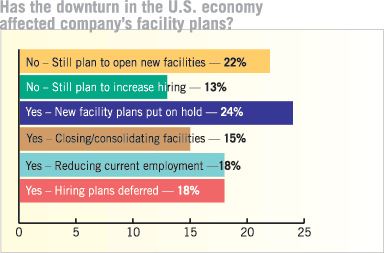
Additionally, 68 percent of the respondents indicated that the tightening of the credit markets is not affecting their facility plans. This is further supported by the reasons for decreasing the number of facilities; 100 percent of those doing so said it was for consolidation, and 56 percent pointed to a need to lower costs, but only 39 percent indicated a decrease in product sales. These findings clearly indicate the current business turmoil has not found its way into this survey response - next year's survey should be extremely interesting.
Recent Project Announcements
Davis Timber Company Expands DeRidder, Louisiana, Manufacturing Operations
04/28/2026
Blevins Asphalt Expands Mount Vernon, Missouri, Maintenance Operations
04/28/2026
Niagara Bottling Plans Perth, New York, Production-Warehouse Operations
04/26/2026
Marubeni-Itochu Steel America Plans Osceola, Arkansas, Flat-Rolled Steel Operations
04/25/2026
Corderill Plans Meridian, Mississippi, Operations
04/25/2026
Ferrara Candy Plans Orangeburg County, South Carolina, Production Operations
04/25/2026
Blue Ops Plans Valdosta, Georgia, Manufacturing Operations
04/25/2026
Virginia Transformer Expands Rincon, Georgia, Production Operations
04/25/2026
AbbVie Plans Durham, North Carolina, Pharmaceutical Manufacturing Operations
04/24/2026
Air Liquide Plans St. James Parish, Louisiana, Production Operations
04/24/2026
Envoy Air Expands Little Rock, Arkansas, Operations
04/24/2026
Australia-Based Syenta Establishes Tempe, Arizona, Semiconductor Development Operations
04/23/2026
Mondi Expands Allegheny County, Pennsylvania, Production Operations
04/23/2026
Most Read
-
Economic Developer Role Shifting from Deal-Making to Systems Stewardship
Q1 2026
-
What Companies Need from Modern Manufacturing Sites
Q1 2026
-
Top States for Doing Business in 2024: A Continued Legacy of Excellence
Q3 2024
-
Capitalizing on the OBBBA Before the 2026 Cliff
Q1 2026
-
40th Annual Corporate and 22nd Annual Consultant Site Selection Survey Results
Q1 2026
-
Where Workforce Capacity Is Being Built — and Where It’s Being Deployed
Q1 2026
-
Last Word: Don’t Lose by Winning
Q1 2026