
Purpose-Built Incentives: Benefitting Business and Regions
Sound incentive decision-making will make for a more perfect union between your company and the community in which it has chosen to locate.
Although locating in an enterprise zone won't work for every firm, those that do locate in such zones can achieve substantial cost savings while helping to spur a community's economic development.
In today's tough economic times, companies considering operational innovations can reduce their uncertainty with a solid risk management strategy.
Low financing rates, and access to capital offer compelling reasons for corporate sale-leasebacks.
Pent-up demand will result in more headquarters projects in the next decade, but these modern, right-sized workspaces will differ in size and design from those of the past.
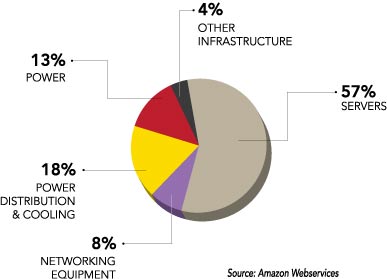
Energy and construction costs, telecom infrastructure/reliability, and the risk of natural disasters take on added importance when selecting a location for a new data center facility.
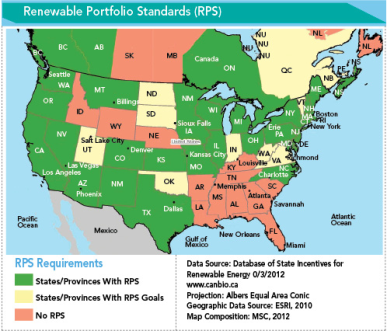
Renewable energy companies considering investment locations should look for areas that are supportive of the industry in terms of an RPS, site readiness, and the presence of suppliers.
President Obama and his economic advisers are intent on helping U.S. manufacturers increase their product exports in order to cut into the nation's $600 billion trade deficit. Recently, however, some economists have begun to argue that America should concentrate more on exporting services, especially since services continue to dominate the U.S. economy.
The editor of Area Development magazine recently spoke with Jack McDougle, Senior Vice President at the Council on Competitiveness, about the offshoring and re-shoring of U.S. businesses and what it would take to grow the nation's manufacturing sector.
As lighting regularly accounts for nearly 40 percent of a commercial building's electricity consumption, it serves as a prime target in energy efficiency and operating costs reduction efforts.
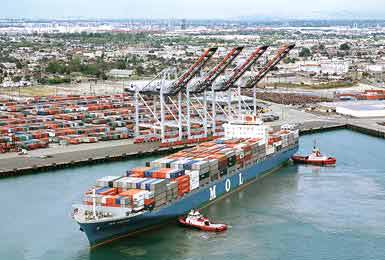
Six million cargo containers from around the world pass through our nation's seaports every year according to Stephen Flynn, former Coast Guard commander and senior fellow at the Council on Foreign Relations.
TransCanada Corp.'s 1,661-mile Keystone XL pipeline would carry oil from Alberta, Canada, to the U.S. Gulf Coast and Midwest. The pipeline would provide an outlet for growing Canadian crude oil production, enabling the United States to replace Venezuelan crude oil with oil from a more secure source.
The concept incorporates specific vocational training into the curricula of community colleges, technical schools or, even, four-year universities. Ideally, the approach serves the needs of students for a quality education; businesses for a well turned out work force; and the educational institutions by attracting more tuition-paying students.
California is experiencing an economic resurgence, riding on growth in key sectors including energy, clean technology, ICT, electronics, and the booming import/export trade.
Now that there's more economic optimism in the air, it's worth taking a look around the country to see how individual states are faring. It turns out that Texas tops the charts, with the highest number of jobs added since 2008.
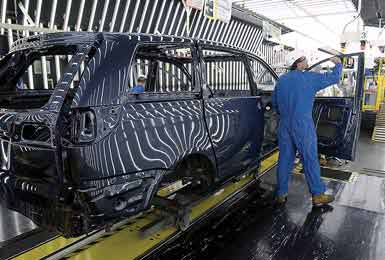
Vehicles with creative power generation will fuel the auto industry in the future.
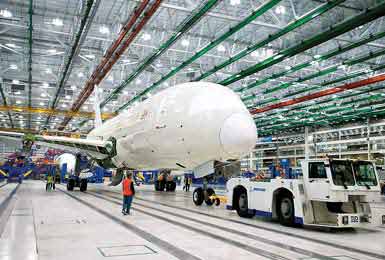
According to a March 2012 Deloitte study, the industry supports nearly 3.5 million workers in every state in the country. It is also the largest net exporter in the United States, with an export value of nearly $90 billion in 2011, much of it consisting of commercial aircraft destined for foreign carriers.
A shakeout in the solar industry is expected to create widespread consolidation.
Some ICT firms have decided to capitalize on the human technology available in their own backyards.
Hubs in the Northeast and California will continue to plan an important role as life sciences headquarter cities.
The electronics sector relies heavily on intellectual property and new technology. Such assets are derived from many sources, but an important source is the employees - namely the engineers and scientists who develop and expand the technology to compete globally in an ever-increasing marketplace.
Locating near major carrier hubs will allow diagnostic providers faster turnaround times.
Plastics categories are often interconnected with other industry clusters.
Medical device manufacturers continue to utilize advanced materials to produce smaller and more complex devices.
Tulsa has seen an economic resurgence over the last two years and appears to be coming out of the recession sooner than other cities its size while grappling with many of the same financial and social problems.
Business owners can help temper the spike in workers' compensation premiums by improving safety programs and informing employees about the shared costs of accidents.
Receive quarterly issues of Area Development Magazine at no charge for qualified executives and consultants to industry.
Corporate Exec Survey Results
Leading Metro Locations
Top States for Business
Annual Econdev Awards