Tax Reform Through the Eyes of a Design-Build CEO
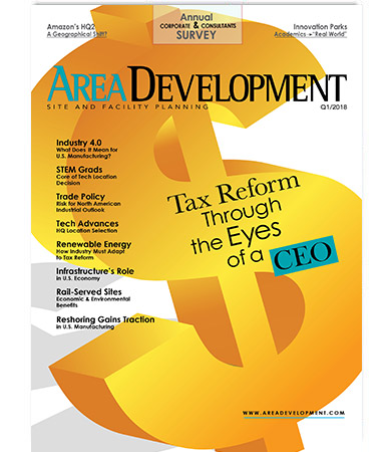
The Tax Cuts and Jobs Act gives businesses more incentive to expand in the U.S. as well as provide employees with better equipment and training.
Recognizing that the respondents are heavily weighted with manufacturing functions, the top location factors make a great deal of sense.
The Corporate Survey results illustrate a level of uncertainty by investors — a clear indication of how challenging the investment project decision-making process has become.
In response to a limited supply of quality sites, tight labor pools, and a rapidly-shifting economic policy environment, businesses must move quickly and strategically.
The investment conversation has to start somewhere, and when companies are seeking new locations, the conversation begins with site inventory.
Last year saw an increase in capital investment, which has continued through the first quarter of 2018.
A community that does not have the adequate labor profile is devastating to a project’s success in that location.
Although the U.S. economy is strong, there may still be some hesitancy in investment decisions brought about by an uncertain legislative environment.
Research and innovation parks continue to evolve to meet the needs of students, faculty, and private-sector tenants alike.
The Fourth Industrial Revolution is transforming global production and supply chains, but the future depends on how well the industry’s human leaders can understand its machines.
The economic and environmental benefits of freight rail transportation should be considered when developing your next facility.
The search for tech talent is leading companies to look at some traditional as well as surprising locations and also putting workspace buildout in a new perspective.
Renewable energy production facility developers must reconsider how to optimize their capital structures in the new tax environment.
The industrial forecast is strong. Will a revamped NAFTA change that?
Companies are re-evaluating locations and layouts of HQs and regional hubs as workplaces evolve.
U.S. manufacturers are picking up momentum in bringing the jobs back they outsourced decades ago to low-cost countries — a move called reshoring.
The federal government is leaning toward the creation of public-private partnerships to finance much-needed improvements to the nation’s infrastructure, which is vital to the manufacturing sector as well as national security.
Area Development’s editor recently asked Kim Nichols, the CEO of Franklin Apprenticeships, about how modernized apprenticeships can change the perception of the manufacturing industry while helping to satisfy its workforce needs, as well as the needs of other advanced industries.
The ELD Mandate, which will change how truckers operate, will ultimately benefit both the trucking industry and the shippers/manufacturers that utilize the industry’s services.
High driver turnover, the new mandate limiting drivers’ hours on the road, and the boom in e-commerce are spurring the adoption of driverless trucks.
The 20 finalist locations for Amazon’s second headquarters location include several smaller cities that are not typically thought of as technology centers.
Since the tight labor market has already pushed up wages, studies have shown an increase in the minimum wage will have minimal negative impact on employment levels.
Receive quarterly issues of Area Development Magazine at no charge for qualified executives and consultants to industry.
Corporate Exec Survey Results
Leading Metro Locations
Top States for Business
Annual Econdev Awards