

Infrastructure Investment: Shifting the Focus from Cost to Opportunity
The cost of upgrading and maintaining U.S. infrastructure is an investment that will pay off for industry and the nation as a whole, resulting in job creation and increased GDP.
We are just beginning to see the economic effect of the TCJA, passed in December 2017, but tax cuts are among many factors influencing U.S. investment decisions.
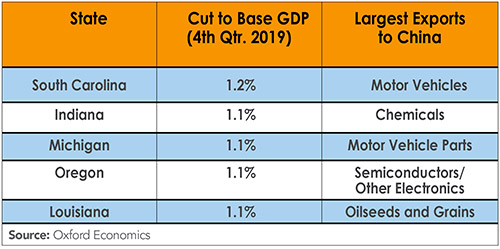
The worsening tariff situation will affect prices throughout the international supply chain that supports companies’ operations both in the U.S. and abroad — and ultimately affect their bottom line.
Smart workplaces are flexible and personalized to attract a high-performing, diverse workforce.
Those looking for a location for a new facility are focusing on communities that differentiate themselves through their quality of life, labor force, and cultural fit.
Agile real estate solutions that reduce your firm’s level of investment and/or headcount may have an effect on incentives provided by state and local entities.
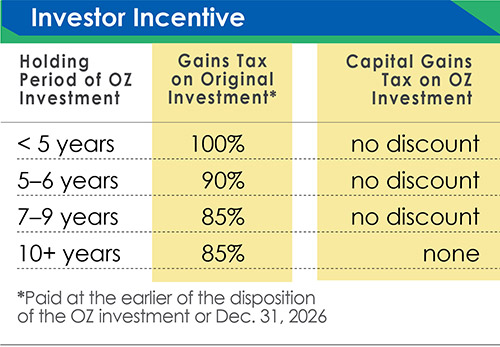
The U.S. Treasury recently released regulations that will guide governance and implementation of Opportunity Zones, which have the potential to attract more than $50 billion of capital to low-income communities.
There’s often a mismatch between incentives provided and those an organization — which also needs to be aware of any “strings attached” — can actually use.
A company that is acquiring or selling a business needs to evaluate the potential advantages and liabilities of incentives already in place, as well as opportunities for future incentives.
Although the education levels of a state’s workforce should be a significant consideration for any project expansion or relocation, that data alone may not be sufficient to tell the whole story of the workforce for a particular market.
You’ve made your list — now check it twice for ownership issues and site suitability, as well as workforce and financial considerations.
When site selecting, there are pros and cons to maintaining confidentiality as well as to making the search public; it all depends upon your company’s current situation.
Life sciences companies are seeking locations where they can attract top talent and identify flexible facilities, which is directly affecting their real estate decisions.
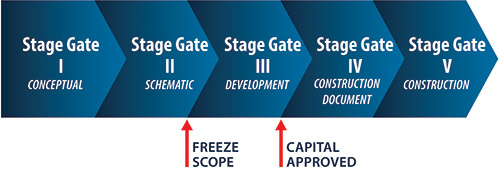
It’s important that clients new to working with an A/E firm understand their standard business processes in order to achieve a successful capital project.
Effective master planning results in seamless construction projects and builds the momentum for lean, concise operations and continued success.
With the uncertain future of new tariffs and penalties, is it time to consider building a manufacturing site in the United States?
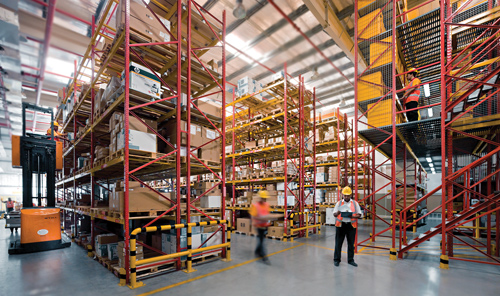
Distribution is moving closer to end customers, and that means more distribution centers in urban environments.
3D printing, rapid prototyping isn’t just for product development; it has helped to create a culture where waste reduction is a priority.
Cybersecurity has become an increasingly important concern for businesses of all types and sizes. To find out more about the cyber threats these companies are facing, Area Development recently interviewed Oliver Dehning, CEO for U.S. operations at Hornetsecurity, a cybersecurity firm focused on cloud-based solutions.
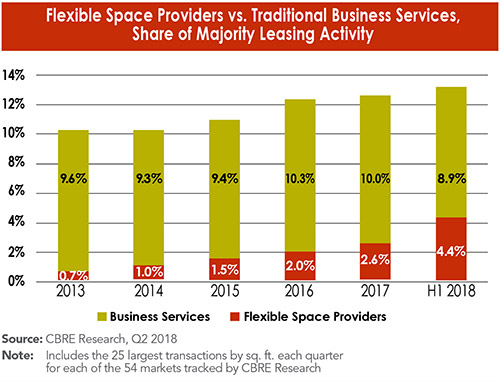
The marriage of physical and digital technologies is having a transformative effect on real estate markets — from industrial and distribution to office.
Jason Lake, Senior Managing Director, Business Incentives Practice at Cushman & Wakefield, spoke with Area Development following his presentation on corporate/economic development collaboration at our Consultants Forum.
Following our Consultants Forum, Area Development discussed the state of industrial real estate in an evolving world with Rob Wheeler, Senior Vice President, Integrated Portfolio Services, at JLL.
Dave Cooper, Shareholder, Economic Development & Incentives Practice Group at Maynard Cooper & Gale, spoke with Area Development about how to deal with the challenges that often come up during the incentives negotiation process.
Tim Cook, CEO, and Katie Culp, President, of KSM Location Advisors discussed with Area Development how managers can anticipate and tackle the unexpected surprises that will arise during a site selection project.
Area Development recently interviewed Chris Schwinden, Vice President, Site Selection Group, about how companies can assess a location’s true workforce potential in this exceptionally tight labor market.
Subsequent to his presentation on tax credits and incentives in the financing package at our Consultants Forum, Brad Elmer, CFA, Managing Director at Baker Tilly Capital, sat down to discuss the topic with Area Development.
Receive quarterly issues of Area Development Magazine at no charge for qualified executives and consultants to industry.
Corporate Exec Survey Results
Leading Metro Locations
Top States for Business
Annual Econdev Awards