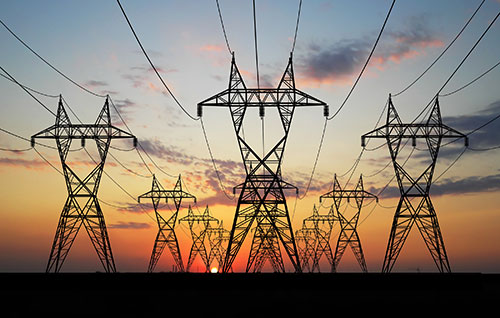
Power-Intensive Site Selection
Manufacturers should prioritize accuracy in their load schedule, as there’s a downside to both underestimating and overestimating load requirements.
Q3 2023
“Fast is fine, but accuracy is everything.” — Wyatt Earp
When siting a new manufacturing facility, best-guessing load requirements can often lead to delayed schedules and potential production setbacks. Electrical equipment lead time, engineering backlogs, as well as transmission and capacity constraints make underestimating load requirements in today’s environment particularly unforgiving.
Less obvious, however, are the opportunity costs associated with overestimating your load schedule. Inflated power demands have the potential to pull the reigns on your speed-to-market strategy by discounting infrastructure and locations that can scale with your needs. Similarly, overly aggressive load schedules and service delivery timelines eliminate otherwise viable locations prematurely in the site selection process.
Hastily engineered timelines and ravenous electricity specifications can come at a cost. One other, perhaps less considered, impact of overestimating electric loads is the potentially conflicting effect that such practices can have on the host utility’s decarbonization efforts. New generation goes through a multi-year load forecasting process. If that process is front-end loaded with artificially large loads, generation investments can be skewed, resulting in potentially escalated costs and higher carbon content.
Accuracy, not conservative estimates, should be prioritized at the outset of the project by first collecting a list of the expected electrical loads of the facility including mechanical equipment involved in production, as well as secondary loads such as HVAC and other utility systems. For many industries, this may require project teams to build load schedules for different investment and operating scenarios. These schedules will serve as the basis for sizing the transformers that will ultimately need to be secured by your power company, along with the switchgear the end user will need for the facility.
While it’s common for electric utilities to be asked to confirm an 18-month service delivery in the early stages of site selection, the reality is that only carefully design-engineered electrical loads will stand the chance of traversing today’s headwinds to meet these timeframes. Just a few years ago, this might not have been the case. A great site combined with a not yet blindsided supply chain stood a real chance. Today, however, lead times for equipment are broadsiding the development community.
Inflated power demands have the potential to pull the reigns on your speed-to-market strategy. Transformers across most voltage classes are still up more than 300 percent from their 2020 lead times, some taking 36 months or more from order to delivery. Switchgear is being quoted up to 75 weeks, with lead times getting longer. Wire and cable, panel boards, circuit breakers, and other electrical supplies are still experiencing record demand as growth industries such as data centers and energy storage manufacturers double down on long-term procurement strategies to meet customer obligations. For much of this equipment, it will be years before supply chains begin to stabilize.
Wyatt Earp, a gunslinger, lawman and gambler of the American West was quoted as saying, “Fast is fine, but accuracy is everything”. When it comes to electric service delivery, early, transparent, and frequent project communication with utility providers wins the day. Do not let overly eager electricity demands and construction schedules slow the draw on your next site.
-
Courtland Robinson, Director of Business Development, Brasfield & Gorrie
Courtland Robinson is Director of Business Development for Brasfield & Gorrie, one of the nation’s largest privately held construction firms, providing general contracting, design-build, and construction management services for a wide variety of markets. Courtland previously worked for Duke Energy, a Fortune 500 energy holdings company in the U.S, and his career spans local, regional, and state economic development.
-
John Geib, Director, Enterprise Economic Development, Technical Services, Duke Energy
John Geib is director of Duke Energy Economic Development’s Technical Services group. He is responsible for supporting new and expanding industrial and commercial projects across Duke Energy's six-state service territory. John joined Duke Energy in 1982 after graduating from the University of Virginia with a Bachelor of Science degree in Mechanical Engineering. He is a registered Professional Engineer and a Certified Energy Manager. John has served on numerous professional boards during his career, currently serving on the Rockingham County Economic Development Board and the Utility Economic Developers Association.




Recent Project Announcements
Black Bayou Energy Hub Expands-Plans Lafayette-Cameron Parish, Louisiana, Natural Gas Operations
09/14/2026
Westerman Expands-Plans Bremen-Hebron, Ohio, Operations
09/04/2026
Germany-Based INNIO N.V. Expands Waukesha, Wisconsin, Production Operations
08/21/2026
Translucent Solar Plans Dorchester County, South Carolina, Panel Manufacturing Operations
08/21/2026
New Zealand-Based SunScout Holding Plans Buda, Texas, Manufacturing Operations
08/17/2026
Aternium Plans Dover, Delaware, Hydrogen Production Operations
08/14/2026
Japan-Based Kyoto Fusioneering Plans Oak Ridge, Tennessee, Headquarters-Operations
08/11/2026
GE Vernova Expands Findlay-Rostraver, Pennsylvania, Manufacturing Operations
08/05/2026
Fortified Solar Expands Greenville County, South Carolina, Manufacturing Operations
07/27/2026
Quality Companies Plans-Expands Louisiana Operations
07/20/2026
TRISO-X Plans Plans Oak Ridge, Tennessee, Manufacturing-Research Operations
07/20/2026
Realta Fusion Plans Madison, Wisconsin, Headquarters-Research Operations
07/20/2026
Peak Energy Plans Sacramento, California, Manufacturing Operations
07/18/2026
Curtiss-Wright Expands Cheswick, Pennsylvania, Manufacturing Operations
07/07/2026
Most Read
-
The Shifting Landscape of Location Strategy
Q2 2026
-
Power Is the New Gatekeeper in Manufacturing Site Selection
Q2 2026
-
Avoid These Red Flags, Deal Killers, and Blunders in Site Selection
Q2 2026
-
Site Readiness Is Broken: What Manufacturers Should Demand From Their Locations
Q3 2025
-
What Site Selectors Discuss After the Site Visit Ends
Q3 2026
-
Why Relationships Still Win Projects in Site Selection
Q3 2026
-
21st Annual Shovel Awards: The American Industrial Economy Remade in Real Time
Q2 2026