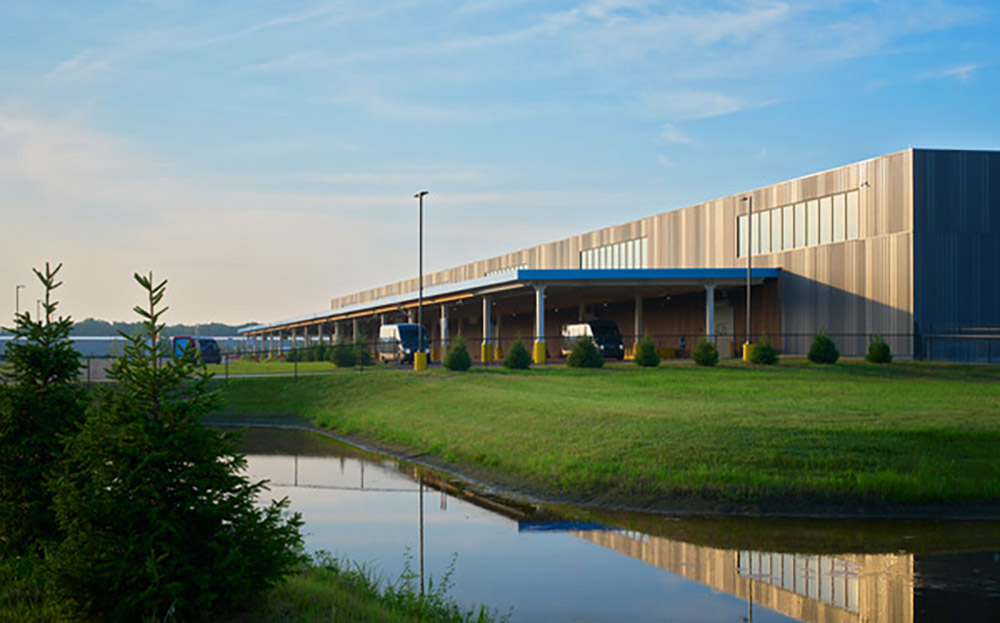
When Amazon set out to build its first owner-occupied delivery station using mass timber instead of concrete and steel, it chose an unexpected proving ground: Elkhart, Indiana. The 171,000-square-foot facility, dubbed DII5, represents both a technical milestone and a signal of how one of the world’s largest logistics companies plans to decarbonize its building portfolio. Constructed by Graycor Construction Company, the project is pursuing Zero Carbon Certification from the International Living Future Institute — and testing more than 40 sustainability strategies in one location.
“Before mass timber, we didn’t have a bio-based structural solution that could compete with concrete and steel at scale,” said Daniel Mallory, vice president of Global Realty at Amazon. “This project allows us to evaluate new materials and methods that could help standardize practices in an emerging industry.”
Engineering a “Wood Warehouse”
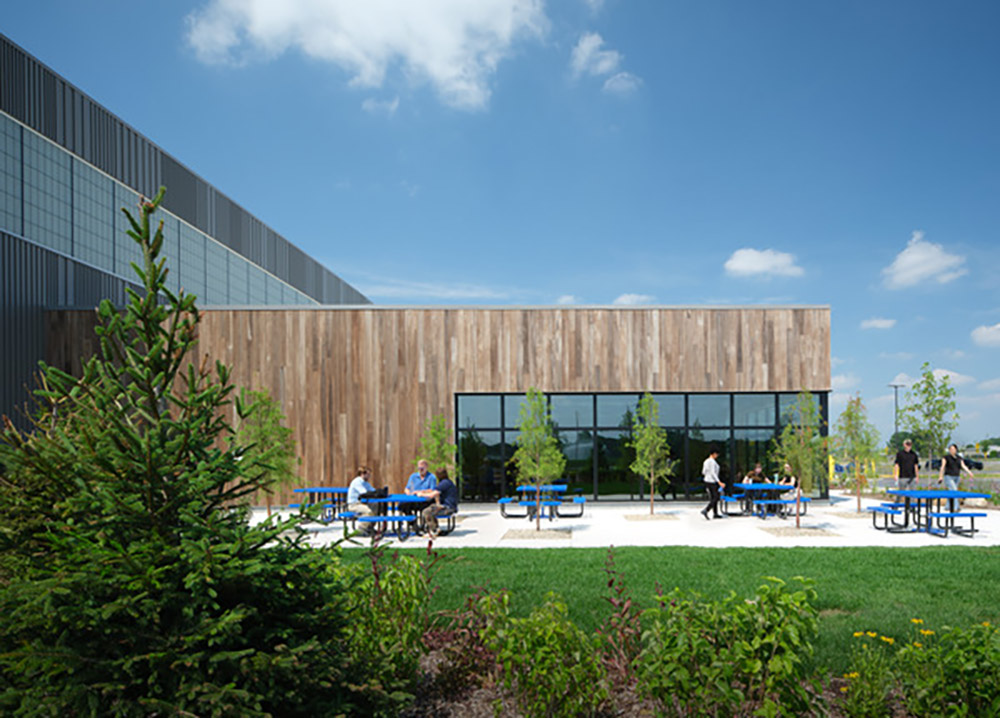
For Graycor, which has built more than 30 projects for Amazon over two decades, the Elkhart job marked a step change in both design and execution. “It’s not a regular old tilt-up or steel delivery station,” said Jon Denbo, project executive for Graycor. “We replaced the precast concrete walls with three-ply cross-laminated timber panels and swapped as many structural members as possible for glue-laminated beams and columns.”
-
Image 1 - Photo credit: © Kendall McCaugherty

-
Image 2 - Photo credit: © Kendall McCaugherty
-
Image 3 - Photo credit: © Kendall McCaugherty
-
Image 4 - Photo credit: © Kendall McCaugherty
-
Image 5 - Photo credit: © Kendall McCaugherty
-
Image 6 - Photo credit: © Kendall McCaugherty
-
Image 7 - Photo credit: © Kendall McCaugherty
-
Image 8 - Photo credit: © Kendall McCaugherty
-
Image 9 - Photo credit: © Kendall McCaugherty
-
Image 10 - Photo credit: © Kendall McCaugherty
-
Image 11 - Photo credit: © Kendall McCaugherty
-
Image 12 - Photo credit: © Kendall McCaugherty
-
Image 13 - Photo credit: © Kendall McCaugherty
-
Image 14 - Photo credit: © Kendall McCaugherty
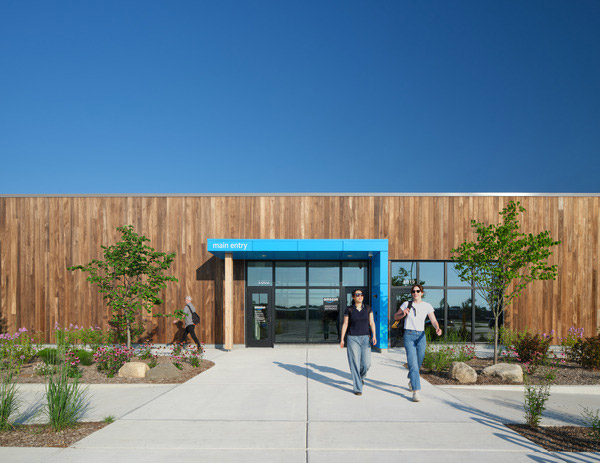
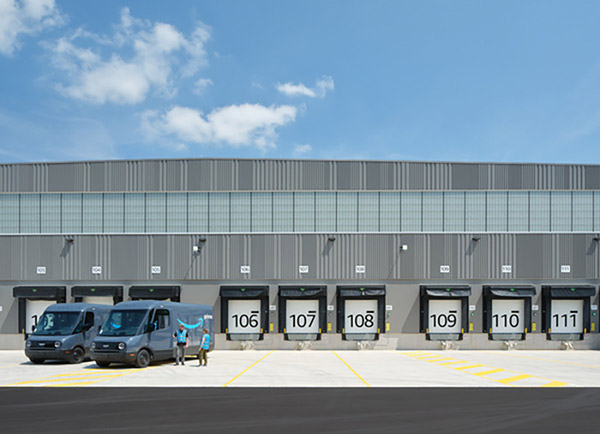
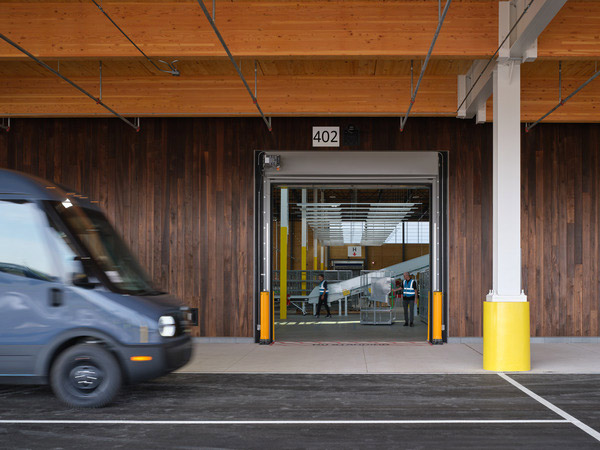
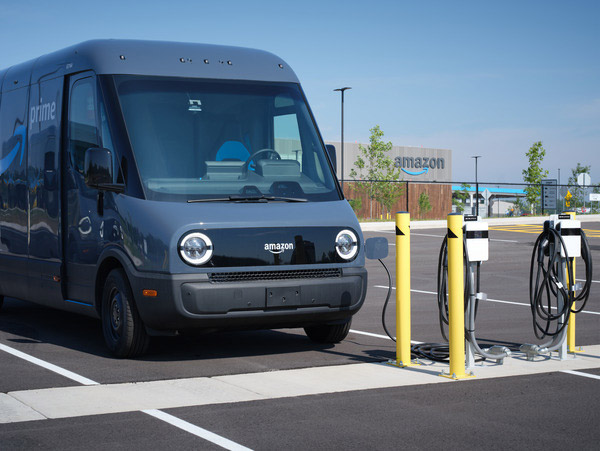
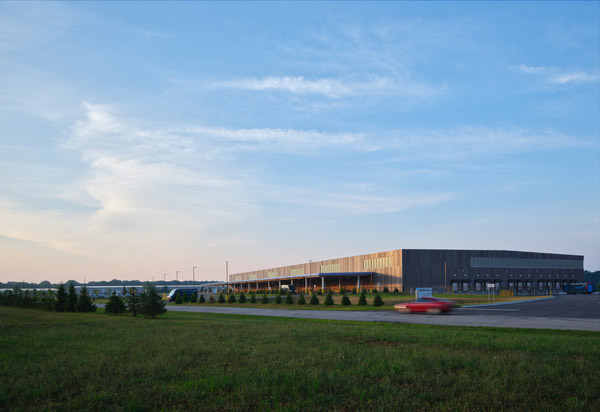
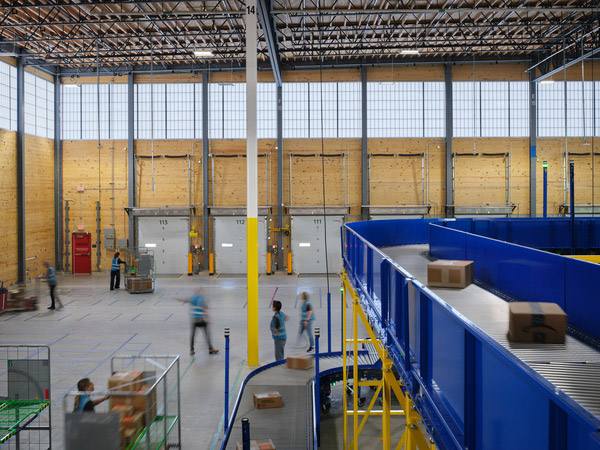
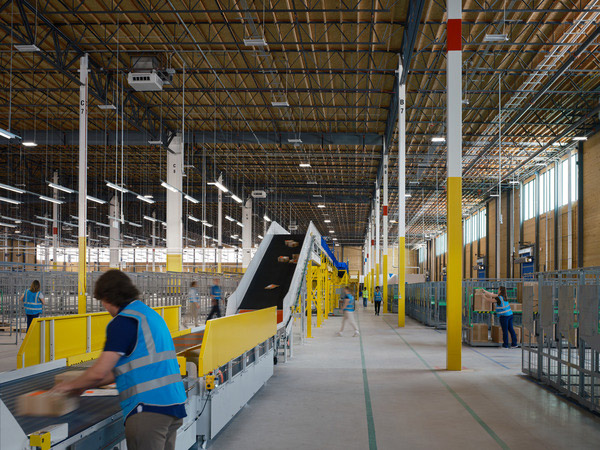
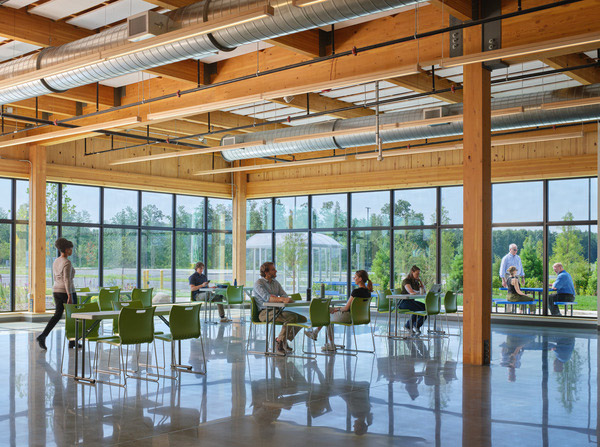
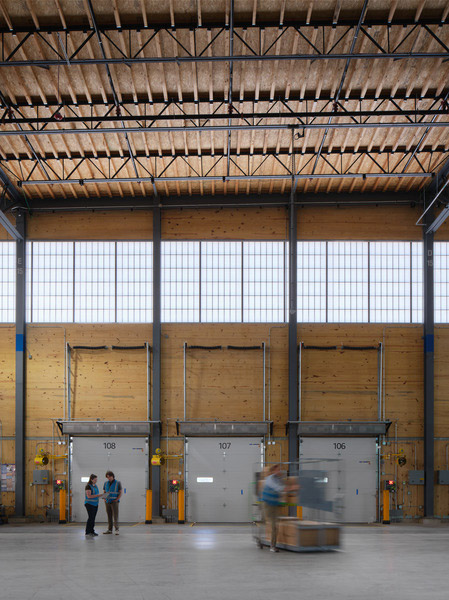
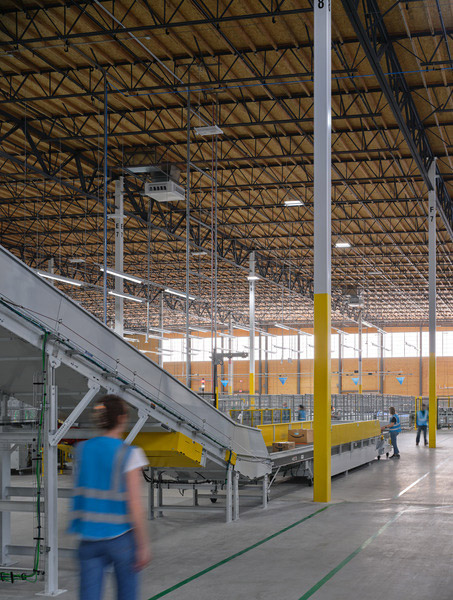
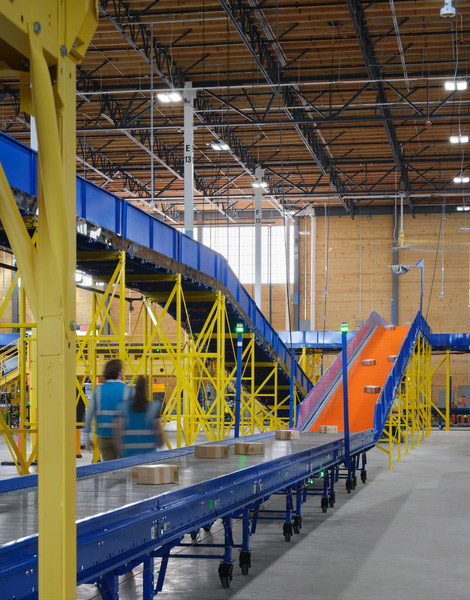
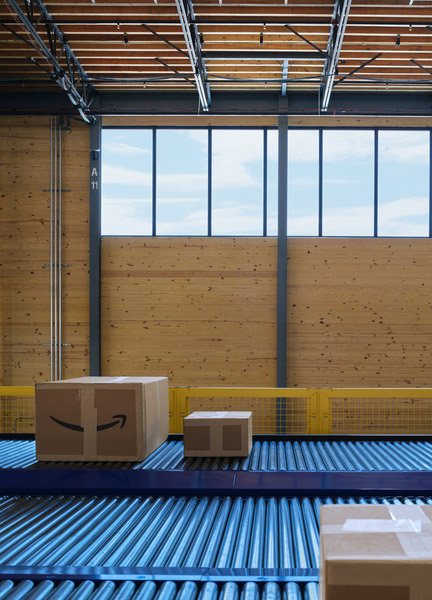
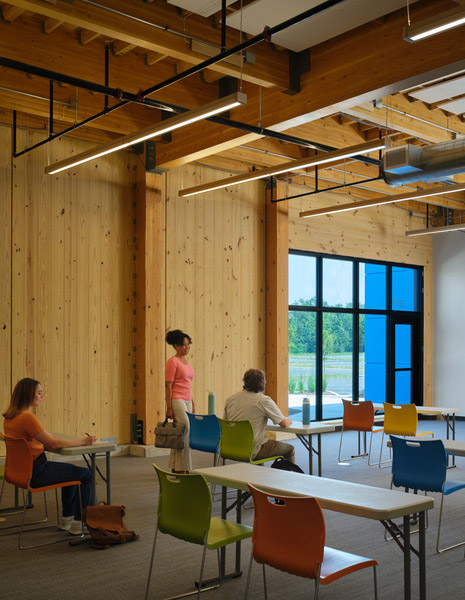
The resulting facility eliminated a substantial amount of embodied carbon while maintaining full industrial functionality. The roof was built with a panelized wood decking system — a rarity in the Midwest. Because timber construction can be more sensitive to moisture, Denbo’s team developed a detailed mitigation plan, working closely with suppliers to sequence deliveries “just in time” and keep materials protected. “The wood went up faster than we thought it would,” he said. “We smashed our goals on install time while keeping the quality and tight tolerances the project required.”
If we can do it in northern Indiana, we can do it anywhere.
Sustainability and Scale
For Amazon, the Elkhart delivery station is not just a one-off demonstration — it’s a testbed for the company’s long-term decarbonization strategy. The project aligns with Amazon’s Climate Pledge commitment to reach net-zero carbon by 2040 and builds on its experience achieving Zero Carbon Certification at its 700,000-square-foot MCI9 sortation center in Liberty, Missouri.
“We’re tracking multiple metrics to evaluate scalability, including total embodied carbon reduction, operational efficiency, biodiversity impacts, and cost,” Mallory explained. “For mass timber specifically, we’re developing a standardized ‘kit of parts’ that can be applied across multiple building types.”
Local sourcing also played a role. Indiana-based firm Arborwood supplied some of the timber components, helping to tie sustainability goals to regional economic impact. The facility will employ more than 200 people and includes employee-centered design features such as daylight-optimized lighting and low-emitting, bio-based interiors.
Overcoming Barriers
While the project demonstrates that large-scale timber can work in an industrial context, it also revealed barriers that need to be addressed for broader adoption. “Some jurisdictions don’t yet recognize mass timber as an approved building method at this scale,” Denbo noted. “In Elkhart, we had to secure a variance — but the city was excited about it.” Material sourcing and trade expertise remain challenges, particularly in regions where timber construction is new. Graycor ultimately brought in specialized crews from the western U.S. to complete the panelized roof system.
171,000
Despite those hurdles, Denbo believes the model is ready to replicate. “If we can do it in northern Indiana, we can do it anywhere,” he said. “Other clients are already asking about sustainable materials and methods like this.”
A Model for What’s Next
Amazon’s Climate Pledge Fund has invested in more than 20 companies developing lower-carbon building materials, including CarbonCure, Brimstone, and Electra. Many of those technologies are already being deployed across Amazon sites — including DII5. “We’re using this project to push the boundaries of what’s next,” said Mallory. “The data we collect here will guide how we scale sustainable solutions across our global network.”
For the industrial sector, the implications are far-reaching. The Elkhart project demonstrates that sustainability, speed, and structural performance can coexist — and that mass timber may be moving from niche architecture into the mainstream of logistics and manufacturing development.