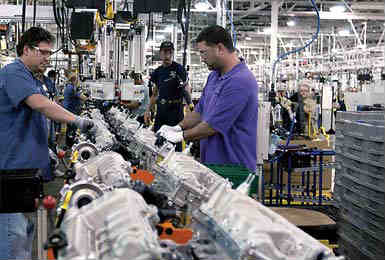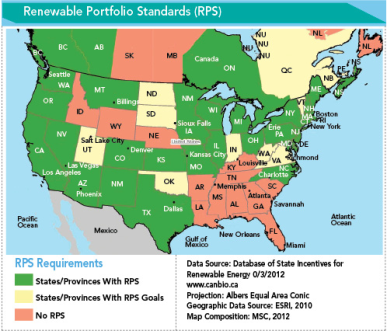
There is shortage of labor force skills in the United States that is starting to have far-reaching impacts. The United States granted 53,000 L-1 visas in 2006, up 33 percent from the year 2000; it is estimated that this number will climb to 65,000-70,000 in 2008, with the primary impetus being a severe shortage of skilled workers. In fact, it has been our experience and those of our peers in the industry that the lack of skilled workers is affecting some companies' ability to grow and pursue market opportunities.
Additionally, by 2015, nearly 20 percent of the nation's workers will be 55 years old or older (up from 13 percent now) - a statistic that should be unsettling to manufacturers. This means a transfer of organizational knowledge needs to commence quickly, or this knowledge could disappear very quickly - and permanently - with retirements just around the corner.
So while the survey conducted in 2007 may have stated that training programs and proximity to technical universities are not such important site selection factors, the fact remains that the fourth-ranked factor in this survey was skilled labor. These factors are all interrelated and will become increasingly important over time.
|
Of course, the importance of both training programs and technical university proximity is a function of both the type of industry and the complexity of the jobs. Add to this the disparity in the quality and availability of these factors from community to community and state to state, and you would be hard-pressed to find total agreement on this issue.
In general, the greater the degree of complexity, innovation, and face-to-face collaboration required in a particular industry, the greater the desire to be close to a technical university. For instance, in the pharmaceutical and biotech sector, there is a direct correlation to the location of research and development centers near universities, where the spillover effect of knowledge can be capitalized upon. In contrast, for both the chemical and automotive sectors, proximity to a university is not so important; however, the availability of training programs is extremely important. These training programs are not only useful to further develop the company's existing work force, but also to create a constant stream of skilled workers to draw upon for growth needs and/or employee attrition.
Of course, a university is a static factor. This means that while the curriculum and funding can be changed to provide special programs to meet industry needs, the university itself is not mobile. The only outreach that can be achieved is through telecommunications and remote campus location. This is not true of training programs. Training programs that specifically address the needs of an employer can be delivered anywhere. The best of all worlds is one where state and local training programs are capable of incorporating expertise from universities, community colleges, and technical training centers, as well as having the ability to tap into private for-profit training centers and being able to deliver this when and where needed.
How Close Is Close Enough?
For companies trying to evaluate the need for proximity to any given educational system, a considerable amount of due diligence should be undertaken to fully understand the quality of the training programs being offered by the respective state and community. To be blunt, some programs look good on paper; however, upon further examination, the ability to execute and deliver is lacking. As a result, close proximity will be very important in these locations. In other states and communities, however, the ability to quickly perform a needs assessment and develop and deliver training programs is superb; in those cases, proximity is not such an important factor.
The fact is that both capability and quality varies significantly within and between states. Some are outstanding and others are simply poor. Because of this, companies are spending more time understanding where and how skills will be developed and sustained over time. In response to this, many communities that may not have a technical university main campus are developing university extensions tied in with science parks, with a focus on integrating industry and learning at the local level.
|
Finally, I would be remiss if I did not point out that the cost of energy has played in important role in shaping clients' perspectives about what constitutes being "close." With gas prices hovering around $4 a gallon in some parts of the country, closer is better, particularly where a high level of interaction and collaboration is required. How long this perception will last is unknown; however, it is a factor that should not be casually dismissed.
In sum, the shortage of skilled workers in the United States is a pressing problem for manufacturers, and a renewed interest in developing the infrastructure and programs to respond to industry needs through training is crucial. Those locations that understand and act will be the better for it.