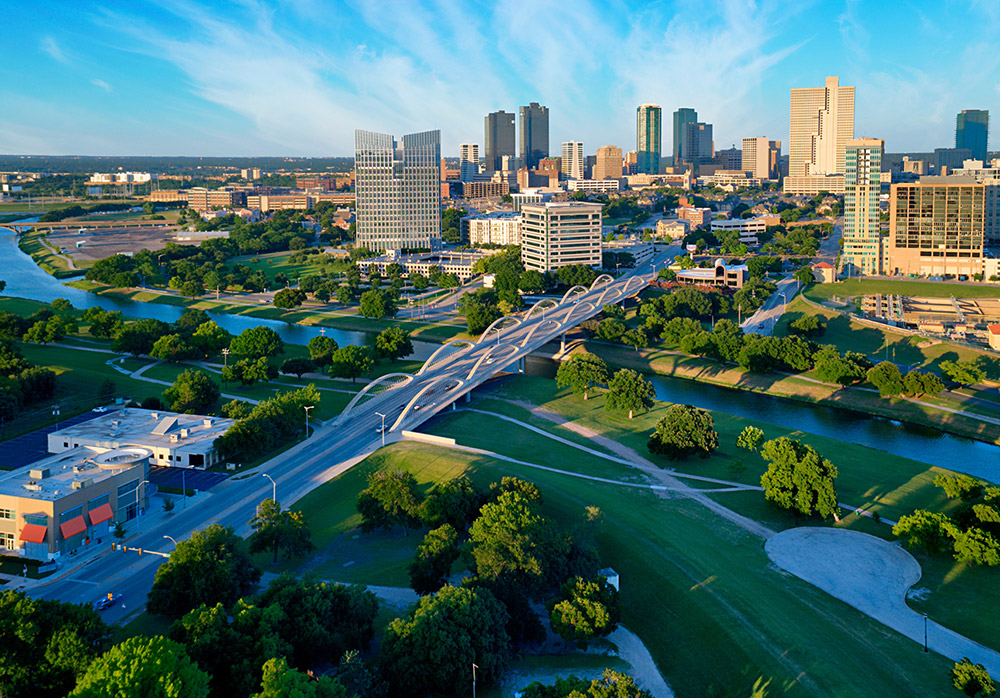
In 2023, the city and its business community created the Fort Worth Economic Development Partnership (EDP), a private, investor-led organization that now handles the front line of business recruitment and corporate outreach. At this year’s annual meeting, Mayor Mattie Parker summed up the impact: “Since the founding of the EDP, the Fort Worth region has secured nearly ten billion dollars in new capital investment and generated more than eleven thousand new excellent jobs.”
Those projects span advanced manufacturing, aerospace, mobility, and logistics—industries where project execution depends on workforce depth, energy access, and logistics capacity. Siemens’ $190 million production facility in south Fort Worth, Bell’s $600 million expansion tied to the Army’s next-generation aircraft, and Wistron’s two facilities totaling $761 million at Alliance all point to an environment where infrastructure and permitting can support complex, capital-intensive operations. American Airlines’ roughly $4 billion Terminal F expansion at DFW International Airport reinforces the logistics base that regional manufacturers rely on for both freight and executive travel.
It’s a risk to pick a new place and build a business, and Fort Worth has delivered beyond our expectations. This is a place that not only wanted our business but believed in it.
For companies evaluating major investments, testimonials like that of Jim Litinsky, CEO of MP Materials, carry weight. His company, which recently located a magnet manufacturing facility in Fort Worth, described the experience this way: “It’s a risk to pick a new place and build a business, and Fort Worth has delivered beyond our expectations. This is a place that not only wanted our business but believed in it.”
Parker called the EDP’s creation a cultural as well as structural change: “We are no longer simply responding and playing defense. We are creating opportunity.” For corporate investors, that means fewer disconnected agencies and faster, clearer feedback during site evaluation. The EDP now leads outbound targeting, coordinates with the city’s infrastructure and permitting teams, and serves as a single point of contact through the decision process.
For manufacturers and corporate real estate teams weighing Texas or multi-state options, Fort Worth’s approach offers a practical takeaway: governance design itself can be a competitive factor. By consolidating outreach, funding it privately, and aligning it with mayoral leadership, the city has reduced friction for capital-intensive projects that demand certainty, utilities, and speed. In a landscape crowded with similar-sounding markets, Fort Worth’s model stands out for treating economic development the way its prospects do—like a business process built to deliver.