In 2025, data centers ran into the same reality confronting manufacturers, defense contractors, and logistics operators: infrastructure that could no longer stretch to meet ambition.
What made data centers different was not the presence of constraint, but the speed at which it arrived — and the scale at which it reshaped location strategy.
What Area Development’s coverage revealed over the course of 2025 was not the cooling of demand, but the arrival of limits — hard, structural limits that could no longer be negotiated around. Data centers did not stop growing in 2025. But they stopped being a real estate story and became something else entirely: a test of power allocation, infrastructure governance, and political will.
From Growth Engine to Constraint Accelerator
Few sectors exposed the realities of modern infrastructure faster than data centers. As artificial intelligence workloads accelerated and computing intensity surged, assumptions that once underpinned siting decisions proved outdated almost overnight.
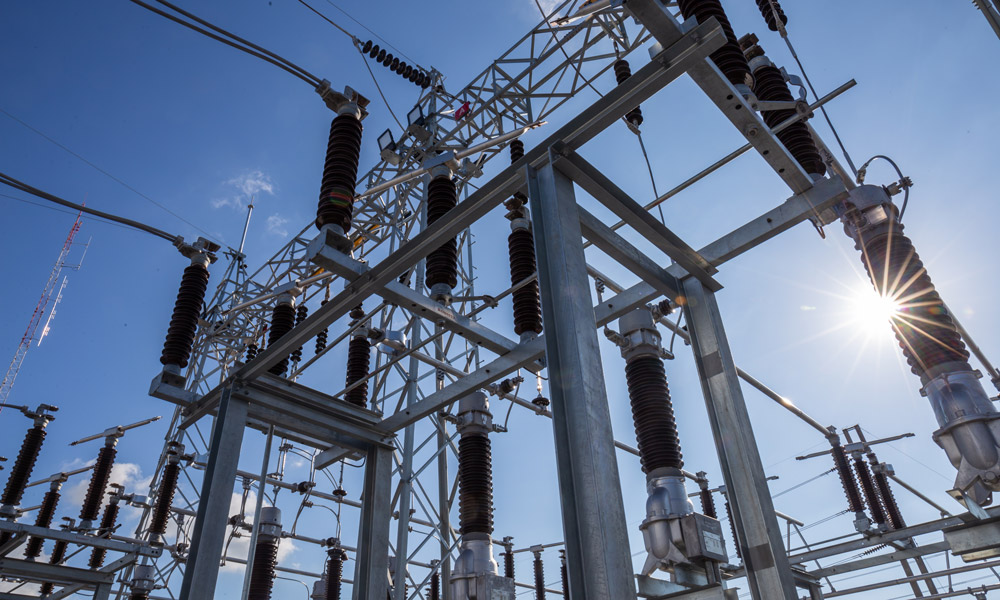
Load forecasts that had seemed aggressive a year earlier were suddenly conservative. Interconnection queues lengthened. Utility timelines slipped beyond project schedules. In market after market, sites that checked every traditional box — land, zoning, access — were eliminated late in the process when power availability failed to materialize.
Our reporting made clear that this was not a localized problem. It was systemic. The scale and speed of demand outpaced planning models built for a slower era of growth.
AI Changed the Equation — and the Timeline
Artificial intelligence did not merely increase demand; it compressed time.
Facilities that once ramped power use gradually now required massive capacity at launch. Phased growth models became less viable. Utilities were asked to deliver years’ worth of load growth in months.
In response, uncertainty replaced predictability. Companies found themselves competing not just with one another, but with manufacturers, life sciences facilities, and communities drawing from the same finite grid resources.
In 2025, power was no longer an input. It was the constraint that reordered every other decision.
Utilities Moved From Background Role to Central Actor
One of the most consequential shifts of the year was the changing role of utilities.
Historically, utilities were treated as service providers — essential, but largely reactive. In 2025, they became strategic actors shaping where projects could go and how fast they could move.
Interconnection queues became competitive terrain. Grid upgrade commitments determined market viability. In some cases, utilities began signaling preference — explicitly or implicitly — among competing uses for limited capacity.
This shift altered the balance of power in site selection. Communities accustomed to marketing sites found themselves constrained by infrastructure decisions outside their immediate control. Developers and operators adapted by exploring new ownership models, pre-investing in capacity, or partnering earlier and more deeply with utilities.
The result was a sector no longer driven solely by land economics, but by infrastructure strategy.
Community Resistance and Resource Competition Intensified
As power demand grew, so did scrutiny.
Communities that had once welcomed data centers as low-impact economic development began asking harder questions. Water use, land consumption, and long-term grid impacts moved from footnotes to central concerns. In regions facing housing shortages or industrial workforce needs, the competition between data centers and manufacturing for electricity became politically charged.
Our coverage showed how quickly the narrative shifted. What had been framed as clean, quiet growth increasingly required justification — not just in economic terms, but in terms of opportunity cost.
Data centers, once viewed as passive infrastructure, became active participants in broader debates about growth, resilience, and equity.
Capital and Ownership Models Adjusted — Unevenly
Faced with these constraints, capital adapted, but not uniformly.
Some developers pursued vertical integration, securing power ahead of site control. Others leaned into partnerships that bundled land, infrastructure, and operations into a single proposition. Financing models evolved to account for longer timelines and higher upfront risk.
Yet adaptation had limits. Smaller operators struggled to compete for capacity. Markets without proactive utility planning fell out of favor. Projects that could not guarantee execution certainty lost momentum regardless of demand strength.
In 2025, access to capital remained necessary — but no longer sufficient.
The Ripple Effects Reached Beyond the Sector
Perhaps the most important lesson of the year was that data center growth did not occur in isolation.
The same power constraints shaping hyperscale decisions affected manufacturing, logistics, and defense projects. Communities learned that attracting one sector could foreclose opportunities in another. Trade-offs became unavoidable.
In that sense, data centers served as an accelerant. They forced long-deferred conversations about grid investment, land use, and regional planning into the open. They revealed which regions had prepared for growth — and which had not.
The End of Easy Growth
By the close of 2025, the data center sector stood at an inflection point.
Demand remained strong. Technology continued to advance. But the era of easy expansion — where land availability and incentives could carry a project forward — had ended.
What replaced it was a more disciplined, more political, and more infrastructure-driven reality. One where success depended on early alignment among utilities, governments, communities, and capital.
As the industry moves into 2026, the defining question is no longer where data centers can be built.
It is who gets access to power first — and who is prepared to make the long-term commitments that access now requires.