Like many of you, I have been following the developing debate over data centers, one of the few issues today generating something approaching bipartisan consensus. Across the political spectrum, Americans are expressing concern about the rapid expansion of these facilities and their demands on electricity, water and local infrastructure.
Data centers, of course, are hardly new. They have been essential to the digital revolution for decades. Long before generative artificial intelligence emerged, data centers made cloud computing possible, enabled streaming services, supported e-commerce and powered much of the digital economy.
What generative AI has changed is the scale and urgency of the demand. AI requires extraordinary computing power, and the facilities needed to provide it are becoming larger, more expensive and more consequential.
Communities that accommodate them thoughtfully are likely to attract investment, talent and new industries.
States and communities have responded in very different ways. Some have aggressively recruited data center investment, viewing it as a catalyst for economic growth. Others have blocked projects or imposed development moratoriums. The principal concerns are familiar: enormous electricity consumption, significant water usage and, in some cases, noise and other impacts on nearby neighborhoods.
Louisiana offers an interesting case study.
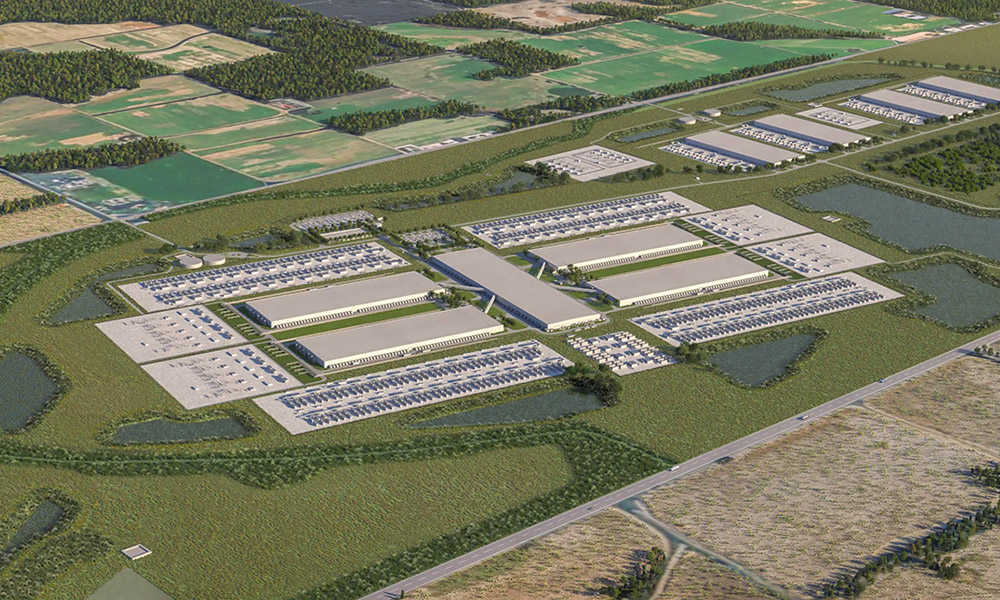
Meta’s planned $50 billion AI data center in Richland Parish is one of the largest economic development projects in the state’s history. Supporters see a transformational investment that will generate thousands of construction jobs, substantial tax revenue, infrastructure improvements and long-term opportunities in one of Louisiana’s most economically challenged regions.
Critics have raised legitimate questions about the project’s unprecedented electricity demand, its environmental impact and whether existing utility customers could ultimately bear some of the cost of the infrastructure required to support it.
I am quite familiar with the site Meta selected. About 20 years ago, when I led site selection for Toyota’s North American manufacturing operations, we evaluated the property as a potential location for a new automobile assembly plant. At the time, we identified several significant deficiencies that prevented the site from being competitive. Many of those shortcomings were subsequently addressed by the state, making the property far more attractive for large-scale industrial development.
Just as railroads became the indispensable infrastructure of the Industrial Revolution, AI data centers are becoming indispensable infrastructure for the Intelligence Revolution.
In my opinion, this project makes a great deal of sense for this part of Louisiana. The region has spent more than two decades trying to attract a major industrial investment, and the economic benefits are already becoming evident.
Local tax revenues have increased substantially. Teachers in Richland Parish are expected to receive bonuses of approximately $50,000 each. Property values have risen, local businesses are benefiting from the influx of workers and investment, and some young people who previously left the region in search of employment are returning home.
The site also has advantages that many competing locations do not. Unlike large parts of the western United States, this region of Louisiana has abundant water. Entergy, the regional utility, is investing billions of dollars in new infrastructure, including natural gas-fired generation, transmission lines, substations and battery storage. The project will also benefit from the region’s abundant natural gas resources, which can provide the reliable, around-the-clock electricity an AI data center of this scale requires.
That does not mean the project should escape scrutiny.
That does not mean the project should escape scrutiny. Developments of this magnitude almost always generate debate over incentives, tax abatements, infrastructure costs, community growth and the long-term economic value that remains after construction is complete.
Northern Nevada had much the same debate when Tesla selected the region for its Gigafactory. Critics questioned the public incentives, infrastructure demands and lasting value of the project. A decade later, there is little doubt that the Gigafactory had a profoundly positive effect on the region’s economy and helped establish Northern Nevada as a center for advanced manufacturing and battery technology.
Just as railroads became the indispensable infrastructure of the Industrial Revolution, AI data centers are becoming indispensable infrastructure for the Intelligence Revolution.
Communities that accommodate them thoughtfully are likely to attract investment, talent and new industries. Those that reject them outright risk the fate of towns bypassed by the railroad: declining competitiveness, lost opportunity and, in some cases, a slow economic fade.
For full disclosure, AI — and the computing power of a data center somewhere — helped me prepare this column.
Consider it Exhibit A.