Global supply chains are being reshaped by geopolitical uncertainty, shifting trade relationships, rising transportation costs and changing freight flows. As those forces converge, transportation strategy has become a central lens through which many industrial location decisions are evaluated.
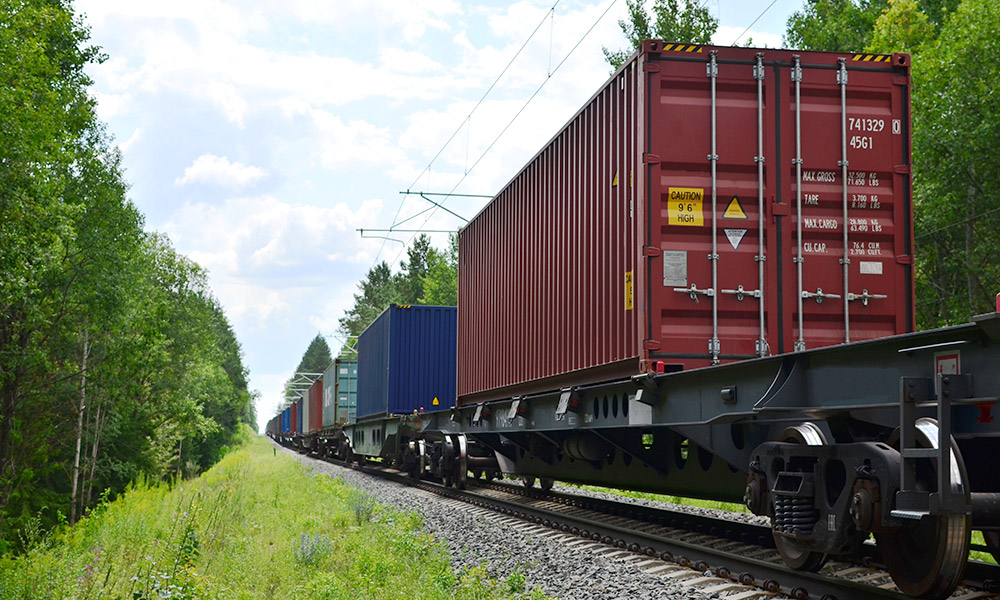
Intermodal transportation has become a core component of industrial supply chain strategy as companies seek more cost-effective ways to move freight. It allows goods to travel long distances by rail before being transferred to trucks for final delivery.
Rail is handling a larger share of long-haul freight as trucking becomes more expensive. Higher operating costs and more limited trucking capacity due to strengthened Federal Motor Carrier Safety Administration enforcement of English-language proficiency requirements and tighter federal oversight of the issuance of nondomiciled commercial driver’s licenses, along with rising insurance premiums and fuel-price volatility, have strengthened the economic case for intermodal transportation. As a result, more companies are shifting freight to rail for the long-haul portion of the journey.
The building becomes a logistics asset rather than simply a real estate expense.
Location matters more than ever
As supply chains change, so do the characteristics of desirable industrial locations.
Today, proximity to major intermodal facilities has become one of the strongest competitive advantages in industrial site selection.
Every mile between an intermodal terminal and a distribution center adds drayage costs, the trucking expense associated with moving containers from the rail terminal to the warehouse. While often overlooked during site selection, those costs accumulate over the life of a facility.
For companies moving significant freight volumes, locating near an intermodal hub can produce measurable operating savings year after year. That means locations with established intermodal infrastructure deserve greater weight during the site selection process.
Transportation costs are incurred every day a facility operates, while occupancy costs tend to be far more predictable. That reality is causing many companies to prioritize supply chain efficiency over simply minimizing occupancy costs.
Companies must consider not only where freight moves today, but how trade routes could change during the lifespan of a facility.
For site selectors, transportation analysis is among the first filters used to narrow potential markets.
Supply chains are becoming more diversified
Another trend influencing industrial real estate is the changing geography of global manufacturing.Companies are reducing their reliance on any single sourcing country by expanding supplier networks across multiple regions. At the same time, importers are adapting to changing tariff policies and shifting geopolitical relationships. In the near term, some companies are accelerating shipments ahead of potential tariff increases. Longer term, many manufacturers are expanding production beyond China into multiple countries.
As freight origins change, so does activity at the ports and inland transportation corridors that support them.
Historically, much of America’s imported freight entered through West Coast ports before moving inland. As manufacturing expands beyond China into countries such as Vietnam, India and other parts of Southeast Asia, freight flows are expected to shift toward East and Gulf Coast ports, creating new opportunities for industrial development along those corridors while reinforcing Chicago’s role as the nation’s premier inland logistics hub.
$450M
That shift will increase demand for industrial real estate along key inland freight corridors, particularly those serving the Midwest, with its central location and easier access to major population centers across the U.S. Chicago remains particularly well-positioned because it connects virtually every major freight network in North America through its extensive intermodal infrastructure.
Recent projects, including Hyundai Translead’s decision to establish a $450 million manufacturing operation in Illinois, illustrate how transportation infrastructure continues to influence major corporate location decisions.
Resilience is replacing efficiency
For years, companies optimized supply chains around just-in-time inventory management. As tariffs, geopolitical conflict, sourcing changes and transportation disruptions have made supply chains less predictable, many companies are using a just-in-case strategy — holding more safety stock so they are better protected against sudden changes in their supply chains.
A lower-cost building may not remain the lower-cost option if its location adds substantial expense to every shipment.
Future labor negotiations at major U.S. ports — the West Coast contract expires in July 2028 and the East Coast contract in September 2030 — will also influence freight routing decisions. Companies often begin developing contingency plans well before labor contracts expire, diversifying port usage to reduce the risk of a supply chain disruption.
Rather than relying on a single supply route, organizations increasingly want more options. They are evaluating multiple ports of entry, diversified transportation modes and distribution networks that can adapt when disruption occurs.
This evolution affects industrial real estate directly. Companies are reevaluating distribution networks, expanding inventory positions and considering facilities that provide greater transportation flexibility rather than simply minimizing occupancy costs.
Modern buildings are becoming logistics assets
Transportation strategy is also influencing what companies want inside their buildings. Occupiers increasingly favor newer facilities with higher clear heights, greater power capacity and flexible layouts designed to support automation, robotics and advanced material-handling systems. Although these facilities often command higher rents, they allow users to improve throughput, maximize cubic storage and reduce long-term operating costs, making them a strategic investment rather than simply a real estate expense.
Transportation costs are incurred every day a facility operates, while occupancy costs tend to be more predictable.
Beyond location and labor, occupiers are placing greater emphasis on infrastructure. Power availability has become a critical consideration as warehouses adopt more automation and advanced material-handling equipment, while water availability and property insurance costs are emerging as additional long-term site selection factors.
The most valuable industrial facilities are those that improve the efficiency and resilience of the entire supply chain while positioning for future flexibility.
Looking beyond today’s market
Industrial site selection has always required a long-term perspective, but today’s environment demands an even broader view. Transportation networks, trade relationships, labor markets and infrastructure investments will continue to evolve over the coming decade. Companies that anticipate those changes rather than react to them will be better positioned for long-term success.
Transportation has become the thread connecting nearly every major site selection decision — from where freight enters the country to how products ultimately reach customers.
The industrial facilities that create the greatest long-term value will be positioned within resilient transportation networks that can adapt to whatever comes next.