For years, the conversation around strengthening America's defense industrial base has centered on funding. Congress has authorized billions of dollars to replenish munitions stockpiles, expand domestic semiconductor production, accelerate autonomous systems and reduce dependence on foreign supply chains.
Yet despite that investment, another challenge continues to slow progress: the physical capacity needed to manufacture these technologies.
The obstacle is no longer simply capital. It is infrastructure.
Modern defense manufacturing depends on an increasingly rare combination of assets: abundant electrical power, secure operating environments, multimodal transportation, specialized industrial facilities and access to a highly skilled workforce. Bringing all of those elements together at a single location has become one of the most difficult and time-consuming parts of developing new manufacturing capacity.
Ironically, the United States already owns many of the sites where those conditions converge.
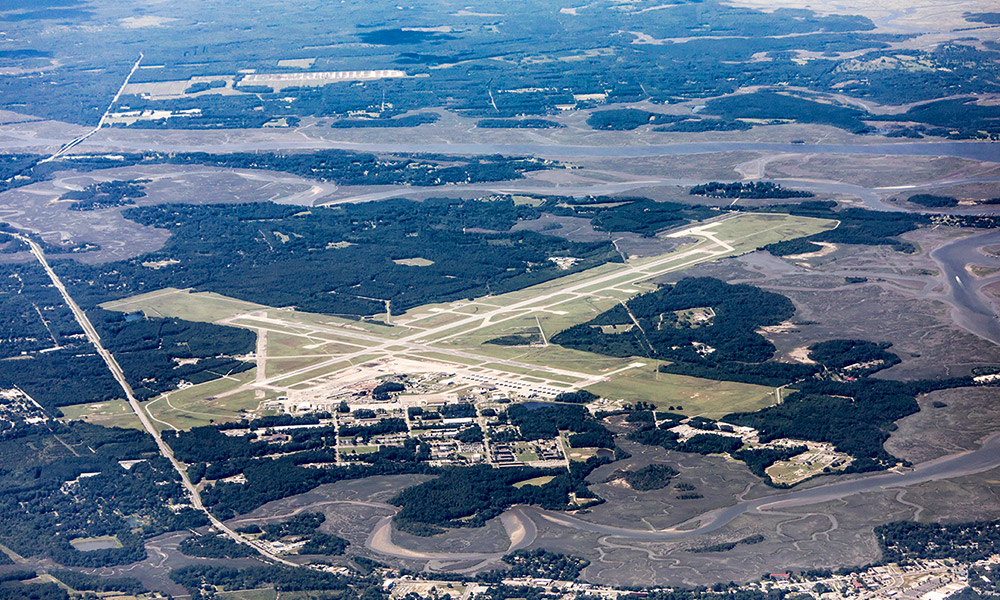
For decades, the Department of Defense invested billions of dollars building installations capable of supporting complex military operations. These bases were designed with resilient utilities, extensive transportation networks, secure perimeters, heavy industrial infrastructure and communities built around technically skilled workforces.
Today, some active installations contain underutilized land or facilities that could potentially support compatible industrial uses, while numerous former military bases retain much of the infrastructure that made them strategically valuable in the first place.
For defense manufacturers facing pressure to add capacity quickly, these properties deserve consideration not simply as government real estate but as strategically located industrial assets.
The new bottleneck is convergence
Industrial site selection has changed dramatically over the past decade. Previously, manufacturers primarily looked for affordable land with convenient highway access. Today, the decision is far more complex.
Companies developing advanced defense technologies must evaluate whether a site can support intensive electrical loads, security requirements, highly specialized manufacturing processes, 24-hour operations and rapid movement of materials and finished products. Equally important is access to engineers, technicians, skilled tradespeople and suppliers capable of supporting sophisticated production.
19,000
Individually, none of these requirements is unique. The challenge is finding them together.
This convergence of power, transportation, security, workforce and industrial infrastructure has become one of the scarcest resources in American manufacturing. Each component is typically developed independently, often over decades. Utilities build transmission capacity on one timeline. Transportation infrastructure follows another. Workforce development depends on regional educational investments and long-term industrial activity. Security requirements introduce an entirely separate layer of complexity.
Recreating that convergence on a greenfield site can take years. For companies supporting urgent national security priorities, that timeline has become increasingly difficult to accept.
The infrastructure already exists
Many military installations were designed around precisely this combination of infrastructure.
Whether still active or redeveloped following the Base Realignment and Closure process, these installations were intentionally built to bring together many of the assets modern manufacturers struggle to assemble today. Robust electrical infrastructure, rail access, highways, airfields, secure operating environments, heavy industrial facilities and communities experienced in supporting defense missions can be found at many of these locations.
The obstacle is no longer simply capital. It is infrastructure.
Several former military installations demonstrate what can happen when this infrastructure is adapted for private-sector industrial use.
Former Kelly Air Force Base in San Antonio, Texas, now known as Port San Antonio, has evolved into a major aerospace and defense innovation campus. Home to aerospace maintenance, cybersecurity firms, advanced manufacturing companies and military organizations, the campus continues to leverage the runways, utilities, workforce and infrastructure originally built to support military operations. According to Port San Antonio, more than 80 tenant customers on campus employ 19,000 people and generate $20 billion in annual economic activity.
Similarly, the former Pease Air Force Base in New Hampshire has been transformed into Pease International Tradeport, where aerospace companies, advanced manufacturers and technology firms operate alongside an active Air National Guard mission. The site's existing transportation network, utilities and aviation infrastructure provided a foundation for its redevelopment. Pease Development Authority describes the campus as a 3,000-acre business and industrial park comprising 250 companies employing more than 10,000 people and occupying 4 million square feet of office and industrial space.
A different model exists within active government-owned facilities. The nation's network of Government-Owned, Contractor-Operated ammunition plants demonstrates that public ownership and private industrial operation can coexist. Facilities such as the Holston Army Ammunition Plant in Tennessee and Radford Army Ammunition Plant in Virginia remain government-owned while private companies operate production on behalf of the Department of Defense.
The models differ significantly in purpose, access and governance. But they illustrate a common principle: Existing infrastructure can provide a valuable starting point for industrial capacity that would otherwise have to be assembled from scratch.
From real estate to manufacturing ecosystems
Historically, excess military property has often been viewed through the lens of real estate management — identifying unused parcels, leasing available buildings or disposing of surplus assets. Those approaches serve legitimate purposes, but from a manufacturer's perspective, they may understate the value of what already surrounds the real estate.
250
The greatest value of these installations may not be an individual building or parcel. It may be the industrial ecosystem around it.
Modern manufacturing increasingly depends on tightly integrated networks of suppliers, component manufacturers, testing facilities, logistics providers, workforce training organizations and end users operating in close proximity. These ecosystems can shorten supply chains, improve collaboration, reduce infrastructure costs and create the resiliency necessary for industries supporting national security.
For manufacturers and site selectors, that changes how a former or compatible active military property should be evaluated. The question is not simply whether acreage or a building is available. It is whether the surrounding infrastructure, workforce, transportation, security and supplier network can eliminate steps that would otherwise have to be recreated elsewhere.
The commercial real estate industry has embraced this broader approach for years, building logistics parks, technology corridors and innovation districts around complementary businesses and shared infrastructure. Applying similar thinking to defense manufacturing could accelerate domestic production while making better use of assets the nation has already built.
A strategic opportunity
The timing could hardly be more significant.
The United States is simultaneously expanding production of munitions, autonomous systems, aerospace components, shipbuilding technologies, advanced electronics, propulsion systems and critical minerals processing. Nearly every one of these industries depends on specialized facilities with significant power requirements and, in many cases, highly secure operating environments.
At the same time, the rapid growth of artificial intelligence infrastructure has highlighted an emerging reality across American industry: Electrical power and site readiness, not financing alone, are increasingly determining where major industrial investment can occur.
Companies are not simply searching for buildings. They are searching for infrastructure that can support long-term growth.
Defense manufacturers face the same challenge.
The question, therefore, is not simply whether America possesses the financial resources to expand its industrial base. The question is whether manufacturers can bring new capacity online quickly enough to meet strategic demand.
Existing military infrastructure may offer one path toward answering that challenge.
Looking beyond acreage
America's next defense manufacturing advantage may not require discovering new sites at all.
For manufacturers evaluating these properties, the first questions should go well beyond acreage and lease rates.
How much resilient power exists? What transportation assets are already in place? What industrial facilities remain usable? What security requirements and operating restrictions apply? How quickly could manufacturing operations begin? Does the surrounding community already possess the workforce and supplier network required to support advanced production?
Those questions reveal a different way to evaluate military properties.
Rather than simply asking whether a site is available, companies can examine how much of the infrastructure required for production has already been assembled — and how much time and capital that could remove from the development process.
The United States has spent decades building transportation networks, utilities, security infrastructure and workforce ecosystems around its military installations. Where those assets can support compatible private-sector development, their value may extend well beyond the acreage itself.
America's next defense manufacturing advantage may not require discovering new sites at all.
It may simply require seeing the ones we already have hiding in plain site.