Editor's Note:This article was paid for and written by Virginia Economic Development Partnership and approved by Area Development.
More than 200 miles from the nearest ocean, the city of Danville may seem an unlikely source of maritime expertise. But it’s a specialization that has been years in the making. More than 20 years ago, the region began building the infrastructure to create a skilled-trades and manufacturing workforce pipeline, preparing the resources that would attract new industries to the rural area — just one way Virginia is meeting the demand for a skilled workforce capable of supporting aerospace and defense projects through innovative workforce pipelines.
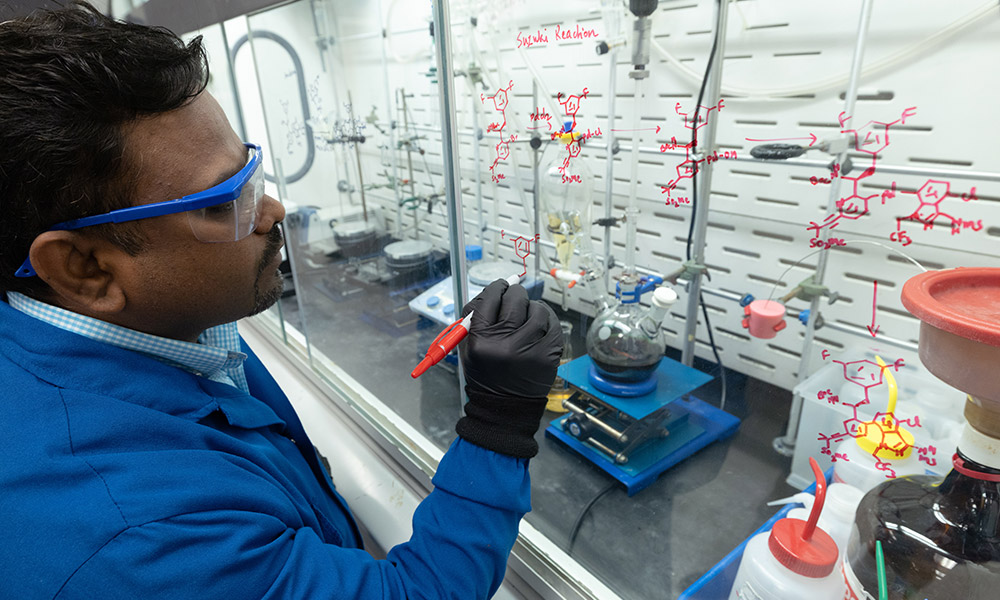
With federal support, Danville’s Institute for Advanced Learning and Research (IALR) developed the Accelerated Training in Defense Manufacturing (ATDM) program to help the U.S. Navy reach its demanding workforce needs. The ATDM pilot was designed to arm trainees, over the course of a 16-week program, with fundamental skills that allow them to walk into a defense manufacturing company and contribute on day one through more than 600 intensive hours of focused training. Students can graduate from tracks with multiple certifications.
“Our goal is to reduce the time to talent,” said IALR President Telly Tucker. “Companies have told us we’ve saved them as much as two years [in training].” The program’s goal is to matriculate up to 1,000 students each year — and serve as a model for additional programs across the country that will help the Navy reach its workforce needs.
A National Center for the Maritime Industry
The Hampton Roads Workforce Council (HRWC) in Norfolk is among the organizations helping coordinate these programs through the Hampton Roads Maritime Training System (HRMTS). The system is essential in bringing skill sets together to produce defense assets in what Shawn Avery, the council’s president and CEO, calls “the nation’s military metro.” He adds that Hampton Roads has “the largest concentration of shipbuilding and ship repair in the nation here with Newport News Shipbuilding and all of our repair yards.”
We’re five years into this and producing about 5,000 to 6,000 people per year in this effort. Within the next two to three years, we will have the capacity to produce up to 10,000 people per year in the maritime industrial base here in Hampton Roads.
With investment support from the Navy and its Submarine Industrial Base (SIB) Program Office, as well as other federal agencies, the HRMTS is connecting trainees from a range of regional programs, like IALR’s ATDM program, to jobs in the defense sector. The organization works with the region’s three community colleges — Tidewater, Virginia Peninsula and Paul D. Camp — on credit and noncredit maritime training.
“We’re five years into this and producing about 5,000 to 6,000 people per year in this effort,” Avery said. “Within the next two to three years, we will have the capacity to produce up to 10,000 people per year in the maritime industrial base here in Hampton Roads.”
The greatest demand has been for employees skilled in welding, electrical work, pipefitting, shipfitting and machining. Among other areas, the HRWC has aggressively expanded welding training, moving from meeting just 50 percent of demand five years ago to having one qualified welder for every open position today.
Welding is also the most popular program within IALR’s ATDM program. However, IALR is watching the Navy’s increased interest in nondestructive testing (NDT) and is exploring adding a track around electronics. Enhancing that demand is the trilateral AUKUS partnership between the United States, Australia, and the United Kingdom, a security agreement to create cohesion in nuclear arsenals among the allies that includes the Royal Australian Navy’s purchase of five Virginia-class submarines from the United States. NNS, Virginia’s largest industrial employer, is a member of the AUKUS Workforce Alliance, a partnership with three Australian universities dedicated to building a skilled workforce to support the partnership. The College of William & Mary will serve as the U.S. academic home of the partnership.
At one time, it may have been difficult for individuals to demonstrate experience in designing, building and maintaining bleeding-edge defense systems. But Virginia’s range of hands-on training opportunities is preparing individuals at every level for rewarding careers advancing innovative technology and the national security mission.