Editor's Note:This article was paid for and written by Georgia Power and approved by Area Development.
For decades, economic development conversations centered on familiar priorities: workforce, transportation, taxes and sites. Those factors remain essential, but today’s project landscape has introduced a new differentiator that increasingly determines where companies choose to invest: confidence in the electric grid.
As manufacturers expand, supply chains electrify and energy-intensive industries such as artificial intelligence and data centers accelerate demand, businesses are asking a single fundamental question more than ever before: Can you reliably provide the power we need?
For states competing for these types of transformative investments, the answer increasingly defines their competitive position.
Georgia has emerged as one of the nation’s leading destinations for business investment because it pairs a strong economic development ecosystem with an electric grid built for long-term growth. At the center of that advantage is Georgia Power’s vertically integrated business model and constructive regulatory environment, which allow the company to plan decades ahead while maintaining reliability, affordability and resilience.
The result is a framework that supports economic growth while protecting affordability.
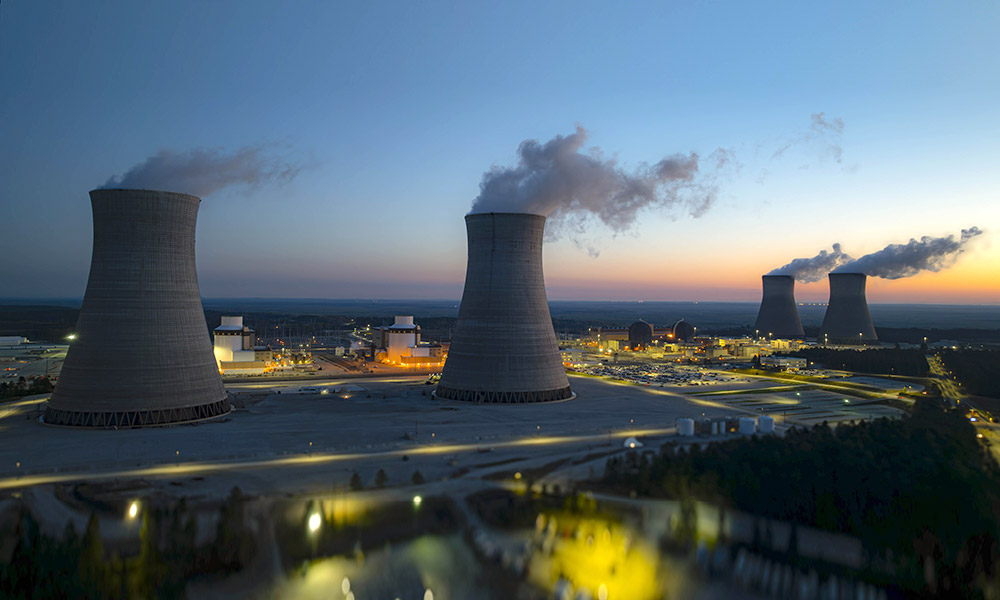
Unlike utilities operating in deregulated markets, Georgia Power owns and manages its generation, transmission and distribution assets as an integrated system. This structure enables coordinated, long-term planning across the entire electric value chain rather than relying on multiple independent entities to make investment decisions.
That integrated approach matters when companies are making multibillion-dollar location decisions.
Whether supporting advanced manufacturers, life sciences companies, logistics operations or hyperscale data centers, businesses need confidence that electric infrastructure will be available when facilities are ready to come online. Georgia Power’s ability to forecast demand, invest proactively and coordinate infrastructure development gives site selectors and corporate decision-makers a higher degree of certainty throughout the project life cycle.
In addition to Georgia Power’s internal structure, the state’s regulatory model encourages thoughtful, long-term investment in generation and grid infrastructure while maintaining transparency and oversight through the Georgia Public Service Commission. Rather than reacting to demand after it materializes, Georgia Power can plan for future growth through its Integrated Resource Planning process, which evaluates projected customer needs years in advance.
Georgia’s experience demonstrates that sustainable economic development depends not simply on having available megawatts, but on having the oversight, planning and investment framework to deliver them with confidence.
This long-range approach has become increasingly valuable as electric demand growth reaches levels not seen in decades.
The rapid growth of Georgia’s large-load manufacturing and digital infrastructure projects represents an important economic opportunity for the state, bringing substantial capital investment while supporting today’s increasingly digital economy.
At the same time, serving these large customers requires careful planning to ensure continued reliability for every customer connected to the grid.
Recognizing this evolving landscape, Georgia has implemented policies that ensure large-load customers — including data centers — pay the costs associated with the infrastructure necessary to serve their operations. Under rules approved by the Georgia Public Service Commission, these customers are responsible for the costs they impose on the electric system, including investments needed to reliably meet their demand.
Energy certainty has become a strategic asset rather than an operational consideration.
This approach is an important principle of sound utility regulation. Customers whose energy requirements drive new infrastructure investments are expected to bear those costs rather than shifting them onto residential households or existing commercial and industrial customers.
The result is a framework that supports economic growth while protecting affordability.
By aligning infrastructure costs with the customers creating the demand, Georgia can continue attracting large-scale investment without placing an undue financial burden on families or businesses already served by the system. It is an approach that balances economic competitiveness with responsible stewardship of the electric grid.
For companies considering major investments, this creates confidence on multiple levels. Businesses know the utility can support their operational needs, existing customers benefit from continued affordability, and communities gain the economic advantages of new jobs, tax-base expansion and private investment.
Energy certainty has become a strategic asset rather than an operational consideration.
As competition for investment intensifies nationwide, communities that can offer reliable infrastructure, predictable energy planning and transparent regulatory policies will continue to set themselves apart. Georgia’s experience demonstrates that sustainable economic development depends not simply on having available megawatts, but on having the oversight, planning and investment framework to deliver them with confidence.