
A few years ago, logistics strategy was still largely about efficiency. The objective was straightforward: reduce transportation costs, minimize inventory, and move products through the network as quickly as possible.
That framework hasn't disappeared, but 2026 has made its limitations increasingly clear.
Across brokerage outlooks, occupier surveys, and industrial market research, a different set of priorities is beginning to emerge. Companies are still focused on cost, but they are placing equal emphasis on flexibility, visibility, and the ability to absorb disruption. The result is a new generation of logistics decisions that look less like optimization exercises and more like risk-management strategies.
For site selectors and corporate real estate leaders, several themes stand out as likely to shape location decisions heading into 2027.
Network redundancy is replacing maximum efficiency.
One of the clearest lessons of the past few years is that highly optimized networks can also be highly vulnerable.
JLL's industrial and logistics research continues to show occupiers focusing on network optimization rather than footprint expansion, evaluating how facilities function together rather than simply adding capacity (JLL). The emphasis is increasingly on creating options within the network rather than extracting every possible efficiency from a single route or facility.
That shift is influencing decisions about facility placement, transportation modes, and inventory positioning. Companies are asking whether they can reroute freight if a port slows, redirect inventory if demand shifts, or maintain service levels if a supplier encounters problems.
In many cases, the answer involves building more flexibility into the network than traditional efficiency models would have allowed.
Infrastructure is becoming a competitive differentiator.
Highly optimized networks can also be highly vulnerable.
Transportation infrastructure has always mattered. What's changing is the degree to which it influences site selection decisions.
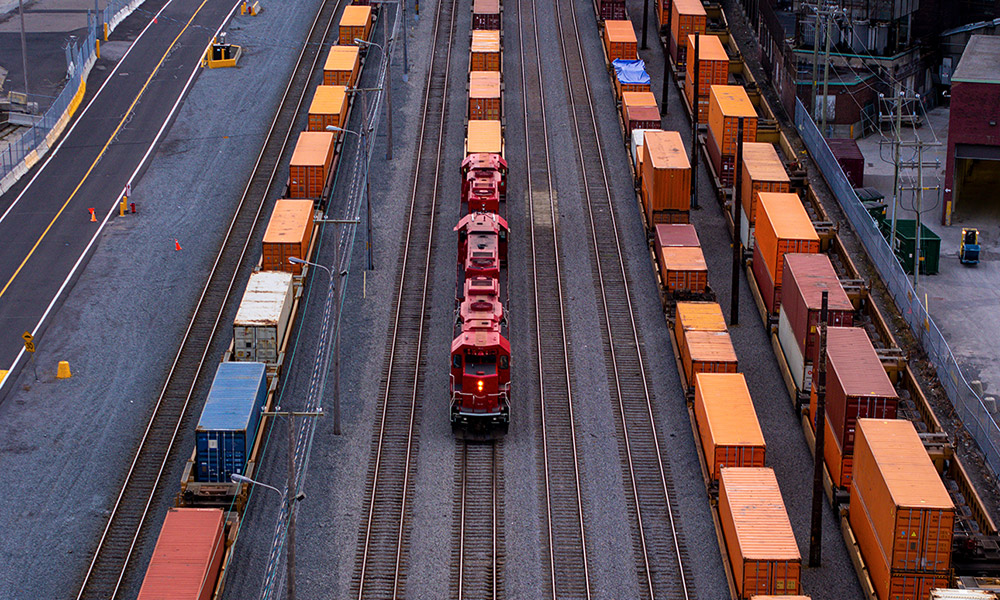
Cushman & Wakefield's industrial outlook highlights continued interest in markets with access to multiple transportation modes and strong connectivity to regional and national freight networks (Cushman & Wakefield). Interstate access remains important, but companies are also placing greater emphasis on rail connectivity, inland ports, air cargo capabilities, and intermodal facilities. For regions competing for logistics investment, that raises the importance of infrastructure readiness.
A site may offer available land and competitive costs, but if it lacks the transportation assets needed to support a modern logistics network, it becomes more difficult to justify. Conversely, markets that can demonstrate freight mobility, redundancy, and long-term infrastructure planning are finding themselves in stronger competitive positions.
Automation is changing the labor conversation.
Labor remains a critical factor in logistics location decisions, but automation is reshaping what companies mean when they talk about workforce requirements.
Across industrial markets, occupiers continue investing in automated storage systems, robotics, and advanced material-handling technologies. The goal is not necessarily to eliminate labor, but to improve throughput, reliability, and scalability.
Transportation infrastructure increasingly serves as a competitive differentiator.
That shift changes the characteristics companies look for in a market.
Rather than focusing exclusively on the size of the available labor pool, logistics operators are increasingly evaluating access to technicians, maintenance personnel, and workers capable of supporting more sophisticated operations. Markets that can demonstrate technical workforce development are likely to become more competitive as automation adoption expands.
Colliers' industrial research points to this evolution as one reason some secondary markets continue attracting logistics investment despite having smaller labor pools than traditional distribution hubs (Colliers).
Inventory strategy is becoming more deliberate.
The just-in-time supply chain is not disappearing, but it is being modified.
The experience of recent years has led many companies to reassess how much inventory they carry, where they place it, and how quickly they can reposition it when conditions change.
CBRE's industrial outlook suggests occupiers remain focused on efficiency, but increasingly through the lens of resilience rather than pure cost minimization (CBRE). Strategic inventory buffers, diversified sourcing strategies, and more flexible distribution networks are becoming part of normal planning rather than exceptional measures.
That has implications for site selection. Facilities located near major population centers remain valuable, but so do locations capable of serving multiple markets efficiently. Companies are increasingly evaluating whether a site enhances overall network flexibility rather than simply reducing transportation costs to a single destination.
Location decisions are becoming more complex.
Automation is reshaping what companies mean when they talk about workforce.
Perhaps the most significant lesson emerging from 2026 is that logistics decisions are no longer driven by one or two dominant factors.
A decade ago, a company might have prioritized transportation costs and labor availability above all else. Today, decisions are more likely to involve a broader mix of considerations, including infrastructure resilience, automation readiness, workforce quality, inventory strategy, transportation optionality, and business continuity planning.
Newmark's broader commercial real estate outlook reflects this trend toward more integrated decision-making, with supply chain considerations increasingly tied to overall corporate risk management and long-term growth strategies (Newmark).
The result is a more demanding site selection process, but also a more strategic one.
The logistics story of 2026 has not been about dramatic disruption or explosive growth. It has been about adaptation. Companies are discovering which assumptions still hold, which no longer do, and what capabilities will matter most in the next phase of supply chain development.
For regions competing for investment, that creates both challenges and opportunities. Cost will always matter. So will access and labor. But increasingly, the winners will be the markets that help companies build logistics networks capable of absorbing uncertainty rather than simply operating efficiently when conditions are ideal.
That may be the defining logistics lesson of 2026 — and the one most likely to influence site decisions in 2027.