For years, rail was often introduced late in the location process.
A company would identify a market, narrow a list of sites, evaluate utilities and workforce, and only then determine whether rail service might be beneficial.
Increasingly, that sequence is reversing.
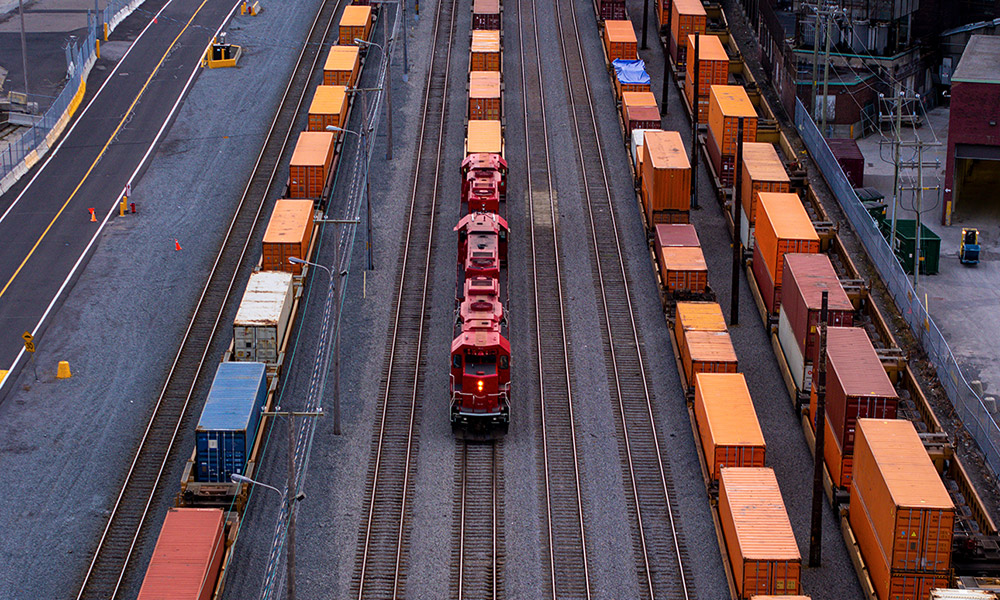
Across logistics, manufacturing, and industrial real estate, rail and intermodal connectivity are appearing earlier in site selection discussions as companies reassess how freight moves through their networks. The shift isn't being driven by nostalgia for rail transportation. It's being driven by economics, resiliency, and a growing recognition that transportation flexibility has become a competitive advantage.
Nine months into 2026, one of the clearer lessons emerging from supply chain planning is that dependence on a single mode of transportation carries more risk than many companies previously assumed.
JLL's industrial and logistics research points to continued emphasis on network resilience and transportation optionality, particularly as occupiers seek greater flexibility in response to changing market conditions (JLL). Rather than optimizing around a single transportation strategy, companies are increasingly building networks capable of shifting between modes when necessary.
That approach naturally elevates the role of intermodal infrastructure.
Transportation flexibility is becoming more valuable.
CBRE's industrial outlook similarly highlights the growing importance of transportation access as occupiers evaluate long-term distribution strategies (CBRE). While highway access remains critical, many large users are placing greater value on locations that offer multiple freight options, including rail service and proximity to intermodal facilities.
The logic is straightforward.
Rail can move large volumes more efficiently over long distances, reduce exposure to trucking capacity fluctuations, and create additional routing flexibility when supply chains are disrupted. Those advantages become more meaningful as companies manage increasingly complex domestic distribution networks.
That is particularly relevant for manufacturers.
As reshoring and domestic production investments continue to expand, transportation considerations are extending beyond outbound logistics. Companies are evaluating how raw materials, components, and finished goods move throughout the production process. In many cases, rail access can influence operating costs for decades after a facility opens.
This is one reason economic developers and site selectors are seeing railroads become more active participants in the location process.
Rather than serving solely as transportation providers, rail operators are increasingly positioning themselves as development partners capable of evaluating site readiness, infrastructure requirements, and freight strategies early in the project lifecycle.
The trend is also benefiting intermodal facilities.
Rail and intermodal connectivity are increasingly moving from the end of the site selection checklist to the beginning.
Cushman & Wakefield's industrial research points to continued demand for markets with strong multimodal transportation capabilities, particularly those capable of connecting highway, rail, port, and air cargo infrastructure (Cushman & Wakefield). For many occupiers, the value is not tied to a single transportation mode but to the flexibility created by having multiple options available.
That flexibility is becoming more important as logistics strategies evolve.
Companies continue to balance efficiency with resilience, reassess inventory placement, and diversify supply chains. As those decisions become more complex, transportation infrastructure increasingly serves as a strategic asset rather than a background consideration.
Colliers' industrial outlook reflects this broader focus on infrastructure quality and long-term operational performance (Colliers). Markets that can demonstrate connectivity, capacity, and transportation redundancy are often better positioned to compete for large-scale industrial investment.
Transportation infrastructure increasingly serves as a strategic asset rather than a background consideration.
The implications extend beyond logistics.
Rail access can influence site readiness, construction timelines, utility development, and future expansion opportunities. For large manufacturing projects, particularly those involving bulk commodities, energy-intensive operations, or high-volume freight movement, transportation infrastructure increasingly shapes the feasibility of a site itself.
That is changing how companies evaluate locations.
Instead of asking whether rail service is available, more occupiers are beginning to ask how transportation infrastructure fits into broader business continuity and growth strategies.
For regions competing for industrial investment, that represents an opportunity.
The most competitive markets are no longer simply offering land, labor, and incentives. They are demonstrating how transportation infrastructure supports long-term operational performance.
The rail story emerging from 2026 is not that companies are abandoning trucks or dramatically changing freight patterns overnight.
It is that transportation flexibility is becoming more valuable.
And as companies plan for the next generation of supply chains, rail and intermodal connectivity are increasingly moving from the end of the site selection checklist to the beginning.