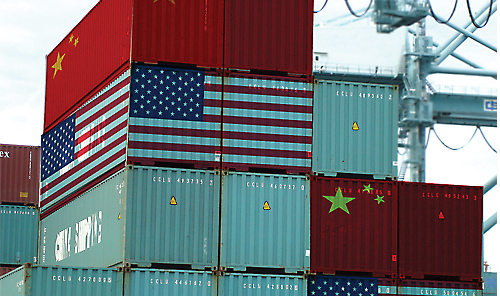

The reshoring momentum began more than 10 years ago, ignited by the 2012 presidential race between Barack Obama and Mitt Romney, during which both men criticized China for stealing American jobs, manipulating its currency, and committing human rights abuses. Reshoring experienced slow but steady growth over the next few years as companies began to consider bringing more manufacturing back to America. But the reshoring movement accelerated quickly after the COVID-19 pandemic exposed the enormous risks in global supply chains.
Since 2020, reshoring has been on the agenda in boardrooms across America, where rethinking global manufacturing has become a consistent topic of discussion. But even with all the executive attention, the question remains: Is manufacturing really coming back?
Yes and No
Reshoring is a popular idea and an obvious choice for American manufacturers, as long as businesses can make the economics work. That is, can a company compete on production costs with existing U.S. labor rates, which are often as much as 10 times higher than those in low-cost countries? In addition, companies must consider the complicated U.S. regulatory environment, environmental requirements and inconsistent government policy.
Companies that can automate production through capital equipment expenditures and reengineer their processes have a chance to make the economics work. But companies that depend on significant labor to build their products may not be able to compete. Reducing labor costs and automating production are key to successfully manufacturing in America.
Companies that can automate production and reengineer their processes have a chance to make the economics work.
While there has been slight and steady growth in manufacturing jobs over the past 15 years, various government policies, including tariffs and tax breaks, have not accelerated hiring as much as many had hoped. In the past two years, manufacturing job growth has been flat.
One Bright Spot: U.S. Defense Spending
One bright spot is manufacturing in the defense sector. The U.S. government is on track to spend $1.5 trillion on defense this year, and much of that will go to U.S. manufacturers or foreign companies that manufacture in the United States. Accelerated by the war with Iran, spending is expected to remain robust as the United States replenishes its weapons stockpiles.
Federal Acquisition Regulations require a certain percentage of each product purchased to be manufactured in the United States. Because of this, industrial manufacturing in America is expected to grow.
Other Made-in-USA Requirements Attracting FDI
Other U.S. government spending programs require products to be manufactured in America. The Infrastructure Investment and Jobs Act, the CHIPS and Science Act, and the Inflation Reduction Act all include requirements to buy raw materials, parts, subassemblies and other goods made, or at least partially made, in America. These funded programs have driven some manufacturing back to the United States, along with a significant amount of foreign direct investment from companies seeking to participate in government-funded programs.
For example, under the Infrastructure Investment and Jobs Act, specifically the Build America, Buy America Act, all iron, steel, manufactured products and construction materials used in federally funded public infrastructure projects must be produced in the United States.
$17B
The CHIPS and Science Act requires companies receiving federal subsidies, grants or tax credits to build, expand or modernize semiconductor manufacturing and research facilities in the United States. This has driven billions of dollars in foreign direct investment from Samsung and TSMC, both of which are building semiconductor fabrication facilities in the United States with partial funding from the federal government.
Foreign Direct Investment in U.S. Manufacturing
The three major government-funded acts have also generated strong interest from foreign investors. Foreign companies in the aerospace sector have invested heavily in U.S. manufacturing to sell products to the federal government and meet U.S.-made content requirements.
Reducing labor costs and automating production are key to successfully manufacturing in America.
Major foreign aerospace and defense corporations investing in U.S. manufacturing include European companies such as Airbus, BAE Systems and Safran, which operate extensive U.S. subsidiaries and supplier networks. Semiconductors, which are essential components of aerospace and defense products, are also being manufactured in the United States for the first time in decades. This focus on U.S. manufacturing benefits both foreign companies and manufacturing employment in America.
Airbus, based in Europe, operates a major commercial aircraft final assembly and manufacturing facility in Mobile, Alabama, producing A320- and A220-family jets. The facility is supported by hundreds of millions of dollars in ongoing expansions.
BAE Systems, based in the United Kingdom, invested $135 million to upgrade and expand its defense and precision-guided munitions manufacturing facilities in Texas and New Hampshire. Safran, based in France, operates multiple U.S. production and maintenance sites. The company is expanding its aerospace electrical systems maintenance, repair and overhaul facilities in Sarasota, Florida, and has opened advanced manufacturing operations for space propulsion in Colorado.
Leonardo, based in Italy, manufactures helicopters through its U.S. subsidiary, Leonardo Helicopters, with substantial operations in Philadelphia.
Samsung, based in South Korea, has invested in a semiconductor fabrication plant in Taylor, Texas. The company has described the project as its largest-ever investment in the United States, with an initial value of $17 billion. Samsung said the facility would expand production of advanced logic chips and improve the supply of critical chips used in next-generation technologies.
Foreign companies in the aerospace sector have invested heavily in U.S. manufacturing to meet U.S.-made content requirements.
Taiwan Semiconductor Manufacturing Co. announced that the expansion of its Arizona site will include three new fabrication plants, two advanced packaging facilities and a major research and development center. TSMC’s total U.S. investment is expected to reach $165 billion, which the company has described as the largest foreign direct investment in U.S. history. The project received $6.6 billion in direct funding under the CHIPS Act.
The Outlook for U.S. Manufacturing
Momentum appears to be building for more foreign direct investment and domestic investment in advanced manufacturing in America. With the assistance of U.S. government funding, the attractiveness of manufacturing in the United States is at an all-time high. Efficiencies gained through automation, robotics and the deployment of artificial intelligence have also strengthened the case for manufacturing here.
Even though job growth is likely to remain slow because of increased automation, investment by U.S. and foreign companies should provide a boost to the American economy.