
For Collins & Jewell Co., proximity to General Dynamics Electric Boat is both an advantage and a problem.
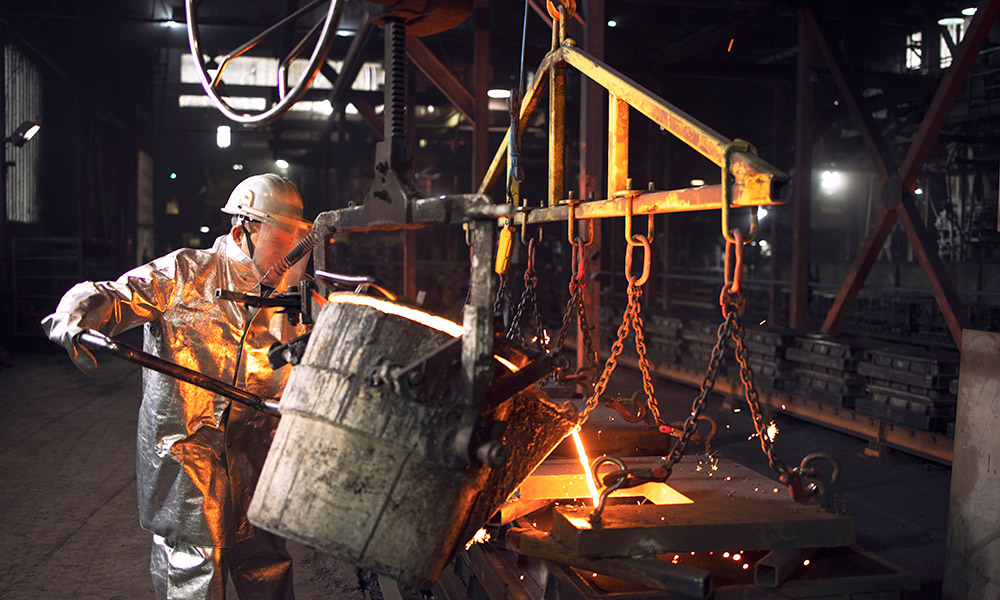
The 90-person custom steel fabrication company is located about 20 minutes from Electric Boat’s Groton shipyard, allowing engineers to visit the shop, inspect components and make changes while work is underway. Collins & Jewell produces everything from training equipment and testing fixtures to shipboard components.
Company President Chris Jewell describes the business as a “Swiss Army knife” for Electric Boat: Some assignments are as simple as the toothpick; others are as complicated as the scissors. But the two companies also recruit from the same limited pool of welders, fabricators and skilled manufacturing workers.
“It’s a blessing and a curse at the same time,” Jewell said. “The challenge is we’re competing for the same workforce.”
That competition is becoming more intense as the Navy’s submarine construction plans create decades of anticipated work for Electric Boat and the network of manufacturers surrounding it. Eastern Connecticut has spent years preparing for that growth, creating short-term training programs, restoring manufacturing instruction in high schools and bringing employers together to identify their shared workforce needs.
The question now is whether that system can expand quickly enough without leaving smaller suppliers behind.
Training pulled by demand
The region began preparing well before the current production surge.
There’s so much work to go around for everybody. It’s like, how can we work together to figure out how we can get all this work done effectively?
Between approximately 2006 and 2016, Eastern Connecticut lost about 3,000 manufacturing jobs, even as federal spending plans signaled that submarine construction would eventually require Electric Boat and its suppliers to hire substantially more workers.
Manufacturers came together through what became the Eastern Advanced Manufacturing Alliance, working with the Eastern Connecticut Workforce Investment Board, community colleges and other regional organizations to develop a foundational manufacturing curriculum.
The first classes began in 2016. The courses originally lasted five to seven weeks and concentrated on skills that could transfer across manufacturing occupations, including blueprint reading, precision measurement, manufacturing math, safety and quality standards.
Employers committed to hiring people who completed the training.
The initiative has since grown from one foundational curriculum into roughly a dozen training pathways. Programs cover occupations including machining, welding, pipe fitting, sheet metal work, electrical work, drafting and design, painting, rigging and ship fitting. Classes now range from approximately two and a half to 10 weeks.
Unlike workforce programs that train people in anticipation of future openings, the Eastern Connecticut model is driven by direct employer requests.
If employers determine that they will need a certain number of pipe fitters, for example, the workforce board works with colleges and training providers to schedule enough classes to meet that demand. Participants must generally be unemployed or underemployed, and training is offered at no cost. Support can also include work boots, clothing and transportation assistance.
90
The goal is not to turn a novice into a fully experienced tradesperson in several weeks. It is to provide roughly 70% of the skills required to enter the workplace, leaving employers to teach the remaining job-specific knowledge through on-the-job training.
About 80% of participants enter without previous manufacturing experience, according to the workforce board.
That approach aligns closely with how Jewell recruits.
Collins & Jewell receives about 400 applications and conducts roughly 200 interviews each year to hire 10 to 12 employees. Rather than limiting the search to experienced tradespeople, the company has hired former chefs, librarians, massage therapists and certified nursing assistants.
“We’re a big believer in hire for character, train for skill,” Jewell said.The company operates its own training and development department, allowing employees with the right attitude and work ethic to learn fabrication and manufacturing skills after they are hired.
Suppliers face a different equation
Training more workers does not eliminate the competition between Electric Boat and its suppliers.
We’re a big believer in hire for character, train for skill.
Large defense contractors can generally offer compensation and benefits that small manufacturers struggle to match. Jewell said his company must instead compete through workplace culture, broader responsibilities and the visibility employees receive inside a smaller organization.
“When you’re one of 90, you’re a bigger cog in the machine than when you’re one of 25,000,” he said.
The scale of available defense work has also changed the relationship among regional manufacturers.
Historically, Jewell said, manufacturers were reluctant to discuss their operations with neighboring companies for fear that competitors might take their work. With demand rising across the region, companies are increasingly sharing recruitment, retention, training and employee-wellness practices through the Eastern Advanced Manufacturing Alliance.
“There’s so much work to go around for everybody,” Jewell said. “It’s like, how can we work together to figure out how we can get all this work done effectively, and everybody gets fed at the end of the day?”
That collaboration is important because the available labor pool cannot be expanded through training alone.
Eastern Connecticut has a relatively small and dispersed population. Electric Boat is increasingly recruiting within an hour’s commute of Groton, including workers from Rhode Island, Massachusetts and communities farther west in Connecticut.
80%
Transportation, housing and child care have consequently become workforce issues.
The region lacks the extensive public transportation systems available in larger Connecticut cities. Employers are exploring carpools, company buses, connections to commuter rail and alternative schedules that allow employees to work longer shifts over fewer days.
Housing construction is increasing, but the available units may not always match what skilled trades workers want or can afford. Longer commutes can also complicate child care and make even well-paying manufacturing jobs less accessible.
Bringing shop class back
The region is also trying to build a longer-term pipeline by restoring manufacturing education that disappeared from many comprehensive high schools during the push toward college preparation. Connecticut’s technical high schools now have waiting lists, Jewell said, a reversal from the period when vocational education was often treated as a secondary option. He believes the state needs more technical-school capacity and potentially more programs concentrated specifically on industrial trades.
It’s a blessing and a curse at the same time. The challenge is we’re competing for the same workforce.
In response, the workforce board adapted its adult manufacturing curriculum into approximately 150 hours of instruction that can be delivered in comprehensive high schools. The region helped purchase equipment, reopen shop spaces and train teachers who may not have previously worked in manufacturing.
Fifteen comprehensive high schools now participate. Students can earn a community college credential, enter additional training, pursue an apprenticeship or move directly into the workforce. The broader system begins even earlier. Mobile manufacturing labs introduce younger students to industrial technology, while career events, internships and employer programs provide additional exposure throughout middle and high school.
A student could encounter manufacturing through a mobile lab in eighth grade, attend a career event as a sophomore, complete manufacturing coursework as a senior and later receive support through an apprenticeship or incumbent-worker training program.
Eastern Connecticut has therefore built more than a collection of disconnected training programs. It has created a pathway intended to move people from initial exposure to long-term manufacturing careers.
But the submarine buildup is now testing every part of that pathway at once.
Electric Boat must hire at scale. Suppliers must grow without losing workers to their largest customer. Schools must restore technical education, while communities address housing, transportation and child care.
The work may be secure for decades. Finding enough people—and ensuring that companies of every size can retain them—remains the harder assignment.