Critical minerals have quickly gone from a relatively specialized corner of industrial development to one of the most active areas of the site selection market.
What is particularly interesting, though, is where the activity is moving.
For much of the past several years, the critical minerals conversation centered on mining. Where are the deposits? How quickly can new resources be developed? How dependent is the United States on overseas sources?
Those questions still matter. But increasingly, the projects moving through the site selection pipeline are further downstream.
They are separation facilities. Refining operations. Advanced materials plants. Magnet manufacturers. Recycling technologies capable of recovering critical materials from industrial waste streams. And, in some cases, companies attempting to build several of those steps into a single domestic supply chain.
For site selectors, that changes the conversation considerably.
The critical minerals industry isn't simply looking for places where minerals can be extracted. It is looking for locations where those materials can be transformed.
And those projects have some very specific requirements.
The bottleneck is in the middle
One of the misconceptions about critical minerals is that America's primary vulnerability is the availability of raw material.
That is only part of the problem.
The larger challenge in many critical mineral supply chains is what happens after material comes out of the ground.
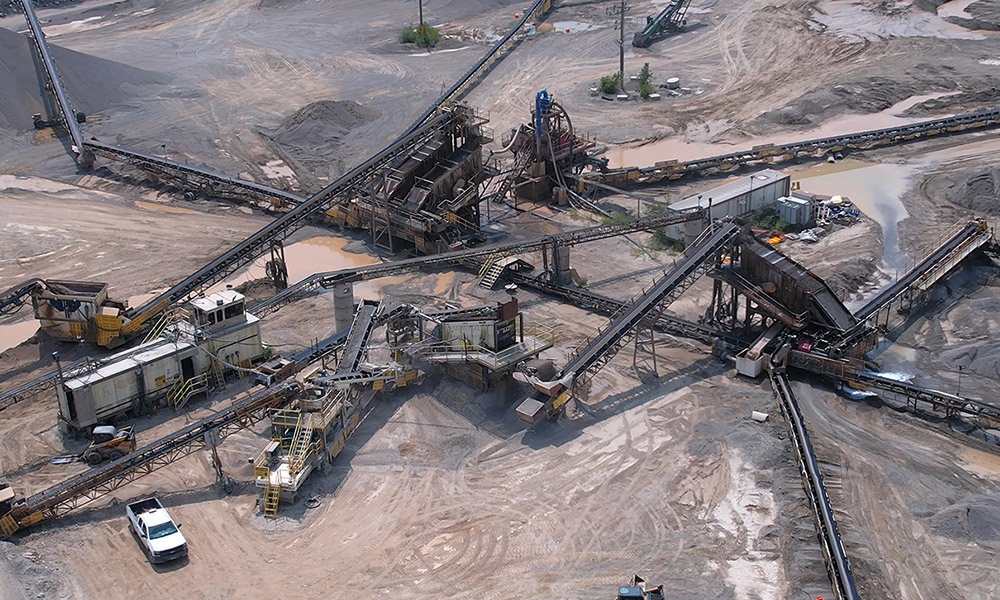
Mining is followed by separation and refining before those materials can move into items like magnets, specialty components, and ultimately finished products. While the United States and allied nations have meaningful mining capacity, much of the world's processing capability remains concentrated overseas.
That makes the middle of the supply chain strategically important.
From a site selection standpoint, it also makes it increasingly active.
We are seeing companies focused specifically on separation and refining, while others are pursuing more vertically integrated strategies that connect processing directly to advanced materials or magnet manufacturing.
The critical minerals industry isn’t simply looking for places where minerals can be extracted. It is looking for locations where those materials can be transformed.
That distinction matters because these projects don't necessarily need to locate next to a mine.
Feedstock may come from domestic mining operations, but it may also arrive from Australia, South America, or other allied markets.
As a result, proximity to the mine is often less important than access to the broader industrial supply chain.
Follow the feedstock
For many of these projects, the first location question is straightforward: How does the material get in?
That puts ports, rail, inland waterways, and established freight infrastructure high on the list of location considerations.
If a separation facility expects to receive feedstock from multiple sources — including international suppliers — locating close to a major port can be more valuable than locating near a single domestic mine.
The same logic applies to rail and barge access.
These operations can handle substantial volumes of material, and transportation costs can accumulate quickly when heavy feedstocks or finished metals have to travel long distances.
It helps explain why regions with established industrial logistics infrastructure are attracting attention.
The Gulf Coast is a good example.
Louisiana and southeast Texas combine deepwater ports, rail, inland waterway access, and a mature industrial base. They also offer another advantage that can matter considerably for critical mineral processing: proximity to chemical suppliers.
Separation and refining are industrial processes. They require inputs beyond electricity and feedstock, and locating within an existing chemical and process-manufacturing ecosystem can reduce both cost and execution risk.
For site selectors evaluating these projects, the infrastructure surrounding the site can therefore matter as much as the site itself.
Power remains the gating factor
The bigger challenge, however, is power.
That isn't unique to critical minerals. Almost every advanced manufacturing project today is confronting the same problem.
What makes critical minerals difficult is the combination of power requirements and extremely aggressive schedules.
Many of the companies in this sector have spent years developing technologies at pilot or demonstration scale. Federal priorities and private capital are now pushing those companies toward commercial deployment much faster.
As a result, proximity to the mine is often less important than access to the broader industrial supply chain.
That means projects that once had relatively flexible development horizons are suddenly looking for facilities capable of operating within the next several years.
Finding the right industrial site is only the beginning.
The more consequential question is whether the required electrical capacity can actually be delivered on the project's schedule.
In many markets, the answer is increasingly difficult.
Utilities may require several years to complete major upgrades. Transmission constraints can extend timelines further. Even otherwise attractive industrial sites can quickly fall out of consideration once realistic power delivery dates are understood.
Site selectors also have to contend with an unusual competitive dynamic.
Critical minerals projects are entering the market at the same time as hyperscale data centers, semiconductor facilities, and other power-intensive advanced manufacturing investments.
Those industries are often pursuing many of the same large, well-served industrial sites.That competition makes early utility diligence essential.
A site that appears ideal based on acreage, transportation, and labor can become irrelevant very quickly if power arrives three years after the project needs to be operational.
Existing buildings can suddenly matter
Those timelines are also changing the traditional greenfield-versus-brownfield calculation.
The perfect greenfield site may no longer be the best site if it requires several years of infrastructure development.
For companies facing aggressive commercialization schedules, existing industrial buildings and previously developed sites can become much more attractive.
A facility with usable electrical infrastructure, industrial zoning, and existing utility connections may provide a substantial schedule advantage even if the building itself requires modification.
That doesn't mean existing facilities are automatically preferable.
Critical mineral processing operations can have highly specific layouts, environmental requirements, and utility demands. But speed to market is forcing companies to evaluate trade-offs differently.
In a traditional site search, an imperfect building might be eliminated because a custom greenfield facility would provide a better long-term operational solution.
Today, the question is increasingly whether the company can afford to wait for that solution.
Clustering comes next
The next phase of the critical minerals site selection story will likely be clustering.
Once separation and refining capacity begins operating domestically, downstream manufacturers have a reason to move closer.
Magnet manufacturers can reduce transportation costs by locating near processed material. Component suppliers can locate near magnet producers. Defense, automotive, and advanced manufacturing companies gain access to shorter and more transparent supply chains.
For site selectors evaluating these projects, the infrastructure surrounding the site can therefore matter as much as the site itself.
The result begins to resemble industrial ecosystems that site selectors already understand well.
Automotive manufacturing followed a similar pattern. Large assembly investments attracted successive tiers of suppliers, logistics providers, and specialized service companies.
Critical minerals could develop the same way.
The difference is that the anchor project may not be the largest or most recognizable facility in the chain.
A separation or refining operation may ultimately influence the location of several downstream investments.
That makes the early projects particularly important to watch.
A different kind of industrial map
Critical minerals are therefore beginning to create an industrial geography that looks different from the one many people expected.
It will not necessarily mirror America's mineral deposits.
Some processing clusters will form around ports. Others may emerge around chemical and metals industries. Some will grow near downstream defense or advanced manufacturing customers. Regions with strong power infrastructure will have an advantage almost regardless of where the original feedstock originates.
For companies evaluating these projects, the lesson is not simply that critical minerals are attracting more investment.
It is that the supply chain itself is becoming a location strategy.
The industry is moving from a conversation about extraction toward one about processing, infrastructure, and downstream manufacturing.
And as that happens, site selectors will increasingly find themselves working not just on individual facilities, but on the early pieces of industrial ecosystems that are still taking shape.
Critical minerals may come out of the ground.
The next generation of projects will be decided by what happens after they do.