Economic incentive agreements play a pivotal role in the modern economic landscape. They have become a cornerstone of state and local efforts to attract business investment, stimulate economic growth and establish long-term partnerships between government and private industry. They also create job opportunities across a wide range of industries, including manufacturing, data centers, logistics and energy.
But these benefits also come with unique legal issues and litigation risks. Because economic incentive agreements are made between governments and private parties, they often raise complex constitutional questions and implicate the so-called “Gift Clauses” found in most state constitutions. These provisions restrict the use of public funds for private benefit.
The Texas Supreme Court’s recent decision in JPMorgan Chase Bank, N.A. v. City of Corsicana and Navarro County brought these issues to the forefront. In May, the court found that an economic incentive agreement involving the development of a shopping center was subject to the Gift Clause in the Texas Constitution. In its decision, the court clarified the boundaries of permissible economic development incentives and provided important guidance for developers, government officials and lenders alike.
This article explores the origins and purposes of Gift Clauses across the United States; analyzes the JPMorgan decision, including the competing policy and business concerns raised by industry and government organizations leading up to the decision; and offers practical takeaways for economic developers seeking to structure agreements that can withstand constitutional scrutiny.
The origins of Gift Clauses
Financial waste in the 19th century
Gift Clauses — sometimes called “anti-aid” or “anti-subsidy” provisions — are found in the constitutions of nearly every state.
Their origins can be traced to financial disasters in the 19th century, when cities and counties invested in speculative railroad schemes and other ventures without putting protections in place for public funds. When the projects failed, taxpayers were often saddled with debt and had little to show for it.
Ohio, for example, constructed dozens of turnpikes, railroads and canals during the first half of the 19th century. Many of these projects were unprofitable, and some were outright frauds. The failed projects put Ohio deeply in debt, and Ohioans began calling the law that financed the projects the “Plunder Law.”
A deal that is genuinely designed to promote economic development, and actually does so, does not cease to be constitutional merely because the economic benefits it generates down the road are not the same ones the parties initially envisioned.
Other states faced similar problems. Local governments attempted to entice private companies to build railroads within their territories by lending their credit to finance construction. These deals frequently lacked government oversight or restrictions on the use of public funds. Without adequate controls, many of the projects became financial disasters and sparked fierce public backlash.
Adopting the Gift Clauses
Shared concerns, different approaches
Seeking to address the waste that had plagued many local communities, states across the country held constitutional conventions and adopted provisions prohibiting the use of public money, credit or resources for private purposes or to benefit private entities.
Although most states have some form of Gift Clause in their constitutions, the wording and structure of these provisions vary.
Some states, such as Arizona, have particularly robust Gift Clauses that strictly prohibit any “donation or grant, by subsidy or otherwise” to private individuals or corporations. Other states, including Texas, prohibit loans and grants of public funds to private individuals or corporations but also have constitutional provisions that specifically allow public funds to be spent for economic development.
Judicial treatment of economic incentive agreements has also been mixed.
Multiple courts have invalidated economic incentive agreements that violated their states’ applicable Gift Clauses. In Turken v. Gordon, for example, the Arizona Supreme Court held that the city of Phoenix’s $97 million payment to a developer for parking rights likely violated Arizona’s Gift Clause because the consideration the city received in return was grossly disproportionate.
In Lord v. City and County of Denver, the Colorado Supreme Court struck down a city subsidy to a private company for a railroad tunnel. The court found the subsidy unconstitutional because the city did not retain meaningful authority over the tunnel’s use or management and did not ensure that the project would continue to serve a public purpose.
$16M
Other courts have upheld economic incentive agreements under their states’ Gift Clauses.
In Maready v. City of Winston-Salem, the North Carolina Supreme Court upheld the constitutionality of local government incentive grants to private companies for economic development. The court ruled that the incentives served a valid public purpose by promoting job creation, economic growth and expansion of the tax base.
Similarly, in State ex rel. Ohio County Commission v. Samol, the West Virginia Supreme Court upheld the issuance of industrial revenue bonds to finance private manufacturing facilities. The court reasoned that the resulting job creation and economic development constituted a public purpose.
Whether a particular economic incentive agreement passes constitutional muster is therefore highly dependent on the language of the applicable constitutional provision and the state in which the agreement is challenged.
Enter the Texas Supreme Court’s decision in JPMorgan.
The JPMorgan decision
Background
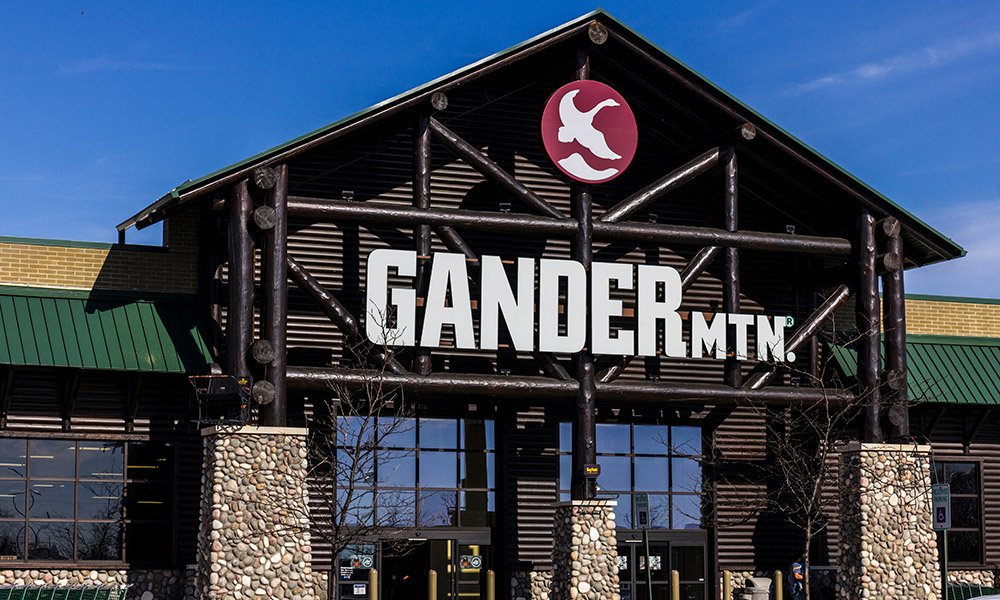
In 2003, the city of Corsicana and Navarro County sought to attract Gander Mountain, an outdoor retailer, with a $16 million incentive package supporting the development of a flagship store in Corsicana.
The city and county pledged future sales tax revenue to finance construction of the Gander Mountain store, with additional incentives tied to other businesses in the shopping center. The Corsicana Industrial Foundation, a nonprofit organization, received the funds and used them to repay a construction loan.
Gander Mountain operated at the location for 11 years but closed in 2015. The shopping center continued to generate tax revenue, however, and a new tenant occupied the former Gander Mountain space.
After Gander Mountain closed, the city and county stopped making incentive payments. They argued that the public purpose justifying the grants had ended with the retailer’s departure.
The lawsuit
The city and county then filed suit seeking a declaration that the agreements were unconstitutional under the Texas Gift Clause because they lacked an ongoing public purpose and adequate government controls.
The trial court granted summary judgment in favor of the city and county and entered a final judgment declaring the agreements unconstitutional. The court found that the closing of the Gander Mountain store extinguished the public purposes that had authorized the city’s and county’s grants of public money.
The wording of an economic development incentive agreement can make a significant difference when its constitutionality is tested in court.
The court also determined that the agreements failed to place sufficient controls on the transaction to ensure that the public purposes for which the original grants of sales tax revenue were made would be carried out.
An intermediate court of appeals affirmed the judgment in a 2-1 decision.
The court’s chief justice dissented, warning that the decision could undermine the financing of economic development projects. From a policy perspective, the chief justice wrote, the holding could become the “death knell” for this type of economic development agreement because creditors would be unwilling to make loans in reliance on pledged sales tax revenue if a taxing entity could have the underlying contract declared unconstitutional after making payments for 10 years.
Competing policy and business concerns
After project lender JPMorgan Chase appealed to the Texas Supreme Court, the case attracted significant attention from industry and government organizations, which filed amicus briefs supporting the opposing sides.
The Texas Bankers Association argued that allowing local governments to terminate economic development agreements after years of performance would chill bank lending for development projects. Lenders, it said, could no longer confidently rely on pledged public incentives as secured collateral.
The association warned that the resulting uncertainty could increase borrowing costs, reduce access to capital and make financial institutions less willing to support local development projects. On the other side, the Texas Public Policy Foundation and Goldwater Institute, as well as the Texas Municipal League and Texas City Attorneys Association, filed briefs supporting the city and county. They argued that economic incentive agreements must satisfy the requirements of the Texas Gift Clause and contain adequate safeguards to protect public funds.
The Texas Supreme Court’s holding
In May, the Texas Supreme Court reversed the lower courts.
The court held that although the Texas Constitution expressly allows public funds to be spent for economic development, economic incentive agreements must still satisfy three requirements under the Texas Gift Clause:
- The expenditure must not be gratuitous.
- The expenditure must serve a legitimate public purpose.
- The expenditure must be subject to adequate government control.
The court framed the constitutional question around the continuing public purpose of the development rather than the continued presence of a particular tenant.
“The constitutional question is not whether a particular tenant — or any other particular economic activity envisioned at the outset of the deal — remains in place,” the court wrote. “The question is whether the expenditures by the City and County genuinely serve the public purpose of economic development in some concrete and actual way — even if it is not in precisely the way the parties initially envisioned.”
The court continued: “A deal that is genuinely designed to promote economic development, and actually does so, does not cease to be constitutional merely because the economic benefits it generates down the road are not the same ones the parties initially envisioned.”
In the court’s view, Gander Mountain’s closure did not automatically extinguish the public purpose of the agreement because the shopping center continued to generate economic activity and tax revenue.
The court also found that the economic incentive agreement included several controls designed to safeguard public funds.
First, the agreement provided that payments would begin only after the Gander Mountain store had been completed and opened. Public funds would therefore not be spent until the initial economic development objective had been achieved. This avoided the type of no-strings-attached arrangement the Gift Clause was designed to prevent.
Second, the agreements required the city’s and county’s contributions to be held in a separate account and used solely to pay debt related to the construction project. The funds could not be used for any other purpose.
Third, the agreements tied the governments’ financial obligations to the actual economic activity generated by the project. Payments were calculated as a percentage of the sales tax revenue generated within the shopping district.
$97M
After reversing the summary judgment entered in favor of the city and county, the Texas Supreme Court remanded the case to the trial court for further proceedings.
On June 25, 2026, the city and county filed a motion for rehearing. They argued that the court’s opinion created uncertainty surrounding the Gift Clause’s requirements and the analytical framework courts should use to apply them. The court denied rehearing on September 9, 2026.
Three takeaways for economic developers
The JPMorgan decision provides important guidance for structuring economic incentive agreements that comply with Gift Clauses and can withstand a constitutional challenge.
1. Understand the law in the applicable jurisdiction
First and foremost, JPMorgan highlights the importance of understanding the constitutional provisions and court decisions that will govern the economic incentive agreement at issue.
Before JPMorgan, the Texas Supreme Court had never analyzed Section 52-a of the Texas Constitution, which contains an economic development exception to the state’s Gift Clauses.
Relatively little case law analyzes constitutional challenges to modern economic incentive agreements, particularly agreements involving industries such as data centers and modern energy projects.
Because each state has its own constitutional provisions and judicially developed tests for determining whether an agreement complies with the applicable Gift Clause, developers and end users must understand the relevant legal nuances and potential risks from the outset.
2. Identify the public purpose
Investor and longtime Berkshire Hathaway Vice Chairman Charlie Munger once said, “Show me the incentive and I will show you the outcome.”
That observation rings true in the world of economic incentive agreements.
Developers should clearly articulate the specific and legitimate public purpose the incentive is intended to serve, such as job creation, expansion of the tax base or infrastructure development. The agreement should then tie the incentive to the achievement of those outcomes.
In JPMorgan, the court held that the arrangement at issue — an agreement dedicating portions of tax revenue to attract businesses and create jobs — satisfied the constitutional requirement that expenditures serve the public purposes of developing and diversifying the economy.
Other courts have upheld economic incentive agreements containing a clearly defined public purpose.
In Blinson v. State, the North Carolina Court of Appeals upheld the constitutionality of state and local economic incentive agreements provided to Dell Inc. to build a computer manufacturing facility in Forsyth County.
The plaintiffs argued that the incentives violated the state’s Gift Clauses. The court rejected those arguments, finding that the incentives served a valid public purpose because they were designed to stimulate economic activity, create and maintain jobs, and encourage investment in industries considered strategically important to the state.
3. Draft economic incentive agreements with precision
JPMorgan also highlights the importance of clear and precise contractual language.
In analyzing the constitutionality of the agreement, the Texas Supreme Court focused closely on the wording of the underlying documents.
When considering whether Gander Mountain’s closure extinguished the agreement’s public purpose, the court noted that the local government bodies could have negotiated an agreement making continued payments contingent on the continued operation of the Gander Mountain store. They did not do so.
Another recent decision interpreting the Texas Gift Clause underscores the importance of precise contractual language and provides a useful comparison with JPMorgan.
In American Precision Ammunition, L.L.C. v. City of Mineral Wells, the 5th U.S. Circuit Court of Appeals considered whether an economic development agreement between the city of Mineral Wells and American Precision Ammunition violated the Texas Constitution’s Gift Clause.
The city had agreed to provide American Precision Ammunition with a $150,000 “gift” and 10 years of tax abatements to entice the company to relocate its manufacturing operations to Mineral Wells.
Projects evolve. Tenants close, industries change and properties find new uses.
Although other portions of the agreement referred to the $150,000 as a “grant,” and the agreement specified that project funds were to be used for infrastructure, access, egress and utilities, the 5th Circuit nevertheless held that the payment was unconstitutional under the Texas Gift Clause.
The court reasoned that the tax abatements — not the $150,000 payment — constituted the benefit American Precision Ammunition received in exchange for relocating to the city. The $150,000 payment, the court found, was intended to be a gratuitous transfer to the company.
The wording of an economic development incentive agreement can therefore make a significant difference when its constitutionality is tested in court.
The JPMorgan decision provides a road map for structuring agreements that comply with the Texas Gift Clauses. In other jurisdictions where case law is sparse, a challenge under a state Gift Clause may present a matter of first impression. That makes precise drafting even more important to limiting and allocating risk.
Conclusion
The JPMorgan decision underscores the enduring importance of Gift Clauses as a check on government spending.
As economic incentive agreements increasingly target cutting-edge industries such as data centers, advanced manufacturing and renewable energy, courts across the country will be tasked with applying century-old Gift Clauses to projects that look vastly different from the railroad subsidies of the past.
Economic developers and public officials should expect heightened scrutiny and be prepared for evolving legal standards as courts interpret historic constitutional prohibitions in the context of today’s innovation-driven projects.
By carefully structuring agreements to ensure that they are nongratuitous, serve a genuine public purpose and remain subject to meaningful controls, economic developers can attract private investment while complying with constitutional mandates.