Brownsville’s economic development office was accustomed to fielding questions from companies looking for sites, incentives and workers.
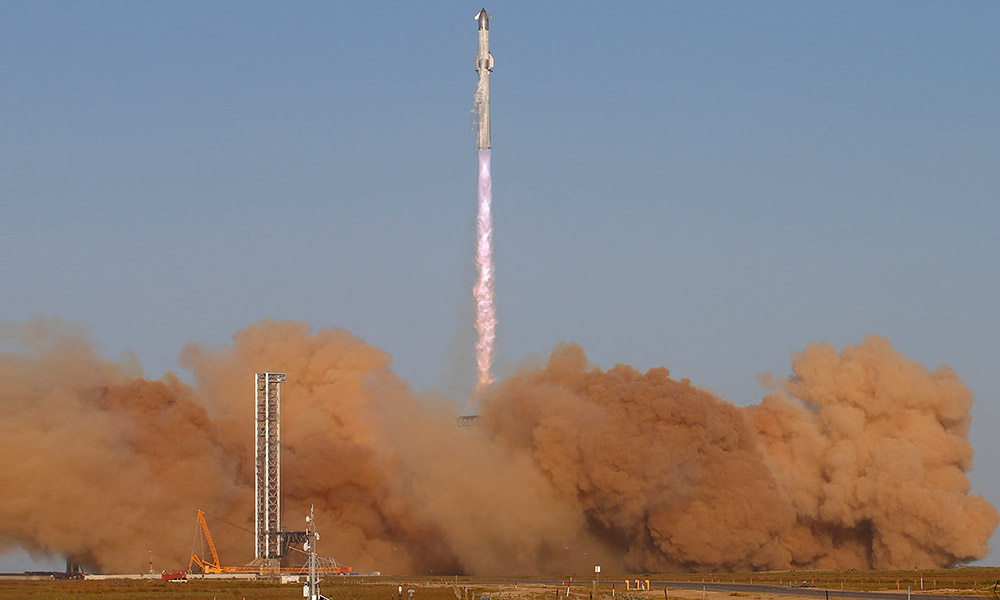
Instead, people kept walking in to ask when the next rocket would launch.
Where could they watch it? What should they do if it was scrubbed? Where could they stay for another night or two while they waited?
The visitors, sometimes called “rocket watchers,” had come to South Texas to see SpaceX launch from Starbase. Their questions were not exactly the traditional work of an economic development organization. But their growing numbers pointed to something larger: Commercial space activity was no longer just an industrial project on the edge of town. It was beginning to reshape Brownsville’s tourism economy, small-business community and daily civic life.
So Brownsville created an Office of Space Commerce.
The new office is intended to handle the community-facing side of the emerging space economy, including space tourism, small-business activity and public inquiries. That allows the city’s existing economic development organizations to remain focused on larger assignments such as company recruitment, supplier development and workforce strategy.
“There was a need to have a dedicated person and a division specifically for some of the peripheral stuff,” said Gilberto Salinas, CEO of the Greater Brownsville Incentives Corp., the city’s Type A economic development organization.
The arrangement reflects how quickly Brownsville’s economy is changing.
84%
SpaceX began considering the region for a launch site about 15 years ago. At the time, Salinas said, Brownsville was still widely viewed as a small border city closely tied to the Mexican economy. Landing SpaceX offered a chance to change that trajectory.
The company’s presence has since grown into Starbase, and Brownsville is now trying to convert that anchor into a broader industrial ecosystem. Salinas said the region is working with two or possibly three prospective Tier 1 SpaceX suppliers, although those projects have not yet been announced.
The city’s ambitions also extend beyond space.
Saronic Technologies has selected the Port of Brownsville for a major autonomous shipbuilding operation, adding defense, artificial intelligence and advanced manufacturing to the region’s emerging industrial identity. Salinas said Saronic’s arrival helps connect the pieces of a cluster extending from SpaceX and its suppliers to maritime defense manufacturing and related technologies.
The speed of the Saronic project was itself notable. According to Salinas, Brownsville first received the inquiry roughly a year before the project was announced — a rapid timetable for an investment of that size and complexity.
There was a need to have a dedicated person and a division specifically for some of the peripheral stuff.” / “This is no longer the sleepy border town that people thought of back in the day.
The combination of SpaceX, Saronic and two liquefied natural gas projects has left Brownsville preparing for growth on several fronts at once.
The city and its economic development organizations are recruiting suppliers, planning industrial infrastructure and trying to ensure the region can meet future labor demand. Brownsville does not yet consider itself to be facing a workforce shortage, Salinas said, but local leaders expect pressure to build over the next three to five years as announced projects expand and additional companies arrive.
The Greater Brownsville Incentives Corp. is creating a dedicated workforce division of three or four people within an organization of about 15. The team will focus on workforce development and talent recruitment, including efforts to attract former Rio Grande Valley residents who left the region for jobs elsewhere.
For decades, Salinas said, one of the region’s most important exports was its own talent. Brownsville is now trying to reverse that pattern by giving younger workers and experienced professionals a reason to return.
Employers are already drawing from across the Rio Grande Valley. Salinas said SpaceX considers approximately 84% of its workforce local when defining the labor shed as the corridor from Brownsville to McAllen. One of the region’s LNG operations reports a local hiring rate of about 70% under a similar definition.
3–4
Housing construction is accelerating alongside the employment growth, with dozens of subdivisions and new multifamily developments under way in Brownsville and surrounding communities.
Against that backdrop, the Office of Space Commerce is less a traditional recruitment agency than an institutional response to the effects of the boom.
It occupies the space between major industrial development and everyday community life: helping visitors navigate launches, connecting smaller businesses to new opportunities and giving the city a place to manage the activity growing around Starbase.
The office’s creation also signals that Brownsville no longer sees commercial space as a single project. It is becoming part of the city’s identity and increasingly intertwined with tourism, manufacturing, defense, workforce development and infrastructure planning.
“This is no longer the sleepy border town that people thought of back in the day,” Salinas said. “This is a place for innovation, where people can invent, design, launch their product.”
In Brownsville, even the visitors wandering into the economic development office are evidence of how much has changed.