The explosive growth of artificial intelligence, cloud computing and digital infrastructure has fueled one of the largest industrial real estate development cycles in decades. Private equity-backed investment in U.S. data center deals reached $45.7 billion in 2025, the highest level in at least five years, according to S&P Global Market Intelligence.
With capital pouring into the sector, one of the biggest challenges facing many developers is finding sites that can actually be built. CBRE's North America Data Center Trends report found that although primary-market supply increased 36% in 2025, the amount of capacity under construction declined for the first time since 2020, with planned projects facing permitting, zoning and power procurement delays. The U.S. Department of Energy's 2026 National Transmission Needs Study similarly points to rapid load growth from data centers and other large industrial users as a driver of the need for additional transmission infrastructure.
To avoid the costly years of approvals and utility extensions that can accompany greenfield sites, developers are increasingly focusing on former manufacturing facilities, power plants, distribution centers, steel mills, rail yards and other legacy industrial properties. Many of these sites already possess the characteristics data center developers value most: industrial zoning, substantial acreage, existing transmission infrastructure, water access and proximity to population centers where network latency matters.
Power access in particular has become a defining site-selection constraint. JLL's 2026 Global Data Center Market Outlook reports that the average wait for a grid connection in primary data center markets now exceeds four years and identifies speed to power as the primary criterion driving data center site selection.
Environmental liability is no longer simply a due diligence issue addressed before closing.
This trend is particularly evident across legacy manufacturing corridors in the Northeast and Mid-Atlantic, including northern New Jersey, eastern Pennsylvania, upstate New York, Ohio and western Pennsylvania, as well as portions of California, Oregon and Washington, where retired industrial facilities offer rare opportunities to secure both land and electrical infrastructure.
Adaptive reuse offers obvious economic and community benefits, returning underutilized industrial properties to productive use while expanding local tax bases, creating construction employment and preventing development on agricultural or environmentally sensitive land. The U.S. Environmental Protection Agency's Brownfields Program has documented billions of dollars in investment and hundreds of thousands of jobs leveraged through brownfield redevelopment, as well as land-use benefits compared with accommodating the same growth on previously undeveloped sites.
However, the very characteristics that make these properties attractive can also introduce significant environmental liabilities.
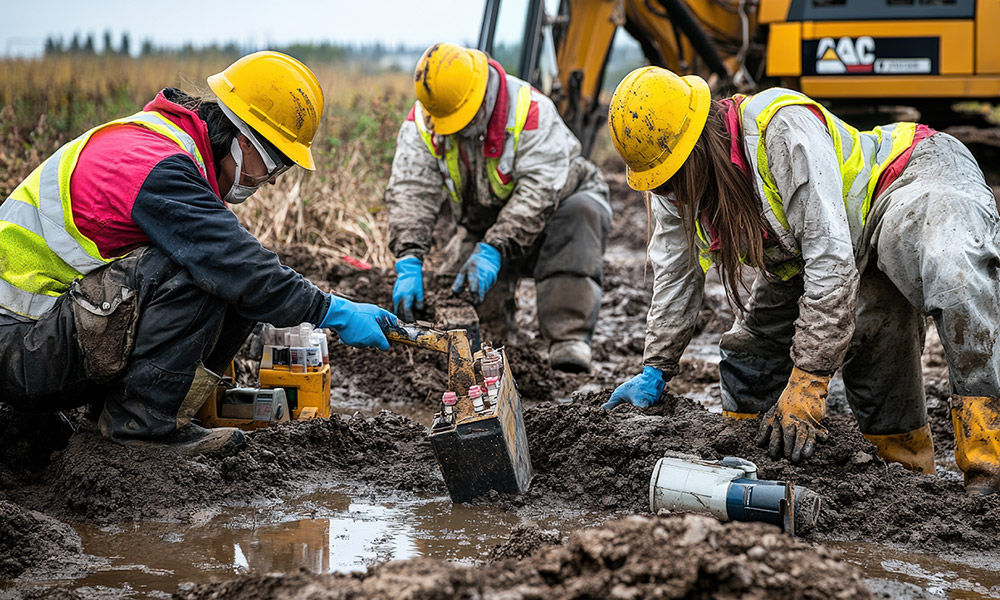
Industrial operations may have left behind contaminated soil, groundwater impacts, underground storage tanks, buried debris, coal ash, fill material or hazardous building materials that remain unknown until construction begins. Under federal and many state environmental laws, current property owners may become responsible for investigating and remediating contamination even if they did not cause it, subject to certain defenses and liability protections. Under the federal Superfund law, or CERCLA, liability can be retroactive, strict, and in some circumstances joint and several, according to the EPA's Superfund liability guidance. Even sites that previously underwent remediation can face renewed regulatory review if contamination migrates, new standards are adopted or previously unidentified impacts emerge.
The very characteristics that make these properties attractive can also introduce significant environmental liabilities.
Construction itself can create additional exposure. Excavation, demolition, grading and dewatering activities frequently uncover contamination that was not identified during due diligence. Transporting contaminated soil, disturbing historical fill or damaging existing containment systems can trigger cleanup obligations, regulatory enforcement and third-party claims that delay construction and materially increase project costs.
What's more, environmental exposure does not end when the facility opens. Modern data centers rely on extensive backup generation systems, fuel storage, sophisticated cooling infrastructure, chemical treatment systems and continuous operations that can generate community concerns regarding noise, vibration, emissions and water consumption. As the number and scale of these facilities expand, surrounding communities and plaintiffs' attorneys are paying closer attention to potential nuisance claims involving noise, diesel emissions, groundwater, wastewater discharge and other operational impacts.
The convergence of legacy industrial redevelopment and increasingly resource-intensive operations has fundamentally changed the risk profile of data center development. Environmental liability is no longer simply a due diligence issue addressed before closing. It has become an ongoing operational and financial consideration throughout the life of the asset.
That shift has also elevated the importance of environmental insurance. Traditional commercial general liability policies have long excluded most pollution-related claims. Pollution Legal Liability, or PLL, and Contractor's Pollution Liability, or CPL, policies were developed to address many of these gaps, providing coverage for cleanup costs, third-party bodily injury and property damage claims, legal defense expenses and certain unknown pre-existing conditions that conventional liability policies generally do not cover.
For many projects, understanding those risks early may prove just as important as securing the land itself.
Importantly, these policies are not one-size-fits-all products. Coverage must be structured around the site's historical use, the construction activities being undertaken, contractual risk allocation among project participants and the facility's long-term operational profile. As data center projects increasingly involve the redevelopment of former industrial properties, it has become increasingly important to integrate environmental diligence, engineering, legal strategy, financing and insurance into a coordinated development process.
The race to build digital infrastructure is unlikely to slow in the coming years, and the barriers to development are likely to continue growing. JLL projects that nearly 100 gigawatts of new data center capacity could be added globally between 2026 and 2030, effectively doubling existing capacity, while grid constraints remain one of the industry's principal barriers to growth. JLL's outlook.
As developers increasingly pursue older industrial sites where power, land and infrastructure already exist, environmental liabilities will become a central consideration in project underwriting, financing and investment decisions.
For many projects, understanding those risks early may prove just as important as securing the land itself.