Critical Site Selection Factor #1: Highway Access Affects the Bottom Line
Access to a high-quality highway infrastructure will improve a company’s profitability.
Q4 2015
When companies undertake a site search, they are evaluating three key elements:
1. How to reduce the total cost of operation
2. How to reduce the risk of business interruption
3. How to improve speed to market for customer deliveries
All three of these elements can be greatly impacted by proximity to high-quality transportation systems, especially highways. Transportation costs are easier to manage with good access to highways, particularly for supply chain and manufacturing operations. Therefore, it is no surprise that highway access is a top concern for companies that are locating or expanding their facilities.
Highways need to be multi-lane roads with some limited access and speeds of 55 mph or higher. Interstates are even better. Trucks use fuel more efficiently when they are traveling at 60 miles an hour, compared to sitting at traffic lights or in stop-and-go traffic congestion. Faster speed to market improves a company's overall profitability.
Logistics site selection cost analysis needs to be focused on total costs, not any individual cost element, says Tim Feemster, managing principal for Foremost Quality Logistics in Dallas, Texas. Many companies focus on incentives, tax, or labor costs and forget the transportation expense. Transportation costs can range from 50 to 80 percent of supply chain costs, depending on the industry and type of operation.
Many companies focus on incentives, tax, or labor costs and forget the transportation expense. Transportation costs can range from 50 to 80 percent of supply chain costs, depending on the industry and type of operation. Tim Feemster, managing principal, Foremost Quality Logistics
High-speed road access is needed to meet the Five Minutes to 55 MPH rule. For every minute/mile driven below 55, one minute/mile of total distance will not be covered by the driver in a day of legal driving. Multiply that by the number of trucks in and out per day and the impact of reduced speed becomes very noticeable. For example, says Feemster, an extra 15 minutes per truck for 400 trucks/day (200 in and 200 out) means 100 hours per business day. Multiply that by 250 business days per year and 25,000 hours of driving is lost getting in and out of the operation that is over 10 man-years of time every year.
Meeting Just-in-Time Delivery Needs
Quick access to well-maintained, highly reliable, high-speed highway systems as well as their connections to intermodal sites is critical for meeting the growing needs for just-in-time delivery of supply-chain manufacturing components and final product deliveries. Just-in-time delivery is preferred because it reduces inventory costs but will only be effective if manufacturing and shipping deadlines can be met. Excellent highway access is especially important for logistics and distribution companies that must meet tight shipping schedules.
Ready access to high-quality, well-maintained highways and interstates is critical for meeting customer shipping demands, as well as deploying future business strategies that may involve new markets. However, deteriorating roads and bridges in the U.S. are a major concern for companies that depend on trucking for shipping and receiving. According to the World Economic Forums 2014-2015 Global Competitiveness Report, the U.S. ranked 16th for the quality of its roads.
Differences in infrastructure will continue to grow in importance as we become even more of an economy where just-in-time manufacturing and distribution of goods are more critical, says Larry Gigerich, managing director of Ginovus, an Indianapolis-based location consulting firm. States and communities that make the investments in increasing road infrastructure, and in existing infrastructure, will be in better shape for economic development.
-
Mark Crawford, Staff Editor, Area Development
Mark Crawford is a full-time freelance writer based in Corrales, New Mexico, who specializes in business, technology, and history.



Recent Project Announcements
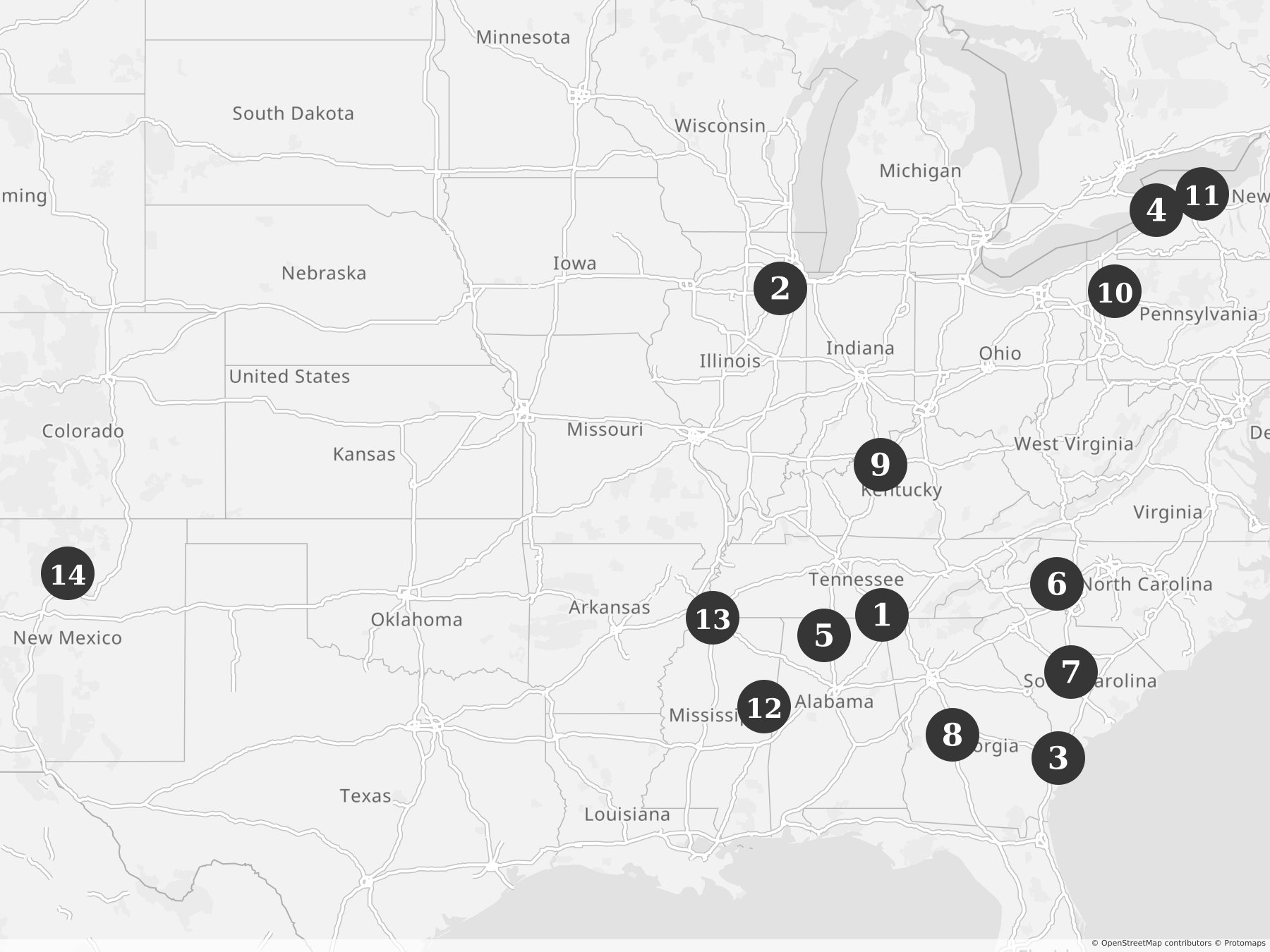
Valmont Industries Expands Jasper, Tennessee, Production Operations
10/25/2026
Hyundai Translead Expands Joliet, Illinois, Manufacturing Operations
10/25/2026
Mitsubishi Power America Expands Chatham County, Georgia, Operations
10/25/2026
Niagara Power Transformer Expands Buffalo, New York, Manufacturing Operations
10/25/2026
Nucor Expands Decatur, Alabama, Manufacturing Operations
10/24/2026
US Conec Plans Hickory, North Carolina, Manufacturing Operations
10/24/2026
Westinghouse Electric Company Expands Richland County, South Carolina, Advanced Nuclear Fuel Operations
10/24/2026
Blue Bird Corporation Expands Peach County, Georgia, Manufacturing Operations
10/24/2026
Silco Fire & Security Plans Bullitt County, Kentucky, Operations
10/24/2026
Conair Expands Franklin, Pennsylvania, Production Operations
10/23/2026
Phoenix Tailings Plans Rochester, New York, Rare Earth Mineral Separation Operations
10/22/2026
Barge Forest Products Expands Macon, Mississippi, Sawmill Operations
10/22/2026
ITT Goulds Pumps Plans Memphis, Tennessee, Manufacturing-Distribution Operations
10/22/2026
Discovery 2 Scale Plans Nambé Pueblo, New Mexico, Headquarters Operations
10/22/2026
Most Read
-
Top States for Doing Business in 2026: Where Competitive Advantage Becomes Project Certainty
Q3 2026
-
Why Great Sites Get Eliminated: The Critical Role of Information Presentation in Site Selection
Q3 2026
-
What Site Selectors Discuss After the Site Visit Ends
Q3 2026
-
2025’s Top States for Business: How the Winners Are Outpacing the Rest
Q3 2025
-
Space and Defense Are Becoming One Industrial Ecosystem
Q3 2026
-
Industrial Location Decisions Follow the Freight
Q3 2026
-
Economic Developer Role Shifting from Deal-Making to Systems Stewardship
Q1 2026