For most of the past two decades, American steel was not at the top of anyone's site selection priority list. The industry modernized, ownership consolidated, and production shifted — but the sector attracted less attention than semiconductors, electric vehicles, or advanced manufacturing. That is changing, and the scale of the change is worth understanding clearly.
A convergence of forces — manufacturing reshoring, federal infrastructure spending, automotive investment, energy development, and data center construction — is creating renewed and sustained demand for domestically produced steel. Steelmakers are evaluating new electric arc furnace mills, direct reduced iron facilities, and downstream processing operations at a pace not seen in years. Multiple large projects remain active in site selection pipelines right now, and the pipeline shows no sign of slowing.
For site selection consultants and corporate real estate teams evaluating locations for steel-adjacent investment, the important thing to understand about this new wave of projects is that they look almost nothing like the steel investment of a generation ago — in their technology, their geography, and above all in their infrastructure requirements.
A Different Industry
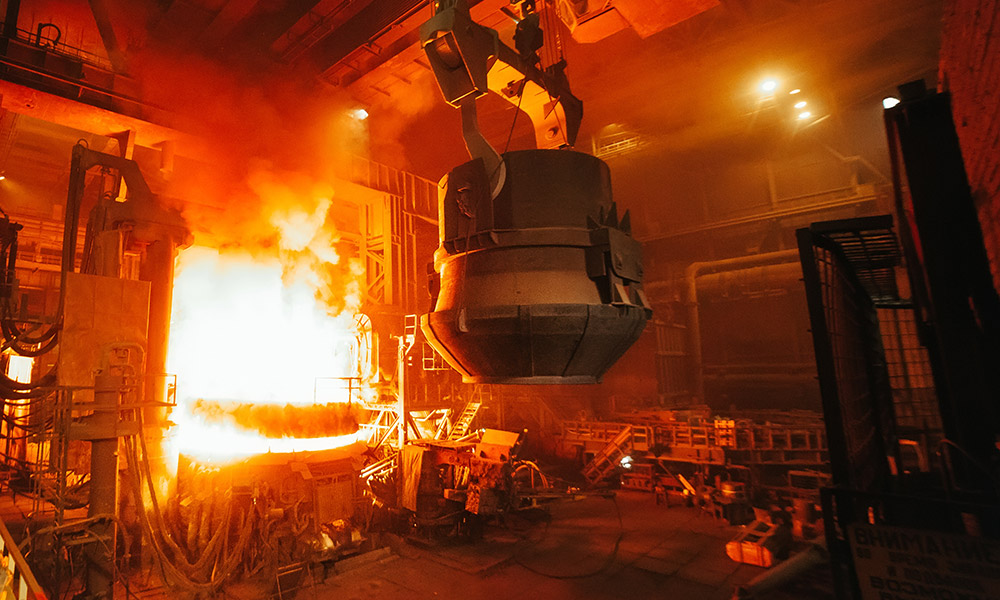
The steel facilities attracting investment today are built around electric arc furnace technology rather than the traditional integrated blast furnace operations that defined the industry for most of the twentieth century. These mills use recycled scrap steel and direct reduced iron as feedstocks and produce significantly lower emissions than traditional operations. That technological shift has transformed where steel projects can locate.
Communities that can guarantee power delivery measured in months rather than years have become genuinely scarce.
That evolution has opened significant new geographies for steel investment. Arkansas, Mississippi, Alabama, Louisiana, and Texas have emerged as particularly active markets, joining long-established steel centers throughout the Midwest. The Gulf Coast in particular combines the port infrastructure, natural gas supply, and large industrial customer base that modern electric arc furnace and DRI operations require.
Why Infrastructure Has Become the Deciding Factor
The critical variable in steel site selection today is not incentives, workforce, or even geography in the traditional sense. It is infrastructure — and specifically the ability to deliver power, water, and rail access at the scale these projects require, on a timeline that matches the project's development schedule.
A typical large electric arc furnace facility requires hundreds of megawatts of electricity and millions of gallons of water per day. Some projects exceed two billion dollars in capital investment. Those requirements are eliminating communities from consideration before incentive discussions begin — not because the communities lack willingness or political support, but because their utility infrastructure simply cannot support the load.
The power challenge is compounded by the same dynamic affecting every energy-intensive industrial sector: data centers, semiconductor fabs, and advanced manufacturers are competing for the same grid capacity in the same geographies. Communities that can guarantee a power delivery timeline measured in months rather than years have become genuinely scarce, and steel projects are competing for access to them alongside every other major industrial user.
Water is the less-discussed constraint but increasingly the binding one. Many communities have available land and adequate power potential but have not done the engineering work to understand what their water and wastewater systems can realistically support for a major industrial user. For a steel project evaluating a community, the question is not whether water is present — it is whether preliminary engineering has been done to establish what the system can deliver, at what cost, and on what timeline.
The Reshoring Tailwind
What makes the current steel investment cycle different from previous cycles is the durability of the underlying demand. This is not a single policy program or a short-term tariff effect. It is a structural shift in how manufacturers think about their supply chains.
Power, water and people—those are the three variables driving almost every siting decision we work on.
As domestic production expands across vehicles, appliances, construction products, energy equipment, aerospace components, and industrial machinery, the demand for North American steel grows with it. Companies that spent years optimizing for global supply chain efficiency are now rebuilding for resilience, proximity, and reduced geopolitical exposure. Steel is the input that underlies nearly all of that manufacturing activity, and the case for domestic supply has not been stronger in decades.
Federal infrastructure spending is adding another layer of sustained demand. Large investments in transportation, energy transmission, and industrial construction all require significant steel inputs over multi-year timelines. That demand visibility is one reason the pipeline of steel projects currently in evaluation is as deep as it is.
The Ecosystem Effect
One dimension of steel investment that often gets underweighted in site selection analysis is the downstream ecosystem it generates. Several newer steel campuses have attracted clusters of processors, metal fabricators, service centers, and manufacturing operations seeking proximity to production. The result is an industrial clustering effect similar to what develops around automotive assembly plants or semiconductor fabs.
The critical variable isn't incentives. It's infrastructure.
For a site selection team evaluating a location for a steel facility or a steel-adjacent manufacturer, that ecosystem potential is worth factoring into the long-term site strategy. A region that lands a major EAF mill is a region that will be fielding calls from downstream processors and fabricators for years afterward. The infrastructure investment required to attract the anchor project pays compounding dividends as the cluster develops.
The communities best positioned for this next cycle of steel investment are not necessarily those offering the largest incentive packages. They are the ones that have done the foundational infrastructure work — power capacity confirmed, water systems engineered, rail access documented — and can demonstrate it with specificity and confidence when a project comes to the table. In steel as in every capital-intensive sector right now, the infrastructure question is coming first.