
U.S. Companies Reshoring Operations Back Home
American business executives are reconsidering their overseas operations and realizing that outsourcing may not be the best option.
2011 Directory
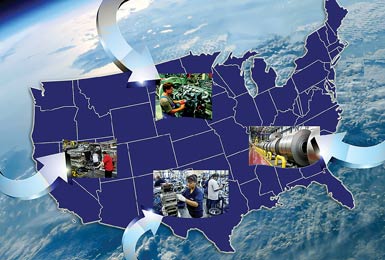
Several factors are driving this sea change, from rising shipping and transportation costs to quality control issues to a desire among U.S. companies with overseas operations to do their part in rebuilding the hurting economy at home.
When given the choice, most U.S.-based companies that outsource overseas would choose to move operations back home if it made financial sense to do so. Once business leaders learn that there are U.S. locations with qualified and affordable labor, low taxes, and attractive economic incentives, they are often eager to explore their options to relocate back to the United States.
At Ecodev, we are seeing a number of small- to mid-sized manufacturers rethinking their overseas operations and questioning the financial incentives that lured them there in the first place. One Minnesota manufacturer that produces its products in China recently decided to move a production facility back to the United States. It expects an approximately 25 percent savings on the overall cost of each item due to cost savings of shipping and transportation. And California-based Seesmart LED, which makes light-emitting-diode (LED) light bulbs in China, is scouting U.S. production locations. Its executives say that when they consider all costs, the difference to produce its product in the United States is insignificant, and they would prefer to create jobs here.
For small- to mid-sized businesses with overseas operations, the time is right to examine overall operating expenses and determine if these facilities are financially viable, or if a return to the United States better suits long-term growth. Reconsidering Outsourcing
Here are three top reasons U.S. companies are rethinking their overseas operations:
Unrealized Cost Savings - Cheap labor remains a top factor companies outsource overseas. While the United States cannot compete with the low working wages for unskilled labor in some countries, a growing number of American workers with a wide variety of education and job skills are ready to work. Companies that require an educated or skilled work force may be better served by American labor.
Furthermore, cheap labor alone should not drive a company's decision to locate overseas, as more companies realize that overall operating costs of doing business in foreign countries are not lower. For instance, rising shipping and transportation costs can make outsourcing cost-prohibitive, particularly if a company has a high volume, lower priced item. Others may find unanticipated expenditures, such as added security in certain parts of Mexico that are experiencing drug trafficking violence. When companies consider all of their operating costs, they may find that they are not actually saving money.
Quality/Reliability Issues - Companies with production overseas can be vulnerable to quality control issues, as foreign countries do not have the same standards as the United States. In terms of reliability, these companies struggle with producing and shipping products on time. China experiences rolling power blackouts that hinder production and delivery timelines. Increased quality control and the management of unreliable fulfillment dates negatively affect the company's bottom line.
Consumer Perception - Companies that uproot U.S. operations and move jobs to other countries have never been met with favor on the home front. Companies that do so in today's depressed economy may tarnish their own reputation. When Polaris Industries, an ATV, snowmobile, and motorcycle manufacturer, recently decided to move its Osceola, Wisconsin, plant to Mexico, many customers told the company they would never buy a Polaris product again.
As consumers grow more conscious of where products are made and use their buying power to support American-made goods, more businesses recognize the value of a "Made in the U.S.A." label. Others, like Seesmart LED, attempt to help the U.S. economy and recognize that the benefits of operating stateside offset the meager cost savings of operating overseas.
Outsourcing is not what it used to be. Whether it's an altruistic motive, or realizing the unforeseen costs and downsides of outsourcing, companies with overseas operations should consider how a move back to United States may improve profitability and reputation in the long run.
-
Dana Olson, President and CEO, Ecodev
Dana Olson founded Ecodev LLC in 2002. He specializes in site selection and economic development consulting, particularly in the manufacturing, biotechnology, medical technology, and alternative energies sectors. Before founding Ecodev, Olson was the COO of ACI Telecentrics, which provides customer service, marketing, and back office support to Fortune 500 companies in the insurance, financial, and telecom industries. Olson is a member of the Industrial Asset Management Council.
-
Site Selection
Overcoming The Four Fundamental Roadblocks to Relocating a Business
-
Site Selection
Bigger Is Not Always Better: Finding the Right Community for a Business Location

Site Selection
Where Is the Best Location For Your Business?
-
Site Selection
How to Improve Profitability Through Business Relocation
-


Recent Project Announcements
Germany-Based Stöbich Fire Protection Systems Expands Dorchester County, South Carolina, Manufacturing Operations
09/14/2026
Black Bayou Energy Hub Expands-Plans Lafayette-Cameron Parish, Louisiana, Natural Gas Operations
09/14/2026
General Atomics Expands Shannon, Mississippi, Manufacturing Operations
09/14/2026
AirPro Expands Rhinelander, Wisconsin, Operations
09/13/2026
Moog Expands West Valley, Utah, Production Operations
09/13/2026
KIHOMAC Expands Davis County, Utah, Operations
09/13/2026
Spot & Tango Expands Upper Macungie Township, Pennsylvania, Production Operations
09/13/2026
Arvaya AI Automations Consulting Plans North Charleston, South Carolina, Operations
09/13/2026
SHEIN Establishes Lebanon, Indiana, Fulfillment Operations
09/13/2026
Saval Foods Expands Howard County, Maryland, Headquarters Operations
09/12/2026
SteelFab Expands Fayetteville, North Carolina, Manufacturing Operations
09/12/2026
Tyson Steel Building Products Plans Liberty, South Carolina, Manufacturing Operations
09/12/2026
Siemens Healthineers Molecular Imaging Expands RockFord, Tennessee, Operations
09/11/2026
British-Based Horse Powertrain USA Plans Southfield, Michigan, Operations
09/11/2026
Most Read
-
The RFI Is No Longer the Starting Line
Q3 2026
-
The Shifting Landscape of Location Strategy
Q2 2026
-
Power Is the New Gatekeeper in Manufacturing Site Selection
Q2 2026
-
Avoid These Red Flags, Deal Killers, and Blunders in Site Selection
Q2 2026
-
Site Readiness Is Broken: What Manufacturers Should Demand From Their Locations
Q3 2025
-
21st Annual Shovel Awards: The American Industrial Economy Remade in Real Time
Q2 2026
-
Why Relationships Still Win Projects in Site Selection
Q3 2026