For Industrial Development, Rail Is the Gravy Train
Rail development has driven economic opportunity across the United States, opening up new markets and efficiently moving freight.
Q3 2018
America’s freight railroads have invested $575 billion in their networks since 1980. Today, the $60 billion freight rail industry encompasses 140,000 miles of tracks operated by seven Class I railroad companies, as well as regional and local rail operators, according to the U.S. Department of Transportation’s Federal Railroad Administration.
Shortline Rail’s Often-Overlooked Role
Many of those miles are operated by the shortline and regional railroads that have played a major role in driving economic opportunities across the United States. During the past 30 years, nearly 560 of these companies have emerged across 49 states. Connecting off-the-beaten-path businesses with larger markets and, often, the major railroads, shortlines play an often-overlooked role in community development. They’re particularly valuable for “first and last mile” services that the major railways can’t efficiently provide. For CSX, shortline railways have become valuable partners in supporting industrial development that provides companies with proximity to customers and attractive labor pools.
By serving the Appalachian Regional Port, CSX is offering the most efficient, cost-effective, environmentally friendly method for shipping goods long distances over land. This will give shippers an alternative to trucking their goods to and from the Port of Savannah, and will help lower shipping costs in the northwest Georgia region. Aubrey Brown, Manager, Industrial Development, CSX Large-Scale Opportunities
Rail is also opening up large-scale economic development opportunities. In Chatsworth, Ga., for example, CSX has joined the state of Georgia, Murray County, and the Georgia Ports Authority to create the new Appalachian Regional Port to funnel goods from four southern states to the deepwater Port of Savannah.
The facility, owned and operated by the Georgia Ports Authority, will expand access for domestic and international shippers by providing a direct rail connection from the Appalachian Regional Port to the Garden City Terminal in Port of Savannah.
Garden City is second only to New York-New Jersey in terms of East Coast port volume, so the new terminal is expected to boost shipments and remove thousands of trucks from Georgia highways every year.
As NAFTA renegotiations continue, both the rail operators and the companies they serve are hoping for a positive outcome. Since NAFTA was originally signed, the major railways have made significant investments in new jobs and facilities to support the complex supply chains that NAFTA helped create.
Ideally, a renegotiated NAFTA agreement will open up opportunities for U.S. exports in Canada, Mexico, and points south. However, the increase in exports from U.S. producers would require infrastructure investments around ports and intermodal centers specifically to accommodate export logistics.
As we see more freight moving through East Coast ports, CSX is well positioned to support the needs of shippers and logistics managers. Our focus on maximizing the use of rail assets and balancing freight flows to and from ports allows CSX to quickly cycle shipping containers through the supply chain, providing consistent, reliable service. Aubrey Brown, Manager, Industrial Development, CSX Enhancing Rail Service to Ports
East Coast railroad companies, including CSX, already have expanded their on-dock rail capabilities in response to the Panama Canal expansion. For instance, in 2011 CSX opened a new Northwest Ohio Terminal near North Baltimore, Ohio, to accommodate double-stacked intermodal freight moving via rail from East Coast ports. The Georgia Ports Authority is also investing more than $126 million to expand rail capacity at its Garden City terminal. When complete, the “Mega Rail” project will expedite the transfer of containers to and from trains inside the terminal, enhancing efficiency and overall service to the Port of Savannah.
Whatever the outcome of the NAFTA talks, a rail-served facility will continue to be a smart choice for many companies seeking to sidestep the growing problem of road congestion and a national truck driver shortage. With a 190-year history in freight rail, CSX is well equipped to help companies and economic development agencies develop rail-served facilities, from identifying sites to construction and expansion.
A freight train can move one ton of freight more than 488 miles on a single gallon of fuel. With that powerful efficiency, rail continues to bring the gravy train for companies and communities across the country.
Recent Project Announcements
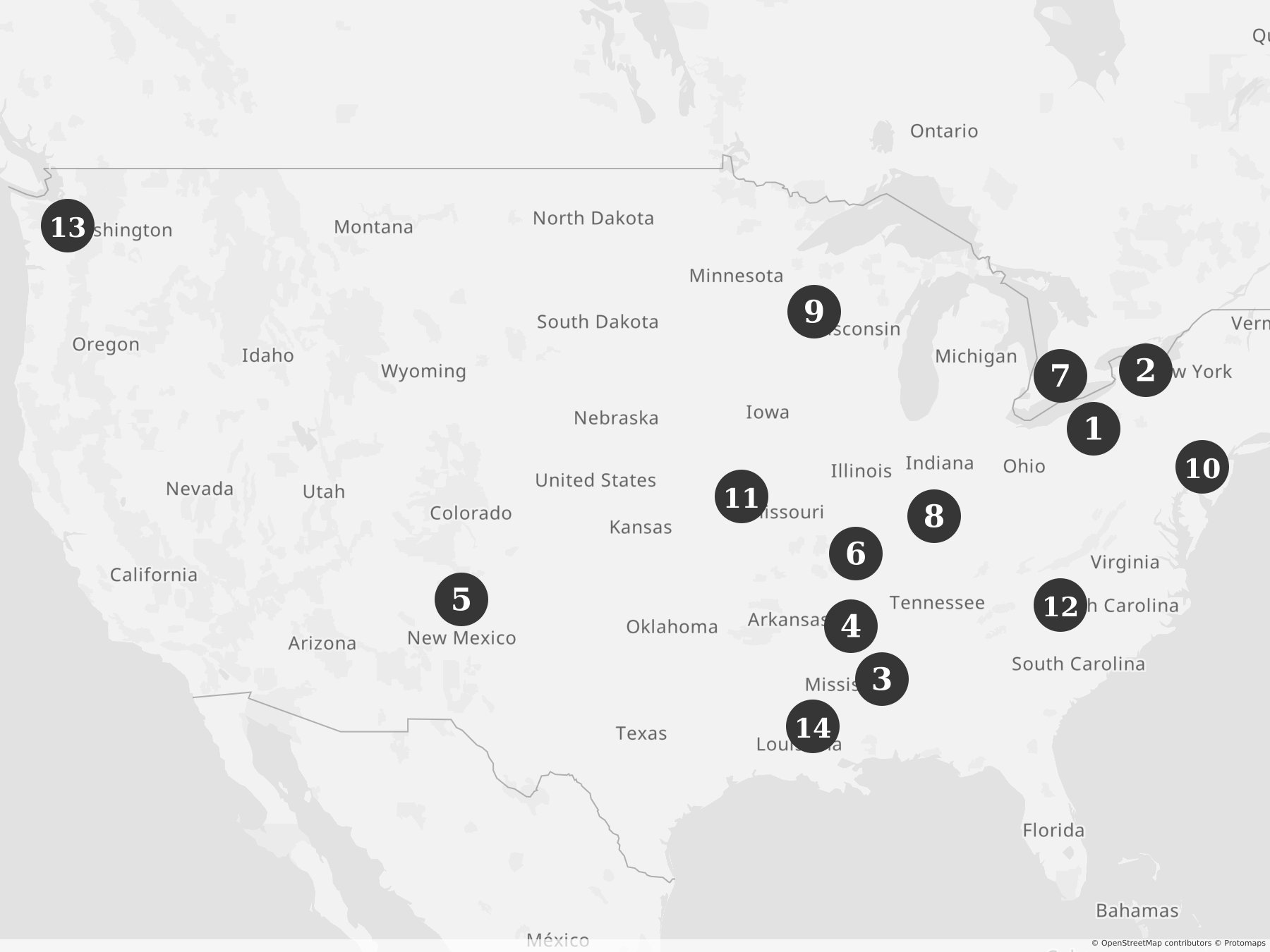
Conair Expands Franklin, Pennsylvania, Production Operations
10/23/2026
Phoenix Tailings Plans Rochester, New York, Rare Earth Mineral Separation Operations
10/22/2026
Barge Forest Products Expands Macon, Mississippi, Sawmill Operations
10/22/2026
ITT Goulds Pumps Plans Memphis, Tennessee, Manufacturing-Distribution Operations
10/22/2026
Discovery 2 Scale Plans Nambé Pueblo, New Mexico, Headquarters Operations
10/22/2026
Premium Auto Body Expands Jackson, Missouri, Operations
10/21/2026
Hitachi Energy Plans London, Ontario, Canada, Manufacturing Operations
10/21/2026
River View Farms Expands Orleans, Indiana, Operations
10/21/2026
Hewlett Packard Enterprise Expands Chippewa Falls, Wisconsin, Operations
10/21/2026
Merck Expands Montgomery County, Pennsylvania, R&D-Manufacturing Operations
10/21/2026
Wagner Logistics Plans Liberty, Missouri, Warehouse Operations
10/21/2026
Utili-Serve Expands Conover, North Carolina, Headquarters Operations
10/20/2026
Shield AI Plans Des Moines, Washington, AI-Piloted Aircraft Manufacturing Operations
10/19/2026
Westwin Elements Plans Natchez, Mississippi, Nickel Refinery Operations
10/19/2026
Most Read
-
Top States for Doing Business in 2026: Where Competitive Advantage Becomes Project Certainty
Q3 2026
-
Why Great Sites Get Eliminated: The Critical Role of Information Presentation in Site Selection
Q3 2026
-
What Site Selectors Discuss After the Site Visit Ends
Q3 2026
-
2025’s Top States for Business: How the Winners Are Outpacing the Rest
Q3 2025
-
Space and Defense Are Becoming One Industrial Ecosystem
Q3 2026
-
Economic Developer Role Shifting from Deal-Making to Systems Stewardship
Q1 2026
-
Industrial Location Decisions Follow the Freight
Q3 2026