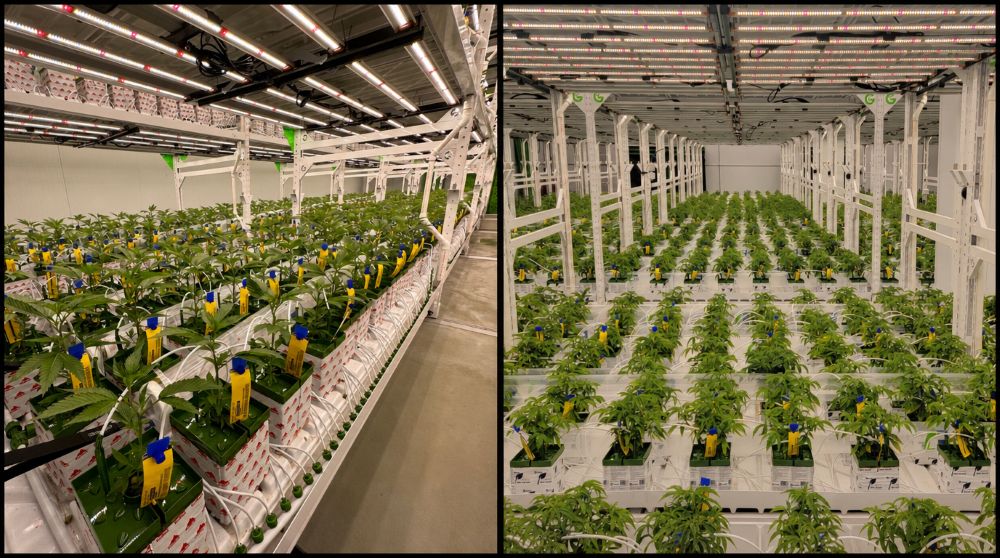
For a cannabis operator preparing to develop a cultivation facility, site selection can look like the step that comes before design. In practice, it is the first and most consequential design decision the project team will make. It is also one of the earliest opportunities to mitigate risk.
A site establishes the limits within which every later decision must fit. It affects whether the project can be approved, built economically and operated reliably. A promising property at the wrong address can consume months of effort before its problems become clear. By then, an operator may already have invested heavily in the deal.
After more than a decade of designing cultivation facilities, I have learned that successful projects begin with a thorough site evaluation. A property must do more than provide enough space. It must be well suited to how the operator plans to use it.
Regulatory viability comes first
Unlike many other commercial and industrial projects, cannabis facilities are especially dependent on local regulations. State authorization does not guarantee that a facility can open on a particular site. Zoning may restrict cannabis uses to limited districts, while municipal rules can add buffers or special-permit requirements. A community may also limit the number of operators it will host.
Regulatory requirements must be evaluated alongside the property itself. Before committing to a property, the team needs to confirm that the intended use is allowed and understand the approvals required to establish it. The distinction between a use allowed by right and one requiring discretionary approval can significantly affect schedule and risk.
A large shell is not necessarily a cultivation-ready building.
The local climate matters as well. Two similar sites may have very different prospects if one community has a clear approval process and the other has little experience with cultivation. Early conversations with local officials can reveal concerns that will shape the project, including odor control and neighborhood compatibility.
An operator should leave this stage with more than a general sense that cannabis is permitted. The project team should understand the approval path, its likely duration and the conditions that could be imposed. If the business plan depends on opening within a specific licensing window, uncertainty at the municipal level can threaten the entire investment.
Utilities determine whether the operation is feasible
Indoor cultivation is an intensive agricultural process. Lighting creates heat. Plants release moisture. The mechanical system must manage both while maintaining precise environmental conditions through every growth phase. This creates substantial electrical demand and makes utility capacity one of the most important site-selection criteria.
A listing may state that a building has three-phase power, but that fact alone says little about whether the available service can support the proposed operation. The team must estimate the actual load and confirm how much capacity exists at the site. If an upgrade is necessary, the utility provider should be engaged early. New service equipment or upstream improvements can add substantial cost and lead time.
Water and sewer capacity deserve the same attention. The design team must understand water quality because it affects treatment requirements and long-term maintenance. The operator must also know where process discharge can go and whether the local authority places limits on it.
Utility rates should be evaluated alongside capacity. A site that can technically support cultivation may still create an unfavorable cost structure. Power is a recurring production input, so even a modest difference in rates can have a large effect over the life of the facility. Like advanced manufacturing, cannabis needs a location that supports the process economically, not just physically.
Existing buildings can carry hidden constraints
Converting an existing warehouse often appears faster and less expensive than building from the ground up. Sometimes it is. But a large shell is not necessarily a cultivation-ready building.
A promising property at the wrong address can consume months of effort before its problems become clear.
Structure is an early concern. Cultivation facilities can require rooftop mechanical equipment, suspended systems and dense interior infrastructure. The roof and framing must be evaluated for those loads. Clear height and column spacing also affect how efficiently grow rooms can be arranged and whether the operator can use mobile racking or tiered cultivation.
The building envelope matters because cultivation rooms maintain conditions that may differ sharply from the weather outside. A weak envelope can make environmental stability difficult and increase the risk of condensation. Moisture that reaches concealed construction can lead to corrosion or microbial growth.
Floor condition and drainage are equally important. An existing slab may lack suitable slopes or drains. Cutting and trenching can be costly when underground conditions are unknown. A building with a low purchase price can quickly lose its advantage if it requires extensive reconstruction.
Good due diligence therefore goes beyond a standard property inspection. The architect and engineers should evaluate the building against the actual cultivation program. A physical condition becomes a project risk when measured against the operator’s process and available capital.
The site must support operations, not just rooms
A cultivation facility is a production environment. Plants and materials move through a controlled sequence from propagation to harvest. Staff need direct routes that protect clean areas and reduce unnecessary handling. Waste must leave securely. Finished product must move through the facility without disrupting ongoing cultivation.
The site needs enough room to organize these movements safely. Access and secure circulation cannot be treated as leftover space. If the property forces incompatible activities together, the operator may live with that inefficiency every day.
Power is a recurring production input, so even a modest difference in rates can have a large effect over the life of the facility.
Security requirements affect the plan from the property line inward. The team may need to control access while still meeting fire department needs and local development standards. A site that permits a clear security strategy is easier to operate than one that requires complicated corrections.
The design should also account for service and replacement. If equipment is packed into inaccessible locations to maximize canopy area, routine work can interrupt production. Grow rooms remain productive only when the infrastructure around them can be maintained.
Choose a site that can adapt with the business
Cannabis markets change quickly. An operator may begin with a limited production target, then add rooms or revise the balance between cultivation and processing. The original site does not need to anticipate every future decision, but it should not block the most likely ones.
Expansion capacity should be tested during site selection. The team should ask whether electrical service can grow, whether mechanical equipment can be added and whether the parcel provides room for an addition. A phased project also needs a construction plan that will not compromise an active crop.
This is where the lowest-cost site can become the most expensive choice. A property that works only for the first phase may force the operator to relocate or operate across multiple facilities later. A site with a slightly higher initial cost may offer greater value if it supports efficient growth.
The lowest-cost site can become the most expensive choice.
Site selection is risk mitigation
Risk mitigation in cannabis facility development begins before design is underway. The goal is not to eliminate every unknown. It is to identify the conditions most likely to affect approval, cost or facility performance while the operator still has the ability to choose another site or negotiate different terms.
No single consultant can answer every question raised by a cultivation site. The operator defines the production plan. The real estate team understands the market. Land-use counsel interprets the approval path. The architect and engineers determine whether the property can support the facility. Economic development programs may improve the financial picture, but they must be weighed against the actual cost of developing and operating the site.
These perspectives need to come together before the deal is complete. Otherwise, one discipline may discover a fatal constraint after another has advanced the transaction. A coordinated review allows the team to compare sites using the same assumptions.
The best site is rarely the one with a single outstanding feature. It is the one where regulatory and physical conditions align with the operation. Site selection sets the stage for everything that follows. When it is treated as both the first phase of design and an exercise in risk mitigation, operators can protect their investment and create facilities that perform as intended from the day they open.